






Cloud repatriation is increasingly common in enterprise IT. Most of us have heard the saying, “Data has gravity.” It’s used so much in tech that it’s almost a cliché. Still, the main point stands out: once your data is in the cloud, moving back on-premises is tough.
More companies are finding strong reasons to move their data back from public clouds to on-premises systems. High costs, sometimes sixty-five to seventy percent more than on-premise data sovereignty issues, and the need to keep data close to AI projects are making organizations realize the cloud is not always the best choice.
Here are the main reasons enterprises are moving their data back on-premises, along with tips for making the migration smooth and affordable
Cost
Cost is the primary driver of cloud repatriation. On-premises storage can be 65-70% cheaper than public cloud storage over 5 years. These numbers are real and are changing how companies plan their IT.
Let’s take a look at a real example.
Suppose your company needs to store 10 PiB (petabytes) of data starting from 0 and adding the same amount each month for 5 years. That means you’ll reach 10 PiB after 60 months. A quick calculation shows:
- You would add about 170.6 TiB each month.
- At the standard storage price of $0.021 per GB per month, this adds up to $6.7 million over five years.
This is much more expensive than on-premises storage, even after accounting for space, power, cooling, and management.
And these clouds, these cloud costs don’t even include extra fees like:
- API charges,
- minimum object size charges,
- and retrieval charges from lower-cost storage classes (both per-object and per-GiB charges).
On average, these extra fees make up about 8% of a monthly cloud storage bill. You don’t have these charges with on-premise storage, so cloud storage really does cost more.
You might wonder about discounts. Usually, enterprise customers can get fifty percent or more off the list price for on-premises infrastructure compared to only ten to thirty percent of public cloud pricing.
Then there are egress fees, which are often the most debated part of cloud pricing. You pay these fees whenever you move data out of the cloud or use it with outside services. If you want to analyze your cloud data with another provider’s AI tools, you’ll pay. If you move data between clouds for backup, you’ll pay again. If you combine cloud data with on-premises data for analytics, the costs keep adding up.
Cloud providers often say they use a cost-plus model where you pay for the operating costs you use. That sounds fair, but it doesn’t apply to egress charges. The cost of data entering the cloud is the same as the cost of data leaving the cloud. We all know these charges exist in the cloud, but not on premises.
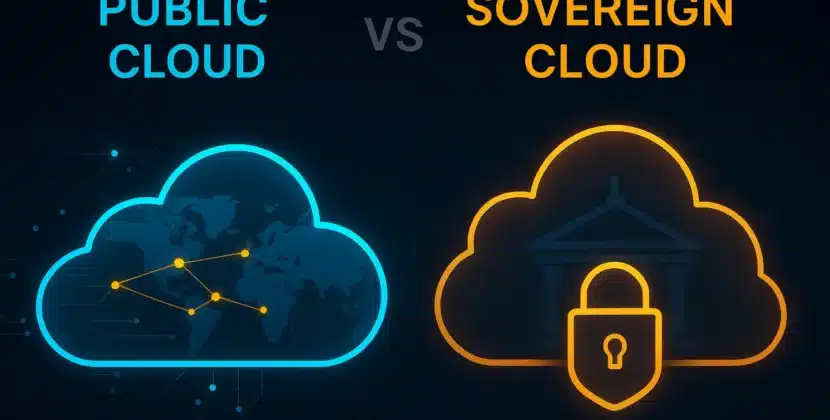
The Sovereignty Imperative
The second main reason for cloud repatriation is data sovereignty. This term covers many concerns. For example, when your data is in the cloud, do you know exactly where it is stored? Some cloud providers let you choose a region or a facility, but not the specific location. Usually, all facilities in a region are located in a single US state or county. Still, could your data end up outside your country if it travels over a network that passes through a country you want to avoid? Would you know if your data is governed by the laws of your business’s country or the country where the data is stored? There are many unknowns, and for those responsible for company data, these uncertainties may not be acceptable.
What we do know is that cloud providers will hand over your data if they receive a court-ordered subpoena, as long as the country where your data is stored follows the rule of law. If not, anything can happen. You don’t need to debate whether cloud storage has backdoors, security flaws, or if providers access your data without permission. These are real concerns and sometimes lack evidence. For example, Google reads your email (see Google’s privacy policy), but only for security and spam protection.
Making the Move: Practical Repatriation
Moving large datasets can feel overwhelming, but today’s tools and standards make it much easier. There are three key principles for a successful repatriation.
First, use the available migration tools. Cloud providers actually offer advanced utilities to help move data both into and out of their platforms. For example, AWS DataSync is built for large-scale data transfers and works efficiently. These tools can make the migration process much simpler.
Second, use standard APIs. Amazon’s S3 API is the most common standard for cloud storage, and even other cloud providers support S3-compatible interfaces. On-premises solutions like Cloudian HyperStore also use these APIs. Because of this standardization, applications can easily move between environments with minimal cloud code changes, often just updating the endpoint URL.
Third, plan for egress fees. Many cloud providers now have policies that waive these charges for customers who are moving their data out. If you don’t qualify for these policies, a quick return-on-investment check usually shows that the migration costs are offset by future savings.
One of the biggest benefits of cloud repatriation is that your applications stay compatible after moving data to S3-compatible on-premise storage. Your existing applications can use it right away. You don’t need major rewrites, since the same APIs work both in the cloud and on-premises.
Best Practices
- Use native migration tools (e.g., AWS DataSync).
- Stick to S3-compatible storage for seamless app portability.
- Negotiate waived egress fees. Many providers offer them for departures.
- Map workloads to cost/resilience tiers in advance.
Regional Cloud Service Providers: Your Opportunity Awaits
This trend opens up big opportunities for regional cloud providers. Local providers can give enterprises the simple operations they expect from public cloud while also addressing cost and data sovereignty issues that global providers often can’t.
Regional providers can stand out by offering repatriation as a service, including migration costs in new hosting contracts. Since no application code changes are needed and migration tools are easy to use, this is a strong market opportunity for providers who focus on value instead of just size.
Mission Possible!
Cloud repatriation isn’t about turning away from innovation. It’s about making smart choices that fit your long-term business goals. Lower costs, better data control, and an easier migration all make a strong case for bringing your data back in-house.
Moving data can be challenging, but it’s possible. With the right strategy, tools, and partners, companies can move away from public clouds and build data systems that meet their needs rather than just following what vendors offer.
Source: Cloud Repatriation: Moving Your Data from the Cloud to On Premises


