






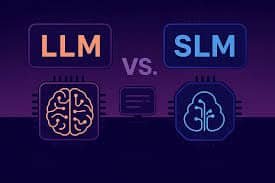
As generative AI rapidly advances in 2026, companies began focusing less on model size and more on the value these models deliver. Large language models (LLMs) like GPT-4o and Claude 3.5 first drew attention for their creative abilities. But small language models (SLMs) have become the practical choice for many businesses. Companies are realizing that using huge models for specialized tasks often costs more than it’s worth. Now, the question of whether SLMs or LLMs offer better returns is at the heart of digital transformation plans. To succeed, organizations need to carefully weigh cost, speed, and how well a model fits their specific needs.
The Architectural Divide: Breadth Versus Depth
LLMs act as generalists in the digital world, trained on vast amounts of diverse data, so they can handle tasks ranging from writing poetry to solving complex coding problems. Their large size, often with more than one hundred billion parameters, gives them the ability to reason through creative or unclear situations. However, this strength also means they can be slow and expensive to use for broad tasks like market research or brainstorming across a company. LLMs are extremely versatile. They work well as the main brain for jobs that need a wide understanding of human context.
SLMs, on the other hand, are designed for specific tasks and usually have fewer than ten billion parameters. They are trained on carefully selected high-quality data to excel at tasks such as legal review or medical transcription. Since they are smaller, SLMs can run on regular company servers or even on edge devices, eliminating the need for costly GPU clusters. When it comes to enterprise ROI, SLMs often outperform LLMs for routine structured work. They may not write a screenplay, but they can process thousands of invoices quickly and accurately.
The Financial Math of Model Selection
Inference costs are a major reason why more companies are choosing smaller models in 2026. Running a million customer service queries on a top LLM can cost thousands in API fees, while using a distilled SLM for the same task is much cheaper, sometimes reducing costs by up to 100 times. This makes it possible for companies to use AI in every department without blowing up their budgets. For businesses with large amounts of data, the lower total cost of ownership makes SLMs the best choice for long-term profitability.
Performance And Reliability In Production
Speed is key to user experience and efficiency. In 2026, businesses, SLMs respond almost instantly, often in just milliseconds, while larger models can take several seconds. This quick response is crucial for real-time applications such as voice assistants or fast fraud detection. When systems are used right away, more people use them, and business processes speed up. This time savings leads to better productivity and a higher return on investment.
Reliability is another reason SLMs often outperform LLMs in terms of enterprise ROI. LLMs can make mistakes or give wrong answers when asked about specific company data they have not seen before. SLMs trained on a company’s own data operate within a predefined knowledge range. This greatly lowers the chance of errors or confusing answers. In regulated fields like finance or healthcare, this predictability is not just helpful; it is required for compliance.
Data Sovereignty and Security
Privacy concerns have led many CIOs in 2026 to choose models that run within their own companies’ networks. Large models often require cloud-based APIs, which means sensitive data must leave the company’s secure systems. SLMs are small enough to run on-site or in a private cloud, allowing companies to retain full control of their data. This setup eliminates additional compliance costs and legal risks associated with using outside providers. For companies focused on security, the peace of mind SLMs offer is an important part of their return on investment.
The Rise Of Hybrid Strategy
Many organizations now use model routers instead of picking just one type of AI model. These systems let a small model handle most routine tasks, while only the more complex problems go to a larger LLM. This way, companies avoid using expensive resources for simple jobs. As the saying goes, you don’t use a Ferrari to pick up groceries. This approach helps balance the high cost of LLMs with the efficiency of smaller models. Using this layered setup is a sign of a smart ROI-driven AI strategy today.
Specialization as a Competitive Advantage
Fine-tuning a large language model requires significant time, skill, and computing power. In contrast, small models can be updated with new data in just days or even hours. This speed helps businesses quickly adjust their AI tools to new market trends or rules. Companies that can make changes faster have a real advantage over those using slow, inflexible models. Being able to customize AI at a low cost is now a key way for businesses to create value.
Determining The Best Fit For Your Business
Choosing between an SLM and an LLM depends on what your business needs. If you want to automate a specific data-heavy task with high accuracy and low cost, an SLM is the better choice. For projects that require creativity, complex reasoning, or long-term planning, an LLM remains the best option. The most successful businesses in 2026 will use different AI models for different jobs, not just one for everything. Matching the model to the task helps make sure every dollar spent on AI adds real value.


