




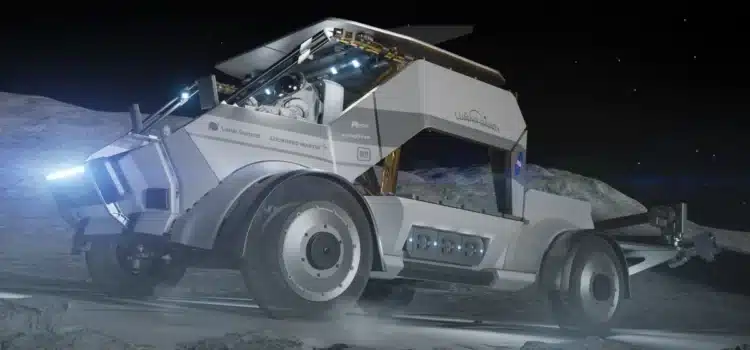
NASA is moving forward faster than ever on developing autonomous rovers capable of operating on the lunar surface, paving the way for independent robotic operations in future lunar missions. To achieve this goal, NASA is outfitting these new rovers with next-level artificial intelligence capabilities that enable them to navigate terrain, identify features, and execute mission tasks with minimal human intervention.
This work aligns with NASA’s broader objectives to build out the Artemis program and establish a long-term human presence on the Moon. It is anticipated that autonomous robotic systems will play an integral role in achieving this goal, enabling exploration, data gathering, and infrastructure assembly in environments where humans will have limited ability to control them.
Moving Toward Autonomous Lunar Exploration
Traditional rovers have operated primarily via commands from Earth, with operators remotely controlling the rovers’ movement and conducting scientific activities. Although relatively short, the time required for a command to travel from Earth to the moon and back imposes limits on the rover’s real-time response.
NASA intends to equip rovers with AI-driven autonomy so they can make decisions based on their immediate environment. For instance, this will allow the rover to determine if there are obstacles along its path and adjust it accordingly, as well as to select individual science targets to prioritize without waiting for a “go ahead” from mission control.
NASA’s movement toward implementing autonomous systems within the next decade is consistent with the broader evolution of robotics in exploration today, as robots become increasingly independent due to the increasing complexity of missions.
AI-Driven Navigation and Terrain Analysis
The use of machine learning verifiably evaluates terrain on the moon in real time as it travels, detecting potential hazards that could obstruct its path. As it travels, a rover will use onboard cameras and other sensors to evaluate the conditions of the surface it is traveling on. It can then use this information to update and reroute itself accordingly.
The Rover’s ability to dynamically change its route as it travels is essential, given the moon’s tough, often unpredictable terrain, which can change dramatically from one area to another over just a few hundred meters.
Supporting Human Missions Through Robotics
Autonomous rovers serve two purposes: they function as exploration tools that lay the groundwork for future human missions. The autonomous rovers will first explore potential landing sites to identify resource locations and establish infrastructure before crewed spacecraft arrive, as they will provide support to astronauts.
The discovery of water-ice deposits by rover missions will enable humans to establish a sustainable, long-term presence on the Moon. Rovers will provide assistance through their capabilities to transport supplies, execute repairs, and track environmental conditions.
NASA envisions an environment where humans and autonomous rovers work together to accomplish mission goals.
Reducing Dependence on Earth-Based Control
Reduced dependence on continual communication with Earth is one of the main benefits of autonomous systems. Although the delay between Earth and the moon is shorter than for missions to farther destinations, limited communication windows and available bandwidth create communication issues in both cases.
The ability to conduct long-duration writing and autonomous rover activities, no matter where they are located, means there will be no delay in undertaking their mission activities, regardless of length or location.
The ability to sustain continuous operations will enable greater productivity and effectiveness in the overall mission compared to traditional means.
Integration with Broader Lunar Infrastructure
NASA is developing autonomous rover systems that can work together as part of the broader lunar infrastructure, which includes orbiting spacecraft, surface base habitats, and communications networks. The rover systems will enable rovers on the lunar surface to communicate, exchange information, and coordinate their actions with each other and with other spacecraft and surface-based missions’ goals simultaneously.
Networks will also improve the efficiency of lunar exploration by enabling the rovers to send their collected scientific data back to Earth or to orbiting resupply platforms. Similarly, data collected by the moon’s surface and by other surrounding spacecraft through the lunar infrastructural network(s) will send commands and updates necessary for operating in that lunar environment, as well as improved rover operations on the moon and elsewhere in space.
NASA is designing this new lunar infrastructure to ensure continued sustainability, so the robotic systems that support the lunar exploration effort will continue to support future exploration efforts.
Challenges in Autonomous Space Robotics
While progress has been made toward the development of autonomous rovers, several challenges remain before they are fully successful. The environment on the moon is very hostile; temperatures range from extreme heat to extreme cold. There is high exposure to radiation and fine dust that can disrupt mechanical and electrical components.
AI systems must also be highly robust; any failure in navigation or decision-making can negatively impact the success of future lunar missions. For AI systems to succeed, they must undergo extensive testing and validation to demonstrate they can consistently achieve the desired results in the real world.
NASA is continuing to improve its technology through simulation, field testing, and incremental mission deployments.
The Role of AI in Space Exploration
AI has emerged as an important part of most current space exploration projects. They are used to process and interpret data, adapt to environmental changes, and carry out complex tasks without direct human involvement.
For AI-enabled robotic vehicles designed for planetary surfaces, AI will assist with both navigation and the scientific analysis of terrestrial materials. A robotic system will be able to identify points of interest (POIs) and conduct scientific experiments much more efficiently than a system without AI. This will greatly increase the ability to obtain scientific data from each robotic mission.
NASA is investing in AI to achieve its long-term exploration objectives.
Conclusion: Robots Leading the Way to the Moon
NASA’s development of autonomous rover systems is a key milestone in our efforts to explore the Moon’s surface. Through its ability to operate autonomously, the rover will lay the groundwork for a more prolonged human presence on the Moon and greater mission efficiency.
Increasingly, AI-based systems will become essential for exploring and understanding the Moon and the solar system.
Source: NASA News Release


