




Big Tech Promises Fewer Secrets, More Money as Data Center Backlash Grows
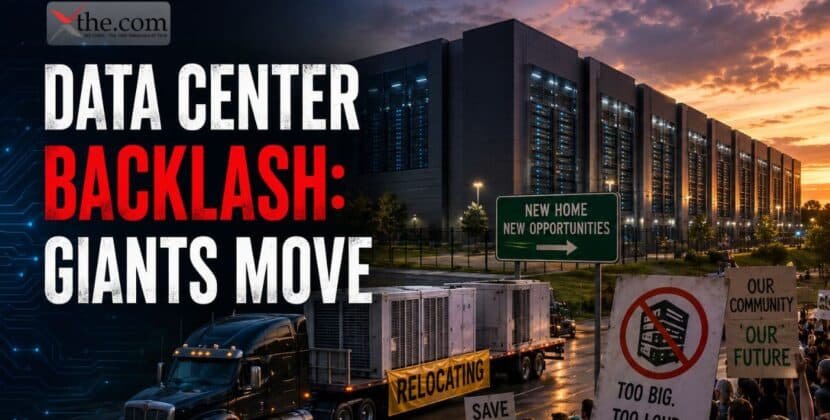
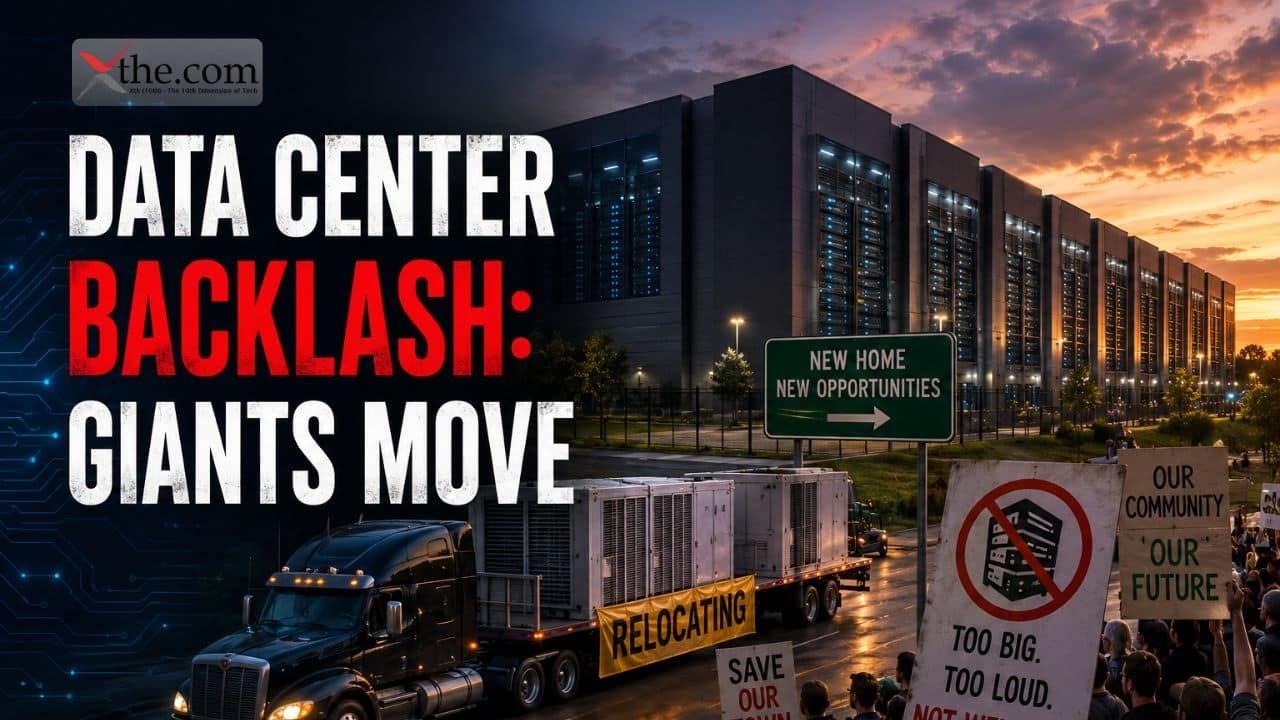
Data center backlash just produced a shift in how US tech giants win local approvals: Amazon, Google, Meta and Microsoft are dropping secrecy agreements, disclosing power and water use, and putting direct payments on the table for the towns that host their server warehouses. A widely carried Associated Press report on October 22, 2026 documented the pivot, and it lands nine days before a midterm vote in which opposition to data centers has become a genuinely potent issue. Here is what changed, why the companies moved now, and what it means for your town, your electricity bill, and the November election.
Key Takeaways:
- – Amazon, Google, Meta and Microsoft say they stopped requiring non-disclosure agreements in data center negotiations with local governments.
- – Amazon’s Data Center Commitment, announced October 2, pledges more disclosure on energy and water use plus $1 billion in community incentives; Meta also pledged $1 billion, and Google says local investment will reach $1 billion by the end of 2027.
- – Donald Trump publicly urged the companies this week to pay host communities a ‘dividend’ if they want projects approved.
- – The four companies are projected to spend more than $600 billion this year on capital projects, mostly data center construction in the US.
- – Data center electricity demand has been raising bills across parts of a 13-state grid, which is where the public backlash started.
Why residents started fighting
The backlash built for roughly a year before the companies moved. Data center demand began pushing up electric bills across a 13-state grid stretching from Illinois east to New Jersey and Maryland, according to the AP report, and that cost shift angered ratepayers who were not the ones ordering the compute. Layered on top were secrecy and environmental concerns. Local officials were often asked to sign non-disclosure agreements that kept project details hidden until a plan showed up on a municipal agenda, sometimes under a code name behind a third-party developer.
Anita Verma-Lallian, a developer with data center projects in Arizona, told the AP the code-name practice ‘raises people’s suspicion as to what’s truly happening.’ Critics also pointed out that the giants aggressively pursue state and local tax breaks while not covering the entire cost of electric-grid buildouts their facilities require, a charge found in a report published this month by several Senate Democrats that criticized Amazon, Google, Meta and Microsoft directly.
The result is a permitting bottleneck. Anti-data-center sentiment has become strong enough that both party campaign committees are working the issue ahead of November 3, when control of Congress and 36 governors’ offices will be decided by US voters.
The playbook pivot on NDA use and payments
The new playbook is money plus transparency. Amazon rolled out its Data Center Commitment in early October, which includes improving the environmental rating of its backup diesel generators, disclosing more about energy and water use at its facilities, and ending NDAs with government agencies. Microsoft has already said it stopped requiring NDAs, and Google says it did the same for its data center processes.
The money is new. Meta and Amazon each said recently they will spend $1 billion on financial incentives for host communities over the coming years, on top of existing school, charity and job-training spending. Google said its investment in local programs in data center communities will reach $1 billion by the end of 2027, and that for all new data center campuses it will pay full real property taxes on buildings and land instead of seeking abatements. Microsoft pointed to a couple of local tax breaks it will forgo entirely.
Even the president weighed in on Wednesday, posting on social media that the companies should pay people and communities a ‘dividend’ if they ‘want to make their Data Centers popular,’ followed by ‘MAKE DEALS, and get them built!!! GREAT FOR THE U.S.A.’
What company leaders are saying
Google and Meta frame the shift differently. Devi Thomas, Google’s global head of community development and engagement, told the AP she would not call resistance a ‘backlash’ but said ‘there are often community questions to be addressed’ and that ‘early public consultation is increasingly a very important part of the process.’ Lindsay Elin, Meta’s vice president of public policy and external affairs, said the company reviews how it shares information with communities, and as part of that work ‘we are reviewing our use of non-disclosure agreements.’
Skepticism persists. Sam Burleigh, a founder of Concerned Citizens of Montour County, a group fighting a potential Amazon-backed project in rural Pennsylvania, called the companies’ commitments ‘propaganda,’ saying they are only moving because ‘they have to find some way, some method to break through that resistance.’ Kathryn Hoffman, executive director of the Minnesota Center for Environmental Advocacy, which has sued over two prospective Google data centers, told the AP she sees more public relations outreach but not more disclosure of critical details about plans.
What it means for readers near proposed sites
If a data center is proposed near you, the change is real but uneven. The companies say they now hold open houses, disclose energy and water use, and pay full property taxes on new campuses, so residents should ask to see those commitments in writing for their specific project rather than relying on company statements. Watch four items: whether any NDA is still attached to the deal, who is listed as the developer behind the project, how backup power and water draw are described, and what direct community payments or tax contributions are guaranteed in the approval documents.
Your electricity bill is the other reader-facing issue. In grid regions where centers have come online, demand growth has been large enough to move rates on the 13-state grid cited in the AP report, and utilities generally recover new infrastructure costs from all ratepayers.
What happens next
Expect three things. First, the midterm effect: if November 3 produces more governors and state legislators hostile to data center tax breaks, companies have real incentive to lock down approvals before state baselines shift, even at the price of higher local payments. Second, the Senate Republican campaign memo from August 18 warned the sector it must fix ‘the toxic brand’ of the industry or risk electoral consequences, so expect ad buys and community investment announcements in towns with contested council races, not just corporate statements to the AP.
Third, watch whether the $1 billion pledges become recurring line items. Amazon and Meta have committed the same headline number, Google has its own timeline to 2027, and Microsoft has gone smaller and quieter. Host communities with actual permits, like towns in Pennsylvania and Arizona quoted in the AP report, are the test cases.
Frequently Asked Questions
Why is it called a data center backlash?
Because organized resident opposition has stalled or blocked legally proposed AI and cloud data center projects across the country, over electric bills, water use, tax breaks, and the secrecy agreements that kept proposals hidden until the eve of municipal votes.
Will I pay for data centers on my electric bill?
Potentially. In parts of the 13-state grid cited in the AP report, data center demand helped push up electric bills, and grid infrastructure costs are typically recovered from all ratepayers. Exactly who pays depends on what a hosting agreement and utility filings say, not on the company’s press release.
Do the tech giants still use NDAs?
Amazon, Microsoft and Google say they stopped requiring NDAs with government agencies for data center projects, and Meta says it is reviewing its practice. Permits depend on state and local rules, so check your own municipality’s process before assuming every project is open.
Sources:
- https://fortune.com/2026/10/22/google-meta-amazon-microsoft-data-center-backlash/
- https://www.usnews.com/news/politics/articles/2026-10-22/facing-pushback-on-data-centers-tech-giants-are-promising-hosts-more-money-and-fewer-secrets
- https://www.aboutamazon.com/news/company-news/amazon-data-centers-built-together