





FDA Approves Tucatinib as a Chemo-Free Maintenance Option for Advanced HER2 Breast Cancer
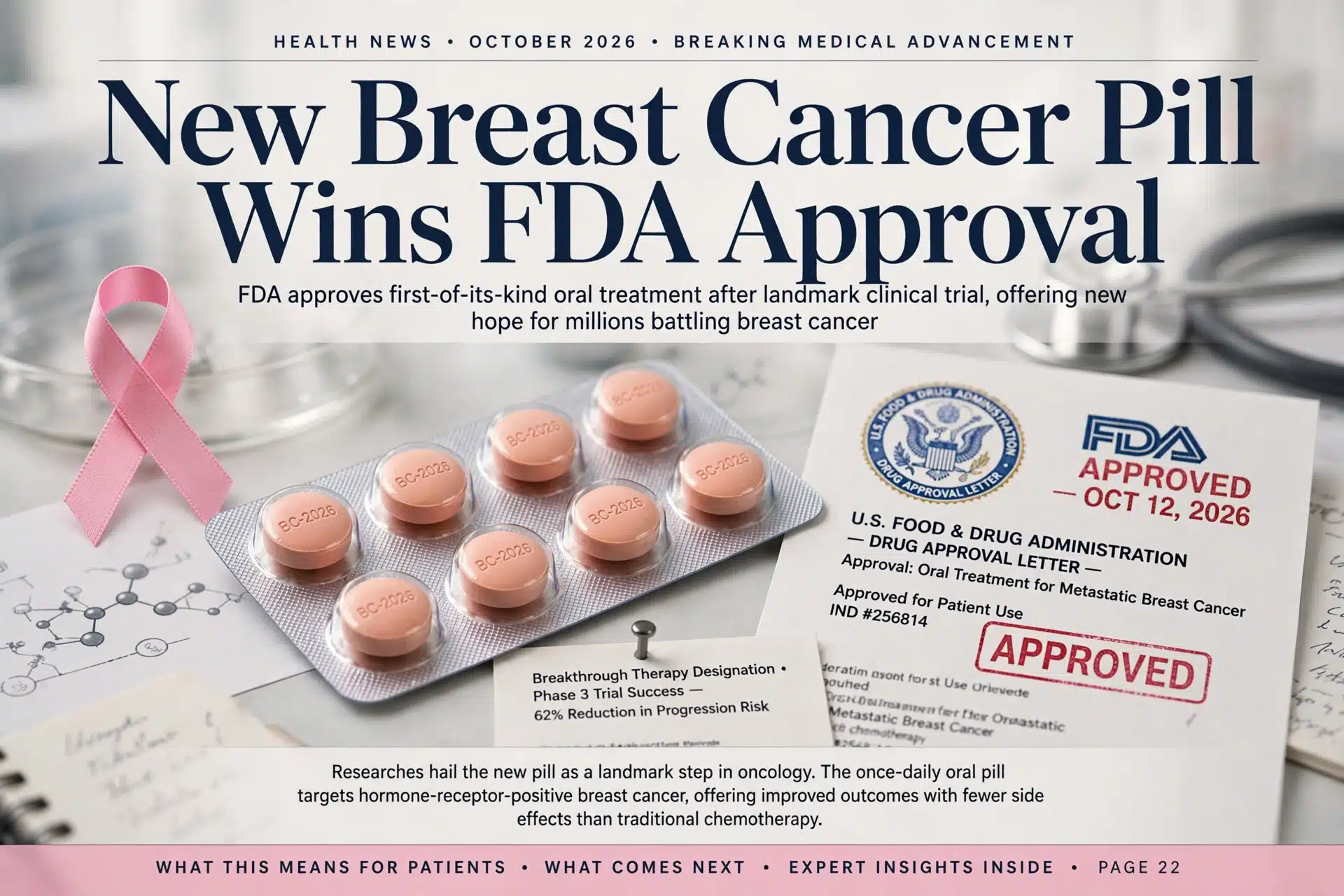
The Food and Drug Administration approved a new maintenance regimen for advanced HER2-positive breast cancer on October 7, 2026, clearing tucatinib, sold as Tukysa by Pfizer’s Seagen subsidiary, to be taken alongside trastuzumab and pertuzumab after initial treatment has done its work. The decision gives oncologists an oral, chemotherapy-free way to hold the line against one of the most aggressive subtypes of breast cancer, and it lands in the middle of the most active year for breast cancer drug approvals in more than a decade.
The approval is for adults with unresectable locally advanced or metastatic HER2-positive breast cancer who have just completed induction treatment, the intensive first phase that typically pairs targeted antibodies with chemotherapy. Instead of continuing chemotherapy indefinitely, patients move onto tucatinib pills plus the two antibody drugs they are already receiving. It is a maintenance strategy in the truest sense: keep the disease suppressed, spare the body the toxic part of treatment, and buy patients more good-time months at home.
What the FDA Approved
Tucatinib is a selective HER2 tyrosine kinase inhibitor, a small molecule that slips inside cells and blocks the growth signal that the HER2 receptor normally sends. The FDA approved it in combination with trastuzumab and pertuzumab, the dual-antibody backbone used across HER2-positive disease, for adults whose locally advanced or metastatic cancer cannot be surgically removed and who have finished induction therapy. The label covers the maintenance setting specifically, which means the regimen is positioned after, not instead of, initial treatment.
The drug first reached the market in 2020 as part of a combination for patients who had already gone through prior anti-HER2 therapies, and it won a second indication in 2023 for HER2-positive colorectal cancer. This approval moves it much earlier in the treatment journey, into front-line maintenance, where millions of pills are taken over months or years rather than in a short salvage course. Pfizer has not announced pricing changes for the indication, and Tukysa remains available in oral form.
The Trial Behind the Decision
The approval rests on HER2CLIMB-05, a randomized study that enrolled 654 patients with advanced HER2-positive breast cancer. Reported results showed a progression-free survival benefit of 24.9 months for patients on the tucatinib combination, a number that oncologists read as meaningful because it reflects how long patients live without the disease worsening, the metric that matters most in daily practice. Overall survival data are still maturing, a detail the FDA noted, and the label carries monitoring guidance for liver toxicity, the main side effect physicians will watch for.
Regulators did not approve this on response rates alone. The trial design let the agency evaluate what happens when the pill is added to the antibody backbone and continued over time, and the safety profile held up well enough for chronic use. Oncology nurses, who manage the day-to-day reality of these regimens, immediately flagged liver function monitoring and pill adherence as the two practical issues that will shape how the drug is used in clinics.
Why It Matters for Patients
HER2-positive breast cancer accounts for roughly one in five breast cancers, and it is the subtype that historically spread fastest. The arrival of trastuzumab and pertuzumab turned it from a diagnosis with the worst prognosis into one with the most treatment options, and the maintenance concept extends that advantage. Patients who respond to induction therapy can pause the chemotherapy portion while keeping the targeted drugs running, which means fewer infusion-side effects, fewer clinic visits for toxicity management and more time living normally.
For oncologists, the approval simplifies decisions that have grown complicated. Between antibody-drug conjugates, CDK4/6 combinations and now re-engineered endocrine therapies, the HER2 and hormone receptor landscape has splintered into dozens of biomarker-specific choices. A defined maintenance backbone of tucatinib plus the two standard antibodies gives practices a clear default after induction, with the trial data to justify it to insurers.
Part of a Record Run of Cancer Approvals
The tucatinib decision is the fourth cancer drug approval the FDA has issued in the five weeks since mid-September, following camizestrant for hormone receptor-positive disease in early September, imlunestrant with abemaciclib for ESR1-mutated breast cancer on September 18, and pirtobrutinib for untreated leukemia on October 2. Breast cancer specifically has dominated the 2026 docket: the agency approved a palbociclib maintenance regimen in June, sacituzumab govitecan combinations for triple-negative disease, and a pair of Enhertu indications for early-stage breast cancer in May.
Analysts at PharmExec noted the practical caveat alongside the good news: overall survival has not yet been demonstrated in the maintenance setting, and liver toxicity monitoring will determine real-world uptake. Those are the usual caveats for a drug approved on progression-free survival, and they rarely slow adoption when the alternative is continuing chemotherapy. What the approval clearly does is widen the toolbox for the 20 percent of breast cancer patients whose tumors run on HER2.
What Comes Next
The next milestones are familiar ones. Community oncology practices will write the regimen into order sets, insurers will set coverage policies, and Pfizer will expand post-marketing studies while survival data mature. Researchers are also testing tucatinib in earlier settings and in combination with antibody-drug conjugates, part of a broader push to move HER2-targeted therapy into the adjuvant and even neoadjuvant phases of care.
For patients, the immediate question is eligibility: anyone with confirmed HER2-positive advanced disease who has completed induction treatment should ask their oncologist whether the new maintenance option applies to them. The approval does not change anything for early-stage patients or for HER2-low tumors that do not meet the testing threshold, but for the population it covers, October 7 marks the day the standard of care gained an oral maintenance pillar.
Frequently Asked Questions
What did the FDA approve on October 7, 2026?
The FDA approved tucatinib, marketed as Tukysa, in combination with trastuzumab and pertuzumab for maintenance treatment of adults with unresectable locally advanced or metastatic HER2-positive breast cancer after induction therapy.
What is tucatinib?
Tucatinib is an oral HER2 tyrosine kinase inhibitor that blocks the growth signals sent by HER2 receptors inside cancer cells. It was first approved in 2020 and is sold as Tukysa by Pfizer’s Seagen subsidiary.
What were the HER2CLIMB-05 trial results?
HER2CLIMB-05 enrolled 654 patients with advanced HER2-positive breast cancer and showed a 24.9-month progression-free survival benefit for the tucatinib combination, with overall survival data still maturing.
Does the new regimen involve chemotherapy?
No. The approval is specifically a chemotherapy-free maintenance option: patients finish induction treatment, then continue on tucatinib pills plus the two antibody drugs, with liver function monitoring during therapy.