




Introduction
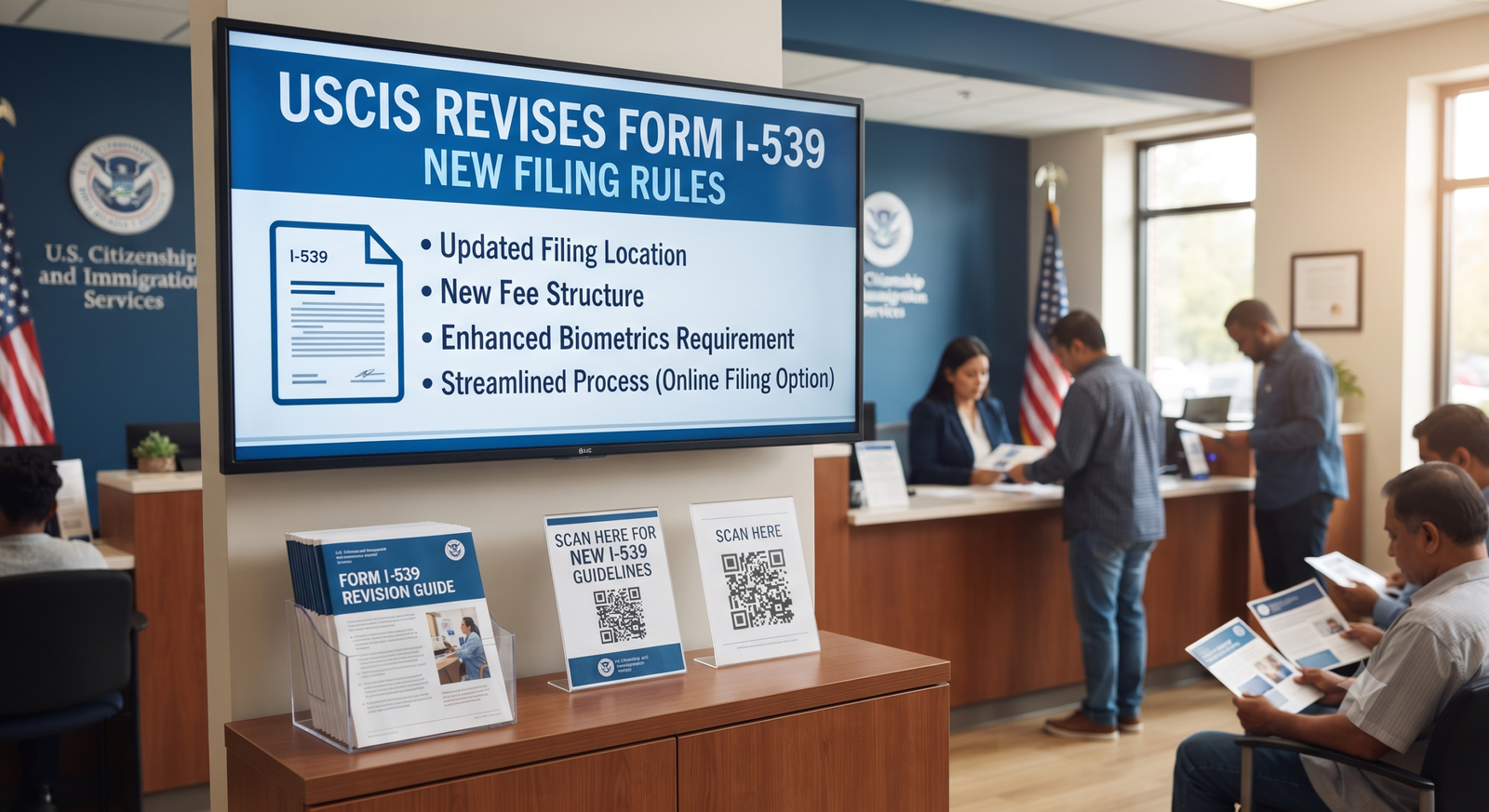
USCIS has announced a major revision to Form I-539, Application to Extend/Change Nonimmigrant Status, effective September 15, 2026. The updated form introduces new filing requirements, additional documentation standards, and a revised fee structure that will affect hundreds of thousands of foreign nationals living and working in the United States.
The I-539 form is used by holders of B-1/B-2 visitor visas, F-1 student visas, J-1 exchange visitor visas, and several other nonimmigrant categories to extend their stay or change their status while in the United States. The revision represents the most significant overhaul of the form in over a decade and reflects the Biden administration’s efforts to modernize the immigration system while reducing processing backlogs.
In this comprehensive guide, we break down everything you need to know about the revised I-539 form, including what has changed, who is affected, and how to prepare a successful application.
What Has Changed in the Revised I-539 Form?
The revised I-539 form introduces several significant changes that applicants need to understand before filing. Here is a detailed breakdown of the key modifications.
First, the form now requires a comprehensive biographic information section that goes beyond basic personal details. Applicants must provide information about their educational history, employment history, and travel history for the past 10 years. This additional data is designed to help USCIS verify the applicant’s identity and assess their eligibility for status extension or change.
Second, the documentation requirements have been significantly expanded. Under the new rules, applicants must submit evidence of financial support for the entire requested extension period, not just the initial period of stay. This means providing bank statements, employment verification letters, or sponsorship documents covering up to 24 months of expenses. USCIS has stated that this change is intended to ensure that nonimmigrants can support themselves without resorting to unauthorized employment.
Third, the form now includes a new section on compliance with visa conditions. Applicants must disclose any violations of their visa terms, including overstays, unauthorized employment, or failure to maintain required insurance coverage. While this information was previously collected through other means, its inclusion on the form itself signals a more rigorous approach to enforcement.
Fourth, the fee structure has been updated. The standard filing fee for Form I-539 has increased from 70 to 50, reflecting USCIS’s effort to become more financially self-sufficient. Biometric services fees remain at 5, but applicants filing multiple forms simultaneously will see a new bundled discount of 15% on the total filing fees.
Fifth, the form now offers a premium processing option for an additional fee of ,000. This expedited service guarantees a decision within 30 calendar days, compared to the standard processing time of 4-8 months. Premium processing is available for all I-539 categories except those involving pending removal proceedings.
Who Is Affected by the Changes?
The revised I-539 form affects a wide range of nonimmigrant visa holders in the United States. Here is a detailed look at who needs to pay attention to these changes.
B-1/B-2 visitors are among the most common users of Form I-539. Business visitors and tourists who need to extend their stay beyond the authorized period must now provide more extensive documentation of their financial resources and travel plans. The new requirement to show 24 months of financial support is particularly challenging for B-2 tourists who may not have U.S. bank accounts or employment.
F-1 students who need to extend their program duration or change their status must now provide detailed information about their academic progress and enrollment status. The form now requires a letter from the Designated School Official (DSO) confirming that the student is maintaining valid status and making satisfactory academic progress. Students who have fallen below full-time enrollment or who have changed majors may face additional scrutiny.
J-1 exchange visitors, including interns, trainees, and au pairs, face unique challenges under the new rules. The form now requires sponsors to provide detailed information about the exchange program’s compliance history, including any previous violations or disciplinary actions. This could make it more difficult for J-1 visitors with problematic sponsor histories to extend their status.
H-4 dependents of H-1B workers are another affected group. The revised form now requires H-4 applicants to provide separate evidence of the principal H-1B holder’s valid status and employment. Previously, a copy of the H-1B approval notice was sufficient. Under the new rules, H-4 applicants must submit recent pay stubs, an employment verification letter, and evidence that the H-1B worker’s petition has not been revoked or pending for more than 240 days.
Tips for Filing the Revised I-539 Form
Navigating the revised I-539 form can be daunting, but with careful preparation, you can maximize your chances of a successful outcome. Here are some expert tips to help you through the process.
First, start gathering your documents early. The expanded documentation requirements mean you will need more time to collect bank statements, employment letters, and other supporting materials. Begin the process at least 90 days before your current status expires to allow adequate time for preparation and mailing.
Second, use the USCIS online filing system whenever possible. The revised form is available for electronic submission through the USCIS online portal, which offers several advantages over paper filing. Online applications are processed faster, you receive real-time updates on your case status, and you can avoid common errors that lead to Requests for Evidence (RFEs).
Third, consider hiring an immigration attorney. The increased complexity of the revised form makes professional guidance more valuable than ever. An experienced immigration attorney can help you navigate the new requirements, identify potential issues before they become problems, and prepare a compelling application package. Many attorneys offer flat-fee I-539 preparation services that can save you money in the long run.
Fourth, be thorough and honest in your disclosures. The new compliance section requires full disclosure of any visa violations. Failing to disclose known violations can result in denial of your application and potential bars from future immigration benefits. If you have a complicated immigration history, consult with an attorney before filing.
Fifth, keep copies of everything. Maintain a complete file of your application, supporting documents, and any correspondence with USCIS. This documentation will be invaluable if your case is delayed, denied, or if you need to file an appeal.
Sources
· USCIS: https://www.uscis.gov
· American Immigration Lawyers Association: https://www.aila.org
· National Immigration Law Center: https://www.nilc.org
· Boundless Immigration: https://www.boundless.com
· Fragomen Immigration: https://www.fragomen.com