




SAN JOSE, CA —
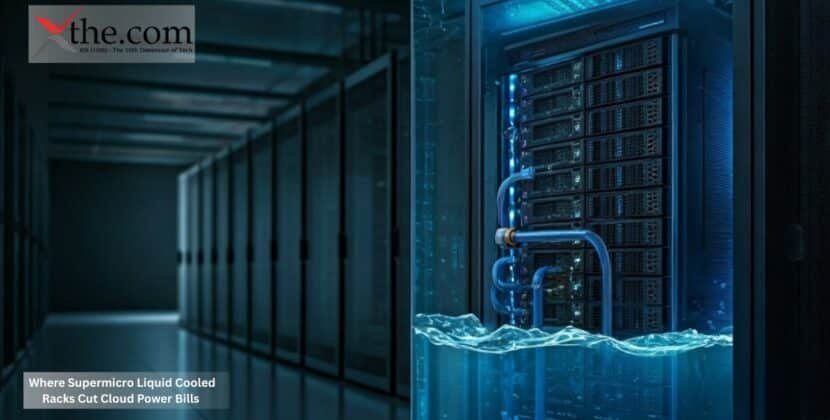
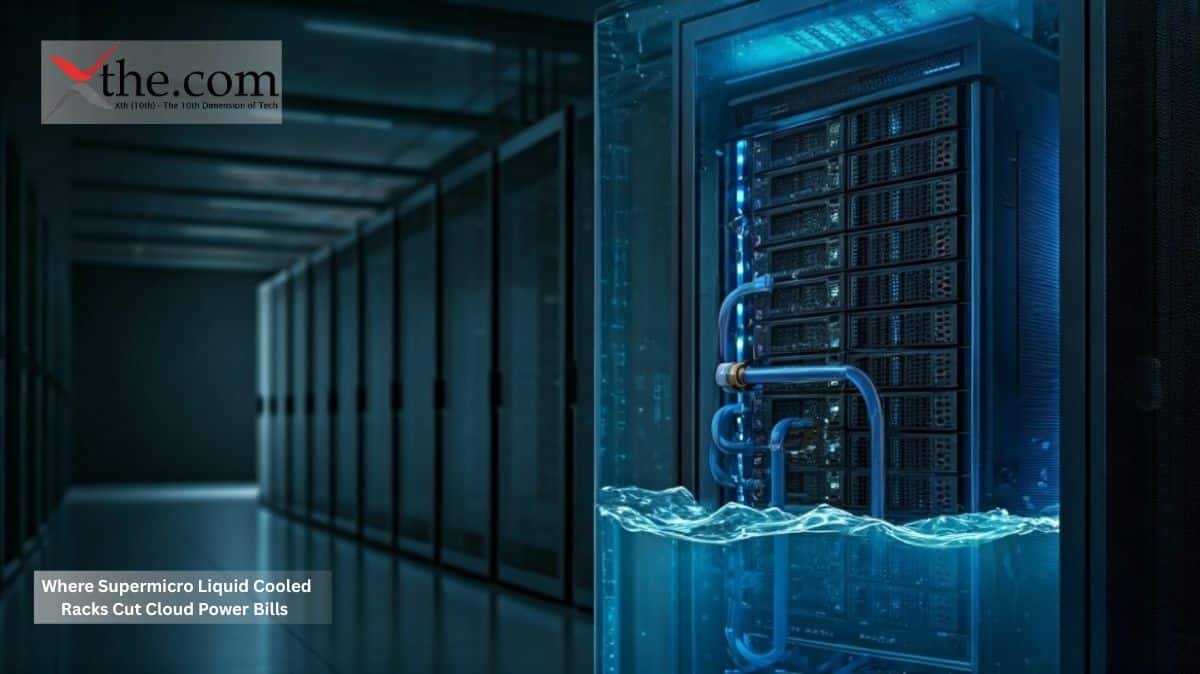
The Supermicro liquid–cooled racks modular turnkey release targets the operational constraint that has become the binding limit on AI infrastructure expansion not GPU availability or capital budget, but the electrical grid capacity ceiling that cooling infrastructure overhead consumes before compute hardware receives its share. As a coolant distribution unit, energy savings compress the cooling fraction of the total facility power draw, and the plug-and-play modular architecture eliminates the deployment complexity that previous liquid-cooling installations required. Reducing power usage effectively in data centers has a hardware answer that operators can deploy within weeks rather than quarters.
The Grid Constraint Liquid Cooling Solves
High-density computing thermal layout at AI accelerator density generates thermal output that forces a power allocation decision that air-cooled data centers resolve unfavorably dedicating increasing percentages of available facility power to cooling infrastructure that serves thermal management rather than compute throughput. A facility operating at 1.5 PUE allocates 33% of total power draw to cooling overhead; reducing PUE to 1.1 through liquid cooling reclaims that cooling overhead as available compute capacity without requiring utility service upgrades.
How to reduce power usage effectiveness in data centers running AI workloads requires thermal management that scales with compute density rather than with facility floor space air cooling that distributes thermal management burden across the full data center volume becomes less efficient as AI rack density concentrates thermal output in specific floor areas that localized cooling infrastructure must manage at intensities that room-level HVAC cannot address without overcooling the surrounding floor space that wastes cooling capacity on under-utilized areas.
Coolant distribution unit energy savings from Supermicro’s redesigned CDU architecture stem from the thermodynamic efficiency difference between liquid and air heat transfer at equivalent thermal loads liquid coolant that extracts heat conductively from chip-level interfaces operates at a fraction of the energy cost of moving equivalent air volumes through high-static-pressure server chassis. The fan power reduction alone from eliminating high-speed server fans, which air cooling requires, generates measurable energy savings that CDU pump power consumption does not fully offset.
Plug-and-Play Modular Architecture and Deployment Speed
The use of plug-and-play modular architecture in Supermicro’s turnkey liquid-cooled rack systems eliminates the deployment barriers that previously made liquid cooling a specialized installation rather than a standard configuration in data centers. To date, liquid cooling systems require customized plumbing, specialized installation contractors, lengthy commissioning times, and downtime during installation that cannot be readily accommodated by operating data centers.
The turnkey delivery of hardware infrastructure using Supermicro’s modular approach results in complete rack delivery, including integrated chiller distribution unit (CDU) manifolds, pre-piped coolant distribution infrastructure, and quick-connect fittings, enabling integrated installation with no custom pipe fabrication for operators. Operators will receive a system that connects to the facility’s supply and return lines via standard connections, reducing installation timelines from a multi-week facility remodel to a few days for equipment deployment and eliminating facility downtime except for the time required to install the rack.
Supermicro liquid-cooled racks‘ modular CDU design also enables incremental deployment scaling that an all-or-nothing facility liquid-cooling infrastructure cannot accommodate operators can deploy liquid-cooled rack capacity in increments that workload growth requires, rather than investing in facility-wide liquid-cooling infrastructure before the workload volume that justifies full deployment has materialized.
CDU Energy Savings and PUE Impact
SuperMicro’s CDU design saves energy by reducing the cooling power “overhead” load by 40% compared with the existing solution. This result is achieved with three benefits brought on by this new CDU architecture:
1. Higher coolant return temperature facilitates increased chiller energy efficiency;
2. The elimination of high-speed fan-cooled servers reduces fan power consumption; and
3. Using a lower total volume of air to distribute high heat absorption loads via a water-cooled distribution system versus a traditional HVAC system saves energy for the entire building cooling system, including the HVAC mechanical equipment and associated distribution piping systems.
High-density computing thermal layout optimization that Supermicro’s rack architecture enables allows operators to position high-density AI accelerator racks without the spacing requirements that air cooling hot-aisle-cold-aisle containment imposes liquid-cooled racks that extract heat through coolant loops rather than exhaust airflow can be positioned in configurations that optimize network topology and storage proximity rather than thermal airflow management, improving infrastructure utilization efficiency alongside energy efficiency.
How to reduce power usage effectiveness in data centers from the 1.4-1.6 PUE range that air-cooled AI workload facilities commonly operate at toward the 1.05-1.1 range that liquid cooling enables generates annual energy cost savings that accelerate hardware investment recovery — the cooling energy cost reduction at scale represents millions of dollars annually for hyperscale deployments and hundreds of thousands for enterprise data centers that justify liquid cooling investment through operational savings rather than only through compute density gains.
Regional Grid Limitation Navigation
Turnkey hardware infrastructure deployment with Supermicro’s modular system enables AI infrastructure expansion within regional electrical grid constraints, where utility capacity limits prevent expansion through additional power service. Operators whose facilities have reached utility service capacity limits can increase compute throughput within existing power budgets by reclaiming the cooling overhead that PUE improvement delivers deploying Supermicro liquid-cooled racks that operate at 1.1 PUE within a facility power budget previously supporting 1.5 PUE air cooling provides 36% more compute capacity from the same utility service connection.
Plug-and-play modular architecture deployment timelines that compress liquid-cooling installation from months to weeks; also address the grid-constraint navigation timeline utility service upgrades that require regulatory approval, infrastructure construction, and interconnection agreements operate on 12-24 month timelines that AI workload demand growth cannot wait for. Liquid-cooling efficiency improvements that expand effective compute capacity within existing grid connections provide the near-term capacity-expansion path that utility upgrade timelines cannot deliver.
Conclusion
Supermicro’s liquid-cooled racks and modular turnkey architecture deliver the cooling efficiency transformation that AI workload density requires without the facility reconstruction timeline that custom liquid-cooling installations historically imposed. Plug-and-play modular architecture compresses liquid-cooling deployment from a multi-month facility project into a weeks-long equipment installation that operational data centers can execute without downtime.
Coolant distribution unit energy savings of up to 40%, cooling power overhead reduction, reclaim grid capacity that air cooling overhead consumes enabling compute density expansion within regional electrical grid constraints that utility service upgrades cannot resolve on AI infrastructure demand timelines. The thermal layout flexibility enabled by liquid cooling improves rack positioning optimization and energy efficiency. Turnkey hardware infrastructure deployment scaling in increments that workload growth justifies, protects capital investment against over-provisioning, and requires a full facility of liquid cooling infrastructure upfront. As reducing power usage effectively in data centers becomes the operational priority that grid-constrained AI infrastructure expansion demands, Supermicro’s modular CDU architecture provides the deployment-ready efficiency improvements that power budget limitations make immediately actionable.
Source: Superior Cooling Reduces Power, Water, Noise, and Space