





HOUSTON, TX —
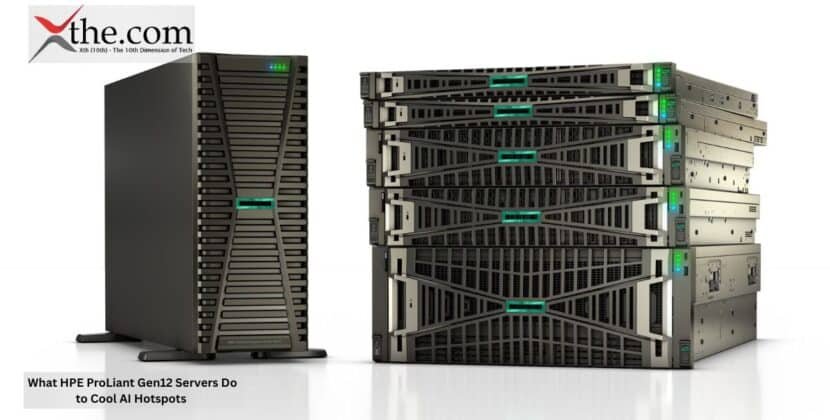
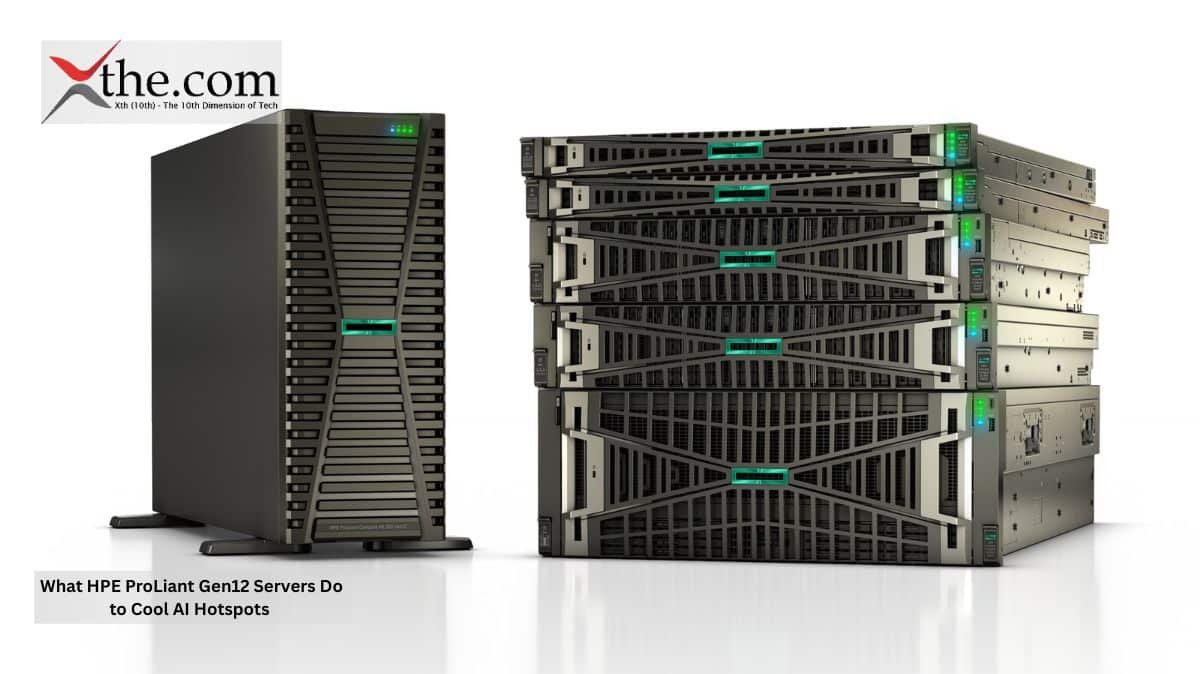
The HPE Proliant Gen12 servers release addresses the thermal wall that data center operators running AI accelerator workloads have been hitting with increasing frequency not a theoretical capacity limit but an active operational constraint where high-density accelerator thermal efficiency failures are forcing throttling decisions that undermine the compute investment justification. As datacenter energy draw limits at the facility level prevent simple horizontal scaling, and rack-scale computing power density continues to increase with each GPU generation, liquid-cooling direct-to-chip architecture transitions from a premium option to an operational prerequisite that AI workload economics require.
The Thermal Wall AI Density Creates
High-density accelerator thermal efficiency failure in data centers running current-generation AI training configurations manifests as localized energy density spikes that facility HVAC systems cannot dissipate at the rack level. Conventional raised-floor air cooling that manages thermal output at the room level distributes cooling capacity across the full data center floor a distribution model that worked when thermal output was relatively uniform across rack populations but breaks down when AI accelerator racks generate 40-80 kW of thermal output in a physical footprint that standard cooling capacity was sized to manage at 10-15 kW.
Datacenter energy draw limits at the facility level compound the thermal problem utility service capacity, transformer ratings, and electrical distribution infrastructure that existing facilities were built around create power ceilings that prevent operators from simply adding more cooling infrastructure to compensate for air cooling’s thermal density limitations. The thermal wall and the power wall arrive simultaneously for AI workload density, making architectural solutions that address both constraints at the rack level the only path forward that does not require facility reconstruction.
Best enterprise rack servers for intensive model training must therefore solve thermal management at the chip level rather than delegating it to facility infrastructure HPE Proliant Gen12 servers integrated closed-loop manifold architecture is the engineering response to a thermal physics problem that ambient air cooling cannot solve at AI accelerator density, regardless of facility HVAC investment.
Direct-to-Chip Cooling Mechanics
With liquid cooling in the ProLiant Gen12 servers, direct-to-chip cooling delivers a supply of cooled liquid directly to each thermal interface (i.e., CPU, GPU, memory subsystem) via integrated manifolds that extract heat before it dissipates into the airspace of the rack (the air-cooled rack would have to pull the heat from air). The closed-loop design allows the continued circulation of the liquid between the chip/cold plate and the facility’s heat exchange (not in contact with the rack environment), and it eliminates the risk of leaks associated with open-loop or exposed liquid-cooling systems located near high-voltage server hardware.
High-density accelerator thermal efficiency improvement from direct-to-chip cooling derives from the thermal resistance difference between conductive liquid heat transfer and convective air heat transfer liquid coolant that contacts the chip package surface extracts heat at rates that airflow across the same surface cannot approach, maintaining junction temperatures within operating specifications at power densities that air cooling would require dramatically increased airflow volumes to manage. The reduced airflow requirement enabled by liquid cooling allows ProLiant Gen12 configurations to reduce fan power consumption while maintaining thermal compliance compounding the energy efficiency gain beyond the direct cooling efficiency improvement.
Rack scale computing power density that ProLiant Gen12 liquid cooling enables allows operators to double the accelerator count per rack footprint that thermal constraints previously imposed a 40-GPU rack configuration that previously required two racks and the associated floor space, power distribution, and network cabling fits within a single ProLiant Gen12 rack that direct-to-chip cooling keeps within thermal and power limits.
Facility Impact and HVAC Retrofit Avoidance
Datacenter energy draw limits at existing facilities become manageable under ProLiant Gen12 direct-to-chip cooling architecture because heat extraction moves from the facility HVAC domain into the rack-level coolant loop domain reducing the thermal burden that facility air conditioning systems must manage while increasing compute density that power distribution infrastructure serves. Facilities that cannot expand HVAC capacity gain compute density headroom through liquid cooling, which air-cooling expansion would require, and would require facility construction to deliver.
Best enterprise rack servers for intensive model training deployment in existing facilities benefit from ProLiant Gen12’s coolant distribution unit compatibility with standard data center coolant infrastructure facilities that have invested in coolant distribution infrastructure for other liquid-cooled hardware can integrate ProLiant Gen12 manifolds without dedicated CDU deployment that new liquid cooling infrastructure would otherwise require.
Liquid-cooling direct-to-chip manifold installation within ProLiant Gen12 servers ships as an integrated factory configuration rather than a field retrofit eliminating the installation complexity that aftermarket liquid-cooling additions to standard server hardware introduce and providing the thermal interface quality that factory-integrated cold plate mounting delivers compared to field-installed alternatives.
Best Enterprise Rack Servers for AI Training Workloads
The thermal management of HPE Proliant Gen12 servers enables continuous, high-performance AI training throughput that higher-performance air-cooled alternatives cannot deliver due to thermal throttling. The GPU clusters with direct-to-chip cooling will run at full clock rates for long-duration AI training jobs because the cooling keeps junction temperatures below the thermal throttling threshold, enabling much faster completion without thermal throttling, even with the same hardware specifications.
Rack-scale computing power consistency across extended training runs provides the predictable compute throughput that training job scheduling requires air-cooled configurations that throttle under sustained load generate variable throughput, making training completion time estimates unreliable and wasting GPU hours during thermal recovery periods consumed between sustained workload phases.
High-density accelerator thermal efficiency at ProLiant Gen12 density levels enables the GPU-to-storage-to-network ratio optimization that AI training cluster design requires fitting more GPU compute within the rack footprint that storage and network infrastructure already serve improves the infrastructure utilization ratio that training cluster economics depend on.
Conclusion
HPE Proliant Gen12 servers‘ direct-to-chip liquid-cooling architecture resolves the thermal wall that AI accelerator density has created for data center operators whose facility HVAC systems cannot scale in proportion to GPU compute investment. Liquid cooling, direct-to-chip, closed-loop manifold integration extracts heat conductively at silicon-level interfaces that air cooling cannot match at equivalent power density enabling compute doubling per rack footprint that rack-scale computing power economics require without facility reconstruction.
High-density accelerator thermal efficiency, enabled by sustained full-clock-rate GPU operation, delivers training throughput consistency that throttled air-cooled configurations cannot match over extended job durations. Datacenter energy draw limits that prevent HVAC expansion become manageable when the thermal burden shifts from facility air conditioning to rack-level coolant loops served by the existing CDU infrastructure. As the best enterprise rack servers for intensive model training evaluation frameworks incorporate thermal sustained performance alongside peak specification comparison, HPE Proliant Gen12 servers’ direct-to-chip cooling architecture provides the thermal management foundation that AI training cluster economics require at the density that next-generation GPU generations will demand.