




Santa Clara, California | July 23, 2026
Intel Just Made Its Own Estimate Look Conservative
Wall Street expected $0.22 per share, but Intel beat that by $0.20, almost doubling what analysts predicted. This gap, revealed after Thursday’s closing bell in Santa Clara, sums up Intel’s second quarter. Instead of just meeting expectations, Intel far exceeded them, a feat that few semiconductor companies achieve even twice in a row, let alone for seven straight quarters.
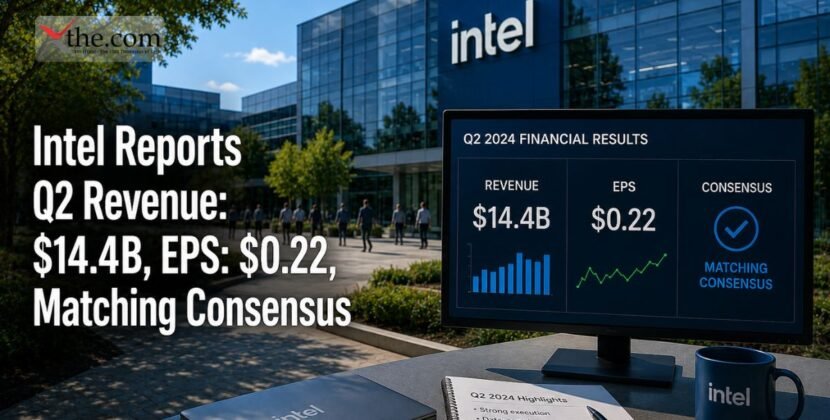
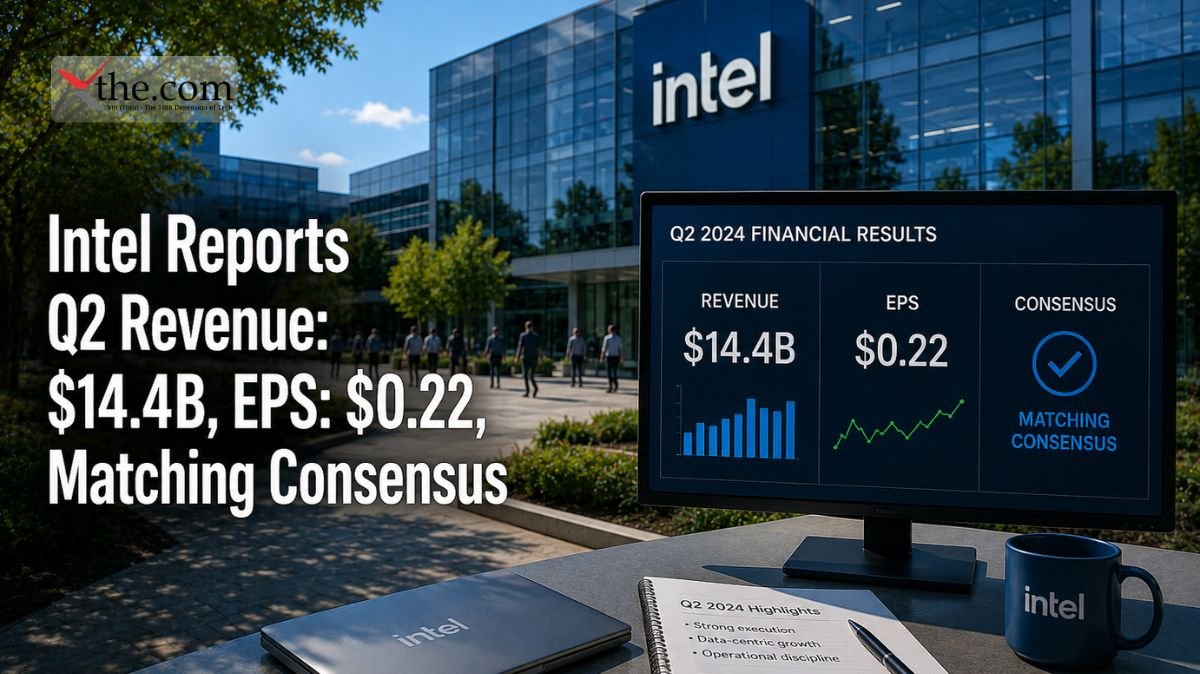
The Intel Q2 2026 earnings results, released July 23 by the company’s investor relations office, showed revenue of $16.1 billion, up 25% year over year, alongside non-GAAP earnings per share of $0.42. Heading into the print, consensus had called for Intel revenue of $14.4 billion and Intel EPS $0.22 — figures widely cited across trading desks and repeated in searches for “Intel Q2 earnings revenue $14.4 billion” in the days before the release. Intel didn’t just clear that bar. It beat the revenue consensus by roughly 12% and the profit consensus by nearly 94%.
Revenue and Profit Blow Past the Consensus Line
The size of Intel’s outperformance is more important than the headline numbers. While some companies quietly beat low expectations, Intel surpassed a target that had already been raised twice this year. CEO Lip-Bu Tan told investors that artificial intelligence is fueling strong demand for computing power, and the data supports this. Non-GAAP gross margin reached 41.8%, up over 12 percentage points from last year and about 280 basis points above management’s guidance.
That last figure deserves attention, because pre-earnings models had flagged real risk of an Intel gross margin below forecast, given the cost pressure tied to ramping new manufacturing capacity. Instead, margin expansion became one of the quarter’s clearest wins. Zinsner, Intel’s chief financial officer, attributed the strength to better factory utilization and improving yields across the company’s newest process node. This detail connects directly to the manufacturing story investors have been watching all year.
Data Center and Foundry Do the Heavy Lifting
Two main business areas drove most of the surprise. Data Center and AI Group revenue hit $6.3 billion, up 59% from last year, as large cloud companies and enterprise customers competed for server capacity that Intel still can’t fully meet. Client Computing and Physical AI revenue grew 13% to $8.9 billion, a steady but significant gain.
Intel Foundry, which is responsible for making chips for other companies as well as itself, reported $5.8 billion in revenue, up 31%. While this is less than the data center business, it is very important for the stock. For two years, investors have wondered if Intel’s foundry plans were serious. This quarter showed they are becoming real.
The 18A Node Finally Has Numbers to Match the Hype.
For much of 2026, Intel’s rally has rested on a narrative: that its next-generation 18A manufacturing process would work well enough, and cheaply enough, to win outside customers away from Taiwan-based rivals. Thursday’s results gave that narrative hard evidence. Management confirmed that the Intel 18A node yields 85 percent, up sharply from roughly 65% earlier this year — a jump that changes the economics of every chip built on the process.
Interest in “Intel 18A node yields 85 percent” surged before earnings, especially after news of a bigger AI partnership with a major cloud provider led to an 8.4% rally the Tuesday before the print. Thursday’s release formalized that arrangement. Executives described a confirmed Intel foundry cloud deal with a large customer, turning the 18A business from a discussion point into real revenue. Zinsner added that third-quarter yields are already ahead of the targets set in March, and that the next node, 14A, is still set for risk production in 2027.
A GAAP Deficit That Reads Worse Than It Is
Not all of Thursday’s numbers were positive. On a GAAP basis, Intel reported a net loss of $11.0 billion, or $2.16 per share, a headline figure that doesn’t reflect the business’s actual operations. The loss is almost entirely due to a $12.5 billion non-cash charge related to escrowed shares from Intel’s CHIPS Act deal with the U.S. government. Without that charge, GAAP operating income improved to $1.8 billion from a $3.2 billion loss last year. Non-GAAP net income, which leaves the escrow adjustment, was $2.2 billion, a clear turnaround from a loss in the same period last year.
If investors only look at the GAAP loss, they might miss the real story of the quarter. Operating cash flow was $7.0 billion, which shows a much stronger performance than the headline loss per share. This is the number management wants Wall Street to pay attention to.
What the Stock Does From Here
Intel shares had already risen sharply before the earnings report, closing at about $102.62 the day before and gaining over 170% so far this year. After-hours trading on Thursday pushed the stock up another 13%, though this was less dramatic than the 23.6% jump after the first-quarter results. Some analysts still see resistance around $108.32, a level the stock has approached but not yet broken through.
The management forecast shows that the momentum is likely to continue. Intel expects Q3 revenue between $15.8 billion and $16.8 billion, with non-GAAP EPS of $0.38 and a non-GAAP gross margin close to 42%. Capital spending is also increasing: Intel now plans to spend over $20 billion on capital projects in 2026, up from the previous $18 billion estimate, and expects to spend even more in 2027 as it tries to keep up with demand.
After spending much of the last three years apologizing for missed targets, Intel has now beaten its own guidance for seven straight quarters. The real question for the rest of 2026 isn’t whether Intel can deliver, but whether Wall Street’s estimates can keep up with a company that keeps proving them too cautious.
Source: Intel (INTC) Q2 2026 Earnings: What the Results Mean for the Stock