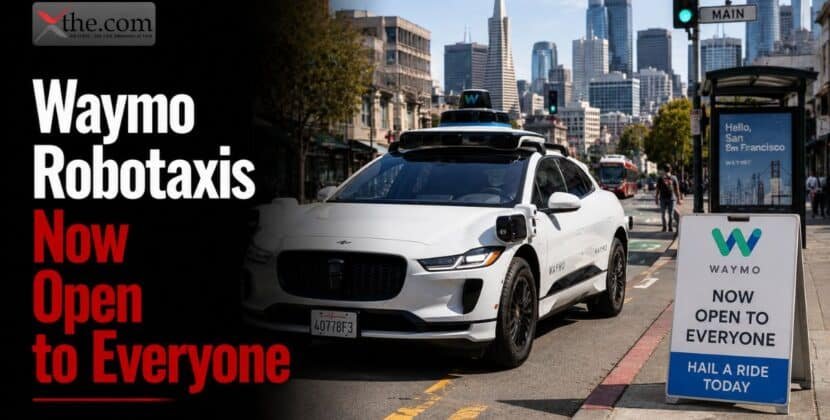




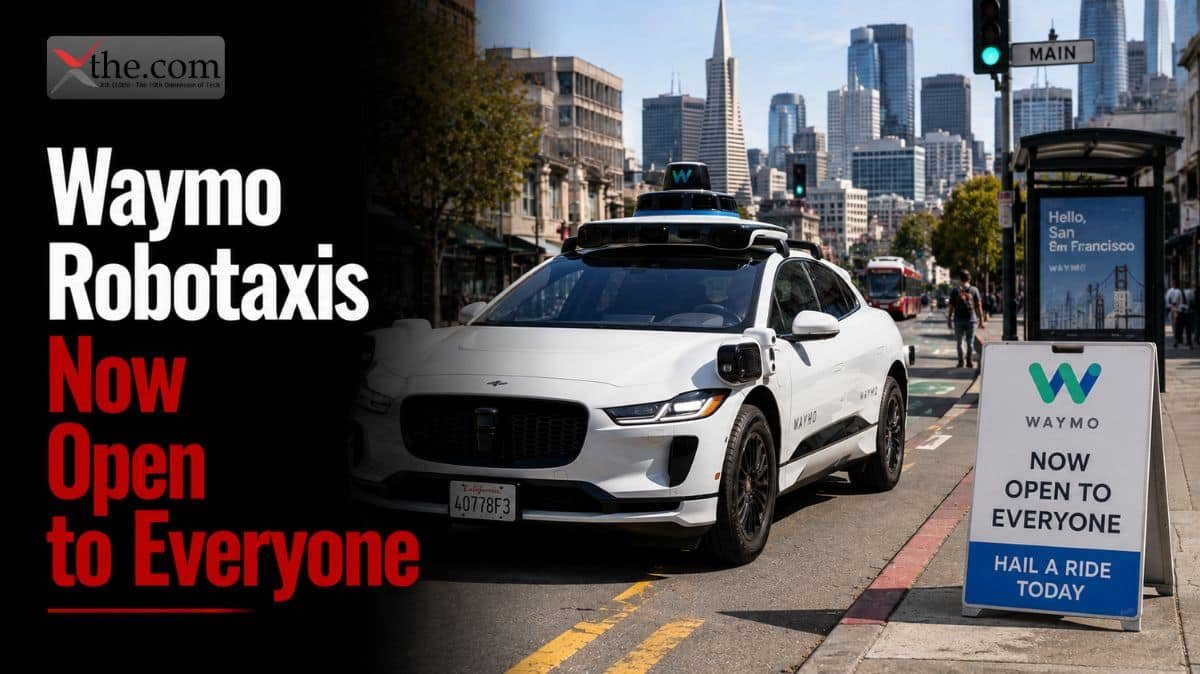
Waymo has opened its next-generation, lower-cost robotaxi service to all riders in three major cities, removing the waitlist requirement that previously limited access to a select group of early users. The expansion, announced in August 2026, marks a watershed moment in the race to make fully autonomous vehicles a mainstream transportation option in the United States.
The service, which operates entirely without a human driver, is now available to anyone with a smartphone in Phoenix, Arizona; San Francisco, California; and Los Angeles, California. Previously, riders had to join a waitlist and receive an invitation before they could use the service.
Which Cities Are Getting Access?
Waymo’s robotaxi service is now available to all riders — no waitlist, no invitation required — in three cities that represent different driving environments and challenges.
Phoenix, Arizona is Waymo’s longest-running market, where the company has been operating autonomous vehicles since 2020. The city’s wide streets, good weather, and relatively predictable traffic patterns make it an ideal testing ground. Waymo has completed millions of rides in the Phoenix metropolitan area.
San Francisco, California represents a more challenging environment. The city’s steep hills, fog, heavy pedestrian traffic, and complex intersections have tested Waymo’s technology extensively. The company has been operating in San Francisco since 2022 and has gradually expanded its service area to cover most of the city.
Los Angeles, California is the newest market to receive full public access. LA’s sprawling geography, heavy traffic, and diverse driving conditions make it the most complex environment Waymo has attempted. The company received permits to operate in LA in early 2026 and has been gradually expanding its coverage area.
What Is Different About the New Robotaxi?
Waymo’s next-generation vehicle represents a significant upgrade over previous models. The new robotaxi is built on a custom platform designed specifically for autonomous driving, rather than being a modified production car like earlier versions.
The key improvements include lower production costs, which Waymo says will allow it to offer rides at prices competitive with traditional ride-sharing services. The new vehicles also feature improved sensor arrays that perform better in rain, fog, and nighttime driving conditions.
Perhaps most importantly, the new robotaxi can handle highway driving in addition to city streets. Previous versions were limited to surface streets, which restricted the areas they could serve. Highway capability opens up entirely new use cases, including airport runs and longer suburban trips.
The vehicles also feature enhanced safety systems with multiple redundant layers for braking, steering, and perception. If one system fails, backup systems can safely bring the vehicle to a stop.
How to Use Waymo
Using Waymo’s robotaxi service is straightforward. First, download the Waymo One app from the App Store or Google Play Store. Second, create an account and verify your identity with a valid driver’s license. Third, set your pickup location on the map. Fourth, request a ride — you will see an estimated arrival time and fare before confirming.
When the vehicle arrives, it will pull up to your location and the doors will unlock automatically. Enter the vehicle, confirm your destination on the screen, and press the start button. The vehicle will then drive you to your destination without any human driver.
The experience is remarkably smooth. The vehicles accelerate, brake, and turn like a cautious human driver. They obey all traffic laws, maintain safe following distances, and yield to pedestrians. For passengers who are nervous about autonomous driving, the vehicles feature a help button that connects you to a remote Waymo agent who can assist in real time.
Cost Comparison
Waymo’s pricing is competitive with traditional ride-sharing services. A typical five-mile ride in Waymo costs between $12 and $15, compared to $15 to $22 for Uber or Lyft and $18 to 25 for a traditional taxi.
The cost advantage comes from the elimination of the human driver, which typically accounts for 60 to 70% of a ride-sharing fare. As Waymo scales its fleet and reduces vehicle costs, the company expects prices to decrease further.
Waymo also offers subscription plans for frequent riders. The Waymo Pass, priced at $99 per month, includes unlimited rides within a defined service area — making it an attractive option for daily commuters.
The Safety Record
Waymo has logged over 20 million autonomous miles on public roads across the United States. According to the company’s safety reports and independent analyses, its robotaxis have a significantly lower accident rate than human-driven vehicles.
A study by the Swiss Re insurance company found that Waymo’s autonomous vehicles were involved in 85% fewer property damage claims and 92% fewer bodily injury claims compared to human drivers. The study analyzed over 100,000 rides across multiple cities.
However, the technology is not perfect. Waymo has faced incidents including minor collisions, cases where the vehicle became confused by unusual road situations, and instances where the vehicle stopped unexpectedly in traffic. In 2025, the National Highway Traffic Safety Administration opened an investigation into a minor collision involving a Waymo vehicle and a child on a bicycle in San Francisco.
Waymo has responded to these incidents by improving its training data, updating its software, and implementing additional safety protocols. The company publishes regular safety reports and cooperates fully with regulatory investigations.
The Competition
Waymo is not alone in the race to deploy autonomous ride-sharing at scale. Several other companies are developing competing technologies.
Cruise, a subsidiary of General Motors, has been testing autonomous vehicles in several cities but has faced regulatory setbacks following a series of incidents in 2023. The company has significantly scaled back its operations and is focusing on rebuilding public trust.
Zoox, owned by Amazon, is developing a purpose-built autonomous vehicle that looks like a small pod. The company has not yet launched a commercial ride-sharing service but is conducting extensive testing in Las Vegas and San Francisco.
Tesla, despite its name recognition, is behind in the autonomous ride-sharing race. The company’s Full Self-Driving system still requires a human driver to supervise at all times, and Tesla has not received permits to operate a driverless ride-sharing service.
The Chinese company Baidu operates the largest autonomous ride-sharing fleet in the world through its Apollo Go service, but it is not yet available in the United States.
What This Means for the Future
Waymo’s expansion to full public access in three cities is a milestone that many industry observers did not expect to see so soon. The technology has matured to the point where fully autonomous vehicles can operate safely and reliably in complex urban environments.
The implications are enormous. If autonomous ride-sharing proves to be safe, affordable, and convenient, it could fundamentally change how Americans get around. Studies suggest that widespread adoption of autonomous ride-sharing could reduce traffic accidents by up to 90%, cut transportation costs by 40%, and free up millions of parking spaces in urban areas.
For now, Waymo’s service remains limited to three cities. But the company has plans to expand to 10 additional cities by the end of 2027, including Austin, Miami, and Chicago. If the expansion continues at this pace, autonomous ride-sharing could become a mainstream transportation option within the next five years.
Sources: