






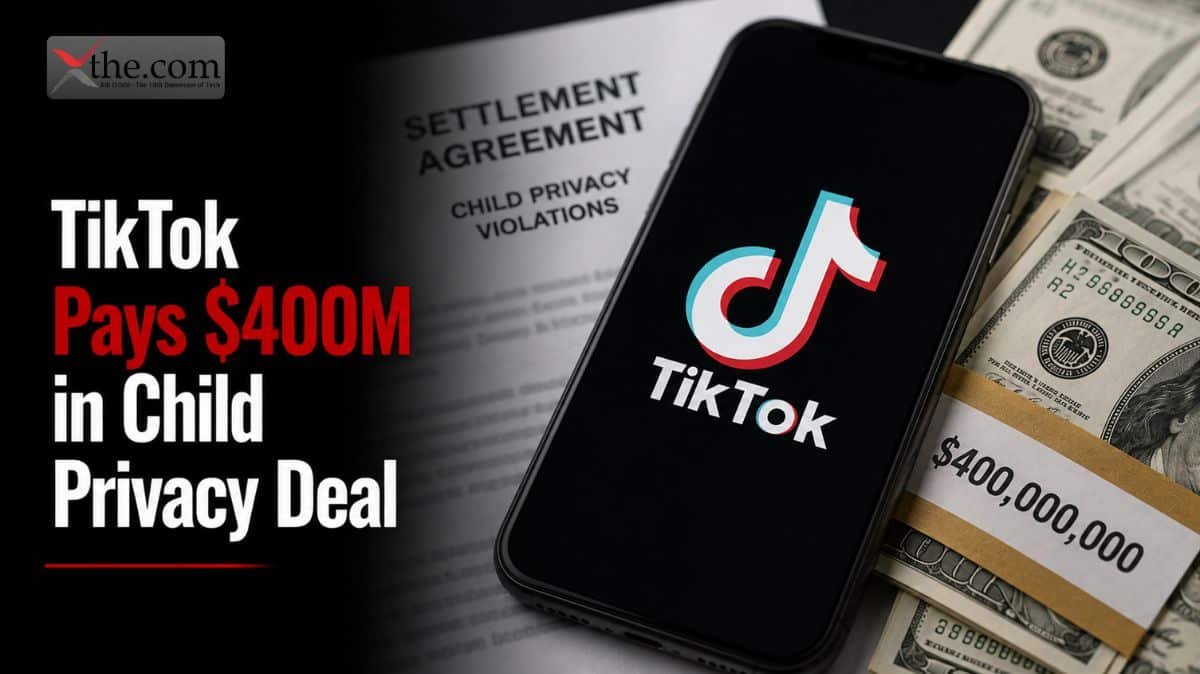
TikTok has agreed to pay $400 million to the United States government to settle a landmark lawsuit filed by the Department of Justice over child privacy violations. The settlement, announced on August 21, 2026, is one of the largest recoveries ever achieved under the Children’s Online Privacy Protection Act, commonly known as COPPA.
The lawsuit, originally filed in 2024, alleged that TikTok and its parent company ByteDance collected vast amounts of personal data on millions of American users under the age of 13 — without obtaining parental consent and in direct violation of federal law designed to protect children online.
What Exactly Happened?
According to the Department of Justice, TikTok allowed children as young as eight years old to create accounts on its platform. The company then consistently collected their personal information including full names, email addresses, phone numbers, precise geolocation data, and browsing habits. The DOJ further alleged that TikTok failed to properly delete children’s data even when parents submitted formal deletion requests.
The $400 million settlement dwarfs previous COPPA enforcement actions. For comparison, Google paid $170 million in 2019 for YouTube’s COPPA violations, and Epic Games paid $275 million in 2022 for Fortnite’s similar infractions. TikTok’s penalty is now the largest COPPA settlement in history.
Why This Case Is Different
What makes this case particularly significant is the scale of the violation. The FTC and DOJ allege that TikTok knowingly allowed millions of children to use the platform while collecting their data for targeted advertising purposes. Internal documents reportedly showed that TikTok employees were aware of the issue as early as 2019 but failed to implement adequate safeguards.
The lawsuit also highlighted TikTok’s algorithmic recommendation system, which allegedly kept children engaged for extended periods by serving them increasingly addictive content — a practice that has drawn criticism from child safety advocates worldwide.
What This Means for Parents
If your child has used TikTok, this settlement may directly affect you. The FTC and DOJ have indicated that affected families may be eligible for additional remedies through a formal claims process. Parents should take the following steps immediately:
First, review your children’s TikTok accounts and check what personal information has been collected. Second, enable the strictest privacy settings available on all social media apps your children use. Third, consider using TikTok’s restricted mode, which limits content exposure for younger users. Fourth, have an open conversation with your children about online safety and the importance of not sharing personal information.
The settlement also requires TikTok to implement stronger age-verification systems and to delete all data previously collected from users who were under 13 at the time of data collection.
TikTok’s Response
TikTok released a statement saying it has invested heavily in creating a safe experience for younger users and that it disagrees with the characterization in the lawsuit but believes this settlement is in the best interest of all parties. The company has since implemented additional age-verification measures, restricted data collection for users under 16, and introduced family pairing features that give parents more control over their children’s accounts.
However, child safety advocates argue that TikTok’s measures are insufficient and that the company’s business model fundamentally relies on collecting user data for advertising — making true compliance with COPPA nearly impossible without restructuring its entire platform.
Industry-Wide Impact
This settlement sends a clear message to every social media company operating in the United States: collecting data from children without explicit parental consent will result in massive financial penalties. Meta, YouTube, Snapchat, and Instagram have all faced similar scrutiny in recent years, and this TikTok settlement raises the stakes considerably.
The case also comes at a critical moment as Congress considers the Kids Online Safety Act, known as KOSA, which would impose even stricter requirements on platforms serving minors. If passed, KOSA would require social media companies to disable addictive features for minors, disable data collection by default, and provide parents with tools to monitor their children’s online activity.
What Happens Next
The settlement still requires final court approval, which is expected within the next 60 days. Once approved, the $400 million will be distributed to the U.S. Treasury, with a portion potentially allocated to affected families through a claims process that the FTC will administer.
Industry experts predict that this settlement will trigger a wave of similar enforcement actions against other platforms. The FTC has already signaled that it is investigating several other social media companies for similar COPPA violations.
Sources:








