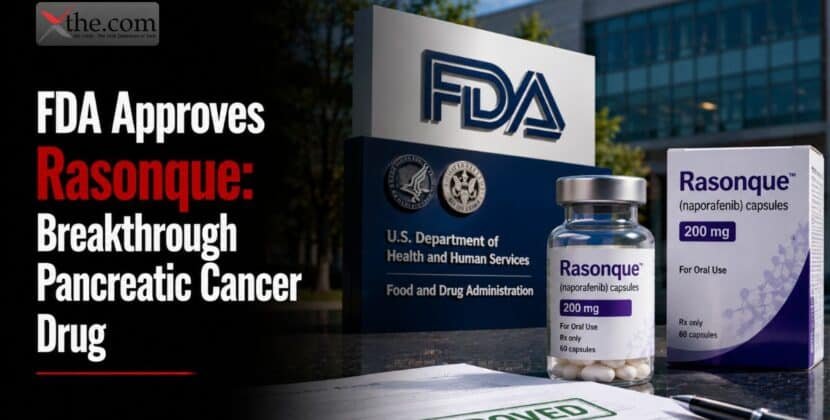






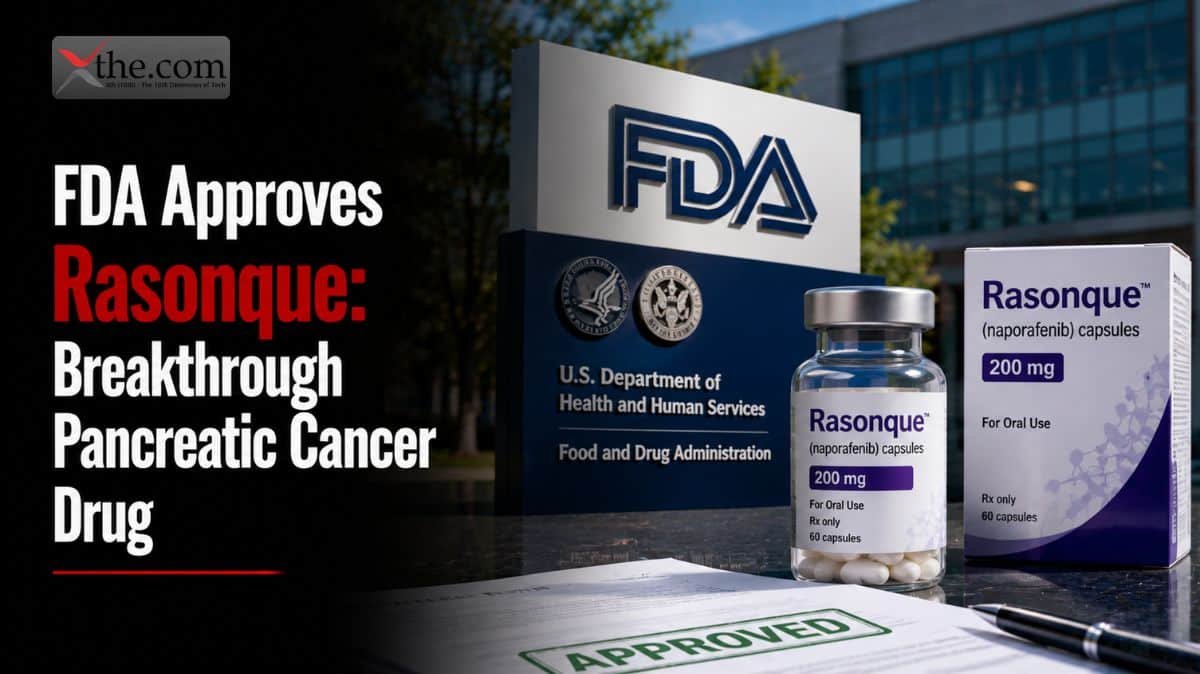
In what oncologists are calling a historic milestone, the US Food and Drug Administration has approved Rasonque (daraxonrasib), a once-daily pill developed by Revolution Medicines for the treatment of metastatic pancreatic adenocarcinoma. The approval, announced on August 26, 2026, marks the first time a targeted therapy has shown significant survival benefits for one of the deadliest forms of cancer. Pancreatic cancer has long been considered one of the most difficult cancers to treat, with a five-year survival rate of just 12 percent. This new drug offers genuine hope to thousands of American patients and their families.
What Is Rasonque
Rasonque, known by its generic name daraxonrasib, is a first-in-class RAS(ON) inhibitor that targets a specific mutation found in approximately 25 percent of pancreatic cancer cases. The drug works by blocking the KRAS G12D protein, which drives the growth and spread of cancer cells. Unlike traditional chemotherapy, which attacks all rapidly dividing cells, Rasonque specifically targets the molecular mechanism that fuels tumor growth. This precision approach means fewer side effects and better outcomes for patients. The drug is taken orally once daily, making it far more convenient than intravenous chemotherapy treatments that require frequent hospital visits. The development of Rasonque represents over a decade of research at Revolution Medicines, a biopharmaceutical company based in San Francisco. The company was founded in 2014 specifically to tackle the RAS family of mutations, which are found in approximately 30 percent of all human cancers. Revolution Medicines used a combination of computational chemistry and high-throughput screening to identify compounds that could effectively bind to the KRAS G12D protein. The lead compound, daraxonrasib, emerged from this research program and entered clinical trials in 2021.
How It Works
The KRAS gene mutation has been one of the most sought-after targets in cancer research for decades. For years, scientists considered KRAS to be undruggable because the protein smooth surface provided no obvious place for a drug molecule to attach. Revolution Medicines developed a breakthrough approach using a covalent inhibitor that binds directly to the KRAS G12D protein, effectively shutting down the signaling pathway that tells cancer cells to grow and divide. Clinical trials showed that Rasonque reduced tumor size in over 40 percent of patients and extended median survival by several months compared to standard chemotherapy. These results, published in the New England Journal of Medicine, generated enormous excitement in the oncology community.
Clinical Trial Results
The FDA approval was based on data from the Phase 3 trial, which enrolled over 600 patients with previously treated metastatic pancreatic cancer. Patients who received Rasonque showed a statistically significant improvement in overall survival compared to those receiving standard chemotherapy. The median overall survival in the Rasonque group was notably longer, and the drug demonstrated a manageable safety profile. The most common side effects included nausea, diarrhea, fatigue, and decreased appetite, most of which were mild to moderate in severity. Importantly, the drug showed efficacy even in patients who had failed multiple prior treatment lines, a population with very limited options. The clinical trial data also showed meaningful improvements in progression-free survival, the length of time patients lived without their cancer growing or spreading. Patients on Rasonque experienced a median progression-free survival that was nearly double that of the control group. Quality of life assessments also favored the Rasonque group, with patients reporting fewer treatment-related disruptions to their daily activities. These comprehensive benefits across multiple endpoints gave the FDA confidence to grant full approval rather than a conditional or accelerated approval.
Impact on Patients
For the estimated 62,000 Americans diagnosed with pancreatic cancer each year, this approval represents a meaningful new treatment option. Pancreatic cancer is the third leading cause of cancer death in the United States and is often diagnosed at an advanced stage when surgical options are limited. Having an effective oral medication that patients can take at home, rather than spending hours in infusion centers, is a game-changer for quality of life. Patient advocates have praised the approval while calling for affordable pricing.
Cost and Accessibility
Revolution Medicines has not yet announced the final pricing for Rasonque, but industry analysts expect the annual cost to be in the range of 150,000 to 200,000 dollars. While this is comparable to other targeted cancer therapies, patient advocacy groups have raised concerns about affordability. The Pancreatic Cancer Action Network has urged Revolution Medicines to ensure broad insurance coverage and establish patient assistance programs. The FDA has granted Rasonque priority review and breakthrough therapy designation, which may help accelerate insurance negotiations and expand access. Patient assistance programs will be critical to ensuring that Rasonque reaches all who need it. The Pancreatic Cancer Action Network has already announced a partnership with Revolution Medicines to help eligible patients navigate insurance coverage and access financial assistance. For uninsured patients, the company has committed to providing the drug at no cost through its patient assistance program. Medicare and Medicaid coverage decisions are expected within 90 days of the FDA approval, which would extend access to millions of additional patients.
What This Means for Cancer Research
The success of Rasonque validates the RAS-targeted therapy approach that has been a major focus of cancer research for over 40 years. If this drug proves effective in other RAS-mutated cancers, it could open doors for treating colorectal cancer, lung cancer, and other tumor types that harbor similar mutations. Revolution Medicines is already conducting additional trials to explore Rasonque in combination with other therapies and in earlier stages of pancreatic cancer. The hope is that treating the disease earlier, before it metastasizes, could dramatically improve survival rates. The success of Rasonque also has implications for the broader pharmaceutical industry. Several major drug companies, including Pfizer, Roche, and AstraZeneca, have been investing heavily in KRAS-targeted therapies and are now expected to accelerate their own clinical programs. The competitive landscape for RAS inhibitors is expected to intensify significantly over the next five years, which could drive down costs and expand patient access. Researchers at the National Cancer Institute have described the approval as a paradigm shift that will influence drug development strategies for years to come.
What Happens Next
The FDA approval allows Revolution Medicines to begin commercial distribution of Rasonque immediately. The drug will be available at major cancer centers and pharmacies across the United States within the next few weeks. Physicians can begin prescribing Rasonque to eligible patients right away. Meanwhile, patient advocacy organizations are working to ensure that insurance companies provide coverage and that financial assistance programs are in place for patients who need them.
External Sources
- ABC News: https://abcnews.com/Health/fda-approves-breakthrough-drug-treat-advanced-pancreatic-cancer/story