






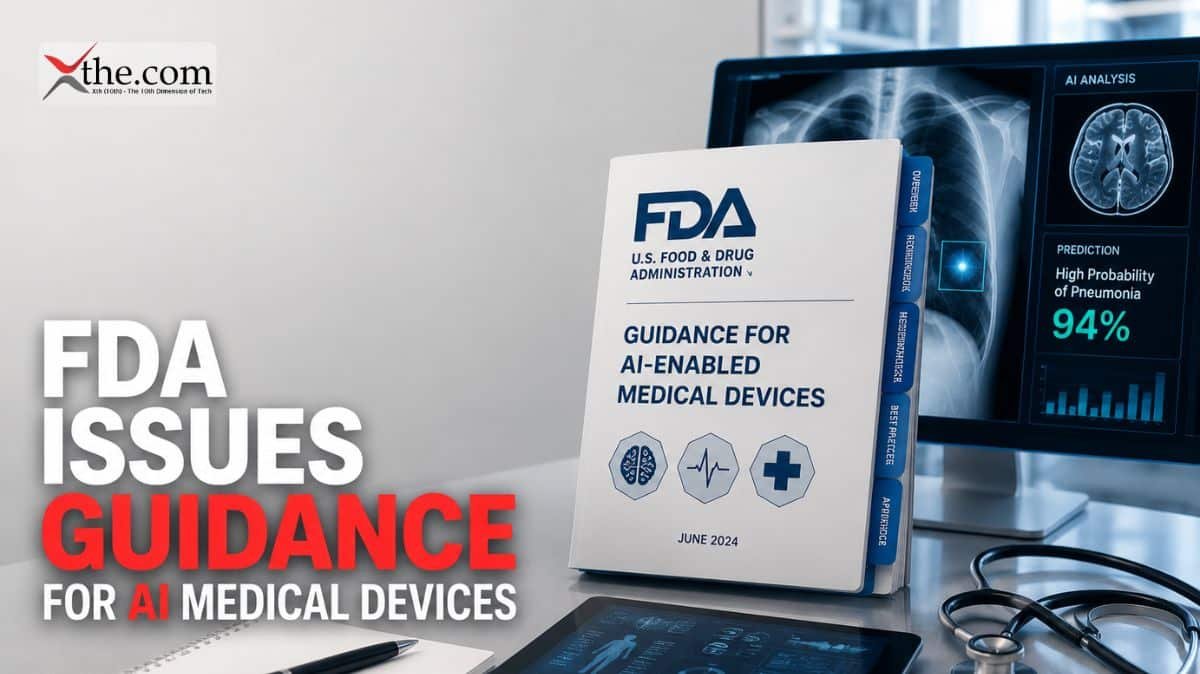
The United States Food and Drug Administration has published a landmark discussion paper on the regulation of generative artificial intelligence in medical devices, marking a significant step toward establishing a comprehensive framework for AI-powered healthcare technology. The paper, released on August 18, 2026, seeks public input on how to ensure patient safety while fostering innovation.
The FDA action comes as the use of AI in healthcare has exploded in recent years. The agency database now includes over 1,500 AI-enabled medical devices, with new approvals being granted at an accelerating pace. These devices range from diagnostic imaging systems that can detect cancers with superhuman accuracy to clinical decision support tools.
What the New Guidance Covers
The discussion paper addresses the unique challenges posed by generative AI, which differs from traditional AI systems in important ways. While conventional AI medical devices typically produce specific, predetermined outputs, generative AI systems can create novel responses, recommendations, or even medical content that was not explicitly programmed into the system.
This capability makes generative AI potentially more powerful but also more unpredictable. The FDA is concerned about scenarios where a generative AI system might produce incorrect medical advice, hallucinate patient information, or make recommendations that are not supported by clinical evidence.
The paper also addresses the issue of model drift, where AI systems gradually change their behavior over time as they process new data. Unlike traditional medical devices, AI systems can evolve in ways that may affect their safety and effectiveness.
The Current State of AI in Healthcare
AI-powered diagnostic tools are now being used in hospitals across the country to detect diseases earlier and more accurately than traditional methods. Radiology, where AI excels at analyzing medical images, has been particularly transformed by these technologies.
Beyond diagnostics, AI is being used to accelerate drug discovery, personalize treatment plans, and improve operational efficiency in healthcare facilities. The technology has shown particular promise in areas where large datasets and pattern recognition are critical.
However, the rapid adoption of AI in healthcare has also raised significant concerns. Studies have shown that some AI systems perform differently across demographic groups, potentially exacerbating existing health disparities. There are also concerns about data privacy.
Industry Response
The healthcare technology industry has largely welcomed the FDA guidance, viewing it as a necessary step toward establishing clear rules for AI development and deployment. Companies developing AI medical devices have expressed concern about regulatory uncertainty.
Major technology companies including Google, Microsoft, and Amazon have all invested heavily in healthcare AI and are closely monitoring the FDA regulatory approach. Startups focused on specific medical AI applications are also paying attention to the guidance.
The pharmaceutical industry is particularly interested in the FDA approach to AI in drug discovery and development. AI tools are being used to identify potential drug candidates, design clinical trials, and analyze patient data.
Patient Safety Concerns
At the heart of the FDA discussion paper is the fundamental question of patient safety. Generative AI systems have demonstrated the ability to produce convincing but incorrect medical information, a phenomenon known as hallucination. In a healthcare context, such errors could have serious consequences.
The FDA is particularly concerned about AI systems that are deployed in clinical settings without adequate validation. The agency guidance aims to establish more consistent standards for evaluating these products.
The discussion paper also addresses the challenge of monitoring AI devices after they have been approved. Traditional medical devices maintain consistent performance characteristics, making post-market surveillance relatively straightforward. AI systems, however, can change their behavior over time.
Global Implications
The FDA approach to regulating generative AI in medical devices will have implications beyond the United States. As the largest and most influential medical device regulatory agency in the world, the FDA decisions often set the standard for other countries.
The global nature of the healthcare AI industry means that companies developing these products must navigate multiple regulatory environments simultaneously. A clear and predictable FDA framework could reduce regulatory complexity.
What Happens Next
The FDA discussion paper is the beginning of a regulatory process, not the end. The agency is seeking public comment on the proposals outlined in the paper, and the feedback received will inform the development of formal guidance documents.
For healthcare providers and patients, the most important takeaway is that AI in medicine is here to stay, and the regulatory framework is evolving to keep pace with the technology. The FDA discussion paper represents a thoughtful and proactive approach to managing the risks and opportunities of generative AI in healthcare.
The tiered regulatory system would classify generative AI medical devices based on their potential risk to patients.
The discussion paper proposes new requirements for transparency and explainability in AI medical devices.
Training data quality is another major concern. Biased training data can lead to systematically inaccurate medical recommendations.
The FDA has approved more than 1,500 AI-enabled medical devices to date, with radiology accounting for the largest share.
International regulatory bodies are watching the FDA approach closely as it will influence how other countries develop their own frameworks.
The discussion paper represents a proactive approach to regulation that seeks to get ahead of the technology rather than reacting to problems.
The economic implications of AI regulation in healthcare are significant. Companies that demonstrate compliance will have a competitive advantage.
The role of real-world evidence in validating AI medical devices is an emerging area of regulatory science.
Patient trust is essential for successful adoption of AI in healthcare. The FDA guidance includes provisions for ensuring patients are informed about AI use.
The timeline for finalizing the FDA guidance is expected to span 12 to 18 months, with interim guidance documents potentially being issued sooner for specific categories of generative AI medical devices.
Healthcare institutions that are early adopters of AI technology will need to establish internal governance frameworks that align with the forthcoming FDA requirements, including processes for validating AI performance and monitoring for adverse events.
The intersection of AI and healthcare regulation represents one of the most important policy challenges of our time. Getting the balance right between fostering innovation and protecting patients will require sustained collaboration between regulators, industry, and the medical community.








