





Apple Cuts iPhone 18 Pro Production by Up to 20% as Demand Cools at Record Prices
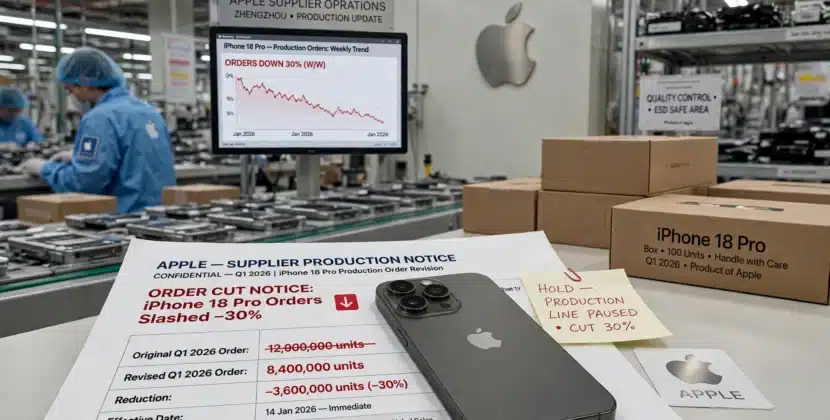
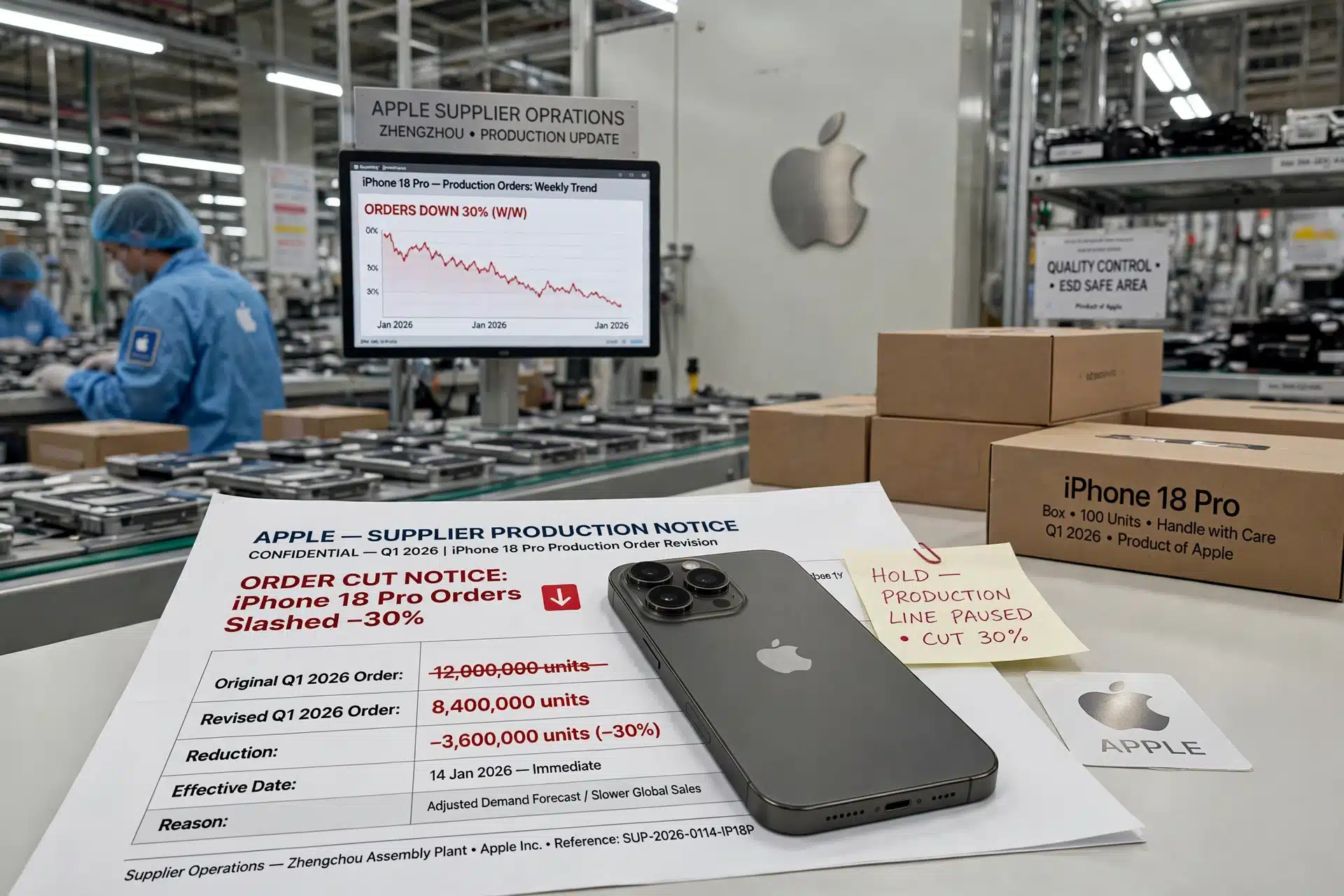
Apple has told suppliers to scale back production of components for its two most expensive new iPhones, according to a Nikkei Asia report published Friday, a sign that demand for the company’s flagship lineup is softening just weeks after launch. The report said Apple cut orders for October by 15 to 20 percent from the levels suppliers had initially been asked to fill, covering both the iPhone 18 Pro and the larger iPhone 18 Pro Max.
An executive level source told Nikkei that the order reductions apply to both premium models for October, and that it remains unclear how demand will evolve in the coming months. The same report noted that Apple has taken a more conservative posture on shipments since early September, well before the reporting period now being trimmed, which suggests the caution is a strategy rather than a reaction to a single weak week of sales.
The Numbers Behind the Cut
The scale of the reduction is meaningful. A 15 to 20 percent trim against initially requested component volumes is the difference between a launch quarter that meets expectations and one that overshoots into unsold inventory. Apple typically front loads production in the weeks after a September debut, then tunes volumes as preorder data and early sales arrive, so an October cut is one of the first hard signals about how the season is actually going.
Timing matters here. Apple unveiled the iPhone 18 Pro and iPhone 18 Pro Max on September 9 with starting prices of $1,199 and $1,299, which are $100 higher than their predecessors. Both models went on sale on September 18. The higher price tags partly reflect the ongoing memory chip shortage that has lifted component costs across the entire electronics industry, and they land in a year when consumers are already stretched.
The Stock Reaction
Apple shares fell 1.6 percent in early premarket trading on Friday following the report, to around $340, after closing Thursday at $340.42. That leaves the stock within touching distance of its record closing price of $341.07 set on September 25, and shares are still up about 25.6 percent for the year, so the pullback erases very little of the recent run.
Sentiment among retail traders turned bearish for a second straight day, according to Stocktwits data cited in coverage of the report, with Apple climbing to the number two spot on the platform’s trending list as investors weighed the possibility of a deeper selloff. Some traders argued the growth story looks tapped out while others called the stock priced for perfection with real execution risk. Professional analysts will get a fuller read when Apple issues its next quarterly report in the coming weeks.
Why Demand Is Cooling
Three forces are pulling in the same direction. The first is price: at $1,199 and $1,299, the Pro line now sits $100 above last year’s equivalents, and that gap is exactly the amount that pushes a marginal upgrader to keep a current phone another year. Surveys have consistently shown that consumers are holding iPhones longer, and a three figure price increase gives that habit a financial justification.
The second is memory. The memory chip shortage, driven by AI data centers absorbing enormous volumes of DRAM, has pushed component costs sharply higher, and Apple absorbed some of that into the sticker price rather than the margin. When memory alone can add tens of dollars to the cost of a device, even a company with Apple’s supply leverage faces a choice between raising prices and protecting demand.
The third force is Apple’s own launch strategy. The company staggered this year’s iPhone releases to make room for its first foldable device, the $1,999 iPhone Duo, which arrived in its own preorder window. Apple prioritized three premium models for the fall while postponing the standard iPhone 18 and the next generation iPhone Air until a spring launch. That leaves the expensive end of the lineup carrying the entire holiday quarter, which is precisely where demand is most sensitive to price.
What It Means for Shoppers
For buyers, a production cut cuts both ways. On one hand, softer demand usually argues for patience: carriers and retailers tend to deepen promotions when inventory is heavy, and trade in values on older iPhones typically firm up as Apple pushes them. On the other hand, Apple is famously reluctant to cut its own prices, so anyone waiting for an official discount on a Pro model may wait a long time.
The memory situation adds its own twist. Because memory costs are pushing up prices across the electronics aisle, shoppers who need a new laptop or phone this holiday season have been told for months to buy early rather than late. The Apple report does not change that logic, but it does suggest the premium tier is where the market is pushing back first.
How Suppliers Read a Cut
Component orders are the earliest readable signal in the consumer electronics supply chain, because they flow to display makers, chip foundries and connector suppliers weeks before any sales data exists. When Apple trims an order book, those suppliers can often shift capacity to other customers, but a cut concentrated on a flagship launch tends to ripple backward as reduced overtime and delayed hiring at factories that depend on the iPhone line for their autumn output. For investors, the practical takeaway is that order cuts usually precede formal guidance changes rather than follow them, which is why the report moved the stock before any comment from Apple.
What Comes Next
Nikkei’s reporting cited people familiar with the matter, and Apple has not publicly commented on production plans, as is its standard practice. The clearest confirmation will come from revenue figures at the next earnings report, where iPhone sales will be parsed against the company’s own guidance and against the supply chain chatter now circulating.
Watch two signals in particular. The first is whether the November component orders follow October down or stabilize, which would tell the market whether the cut was calibration or the start of a trend. The second is whether the spring delay of the standard iPhone 18 and iPhone Air moves, because if Apple pulls those launches forward, it would be a sign that the company needs mainstream priced models on shelves sooner to support the year.
Frequently Asked Questions
How much did Apple cut iPhone 18 Pro production?
Apple asked suppliers to cut October component orders for the iPhone 18 Pro and iPhone 18 Pro Max by 15 to 20 percent from the levels initially requested, according to Nikkei Asia, with the company taking a conservative posture on shipments since early September.
Why is iPhone 18 Pro demand slowing?
The Pro models launched at $1,199 and $1,299, which is $100 above their predecessors, at a moment when the memory chip shortage has raised component costs and consumers are stretching upgrade cycles. Apple also delayed its cheaper models to spring, leaving premium phones carrying the fall quarter.
Did Apple’s stock drop on the report?
Apple shares fell about 1.6 percent in early premarket trading on Friday to near $340, close to but below the record closing price of $341.07 from September 25. The stock remains up more than 25 percent for the year.
Will iPhone 18 Pro prices get cheaper?
Apple does not cut its own prices, though carrier promotions and trade in offers tend to deepen when demand is soft. Analysts will watch November production orders and the next earnings report for signs of whether the October cut was a one time adjustment.