





New Herpes Pill Hovilpri Wins FDA Approval for Patients With Weakened Immune Systems
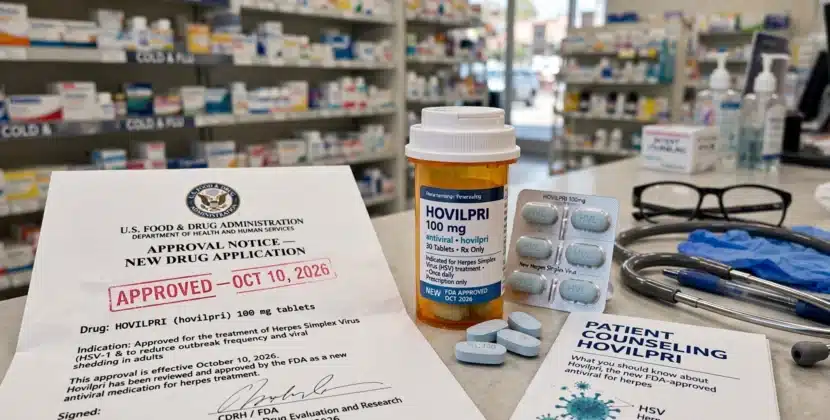
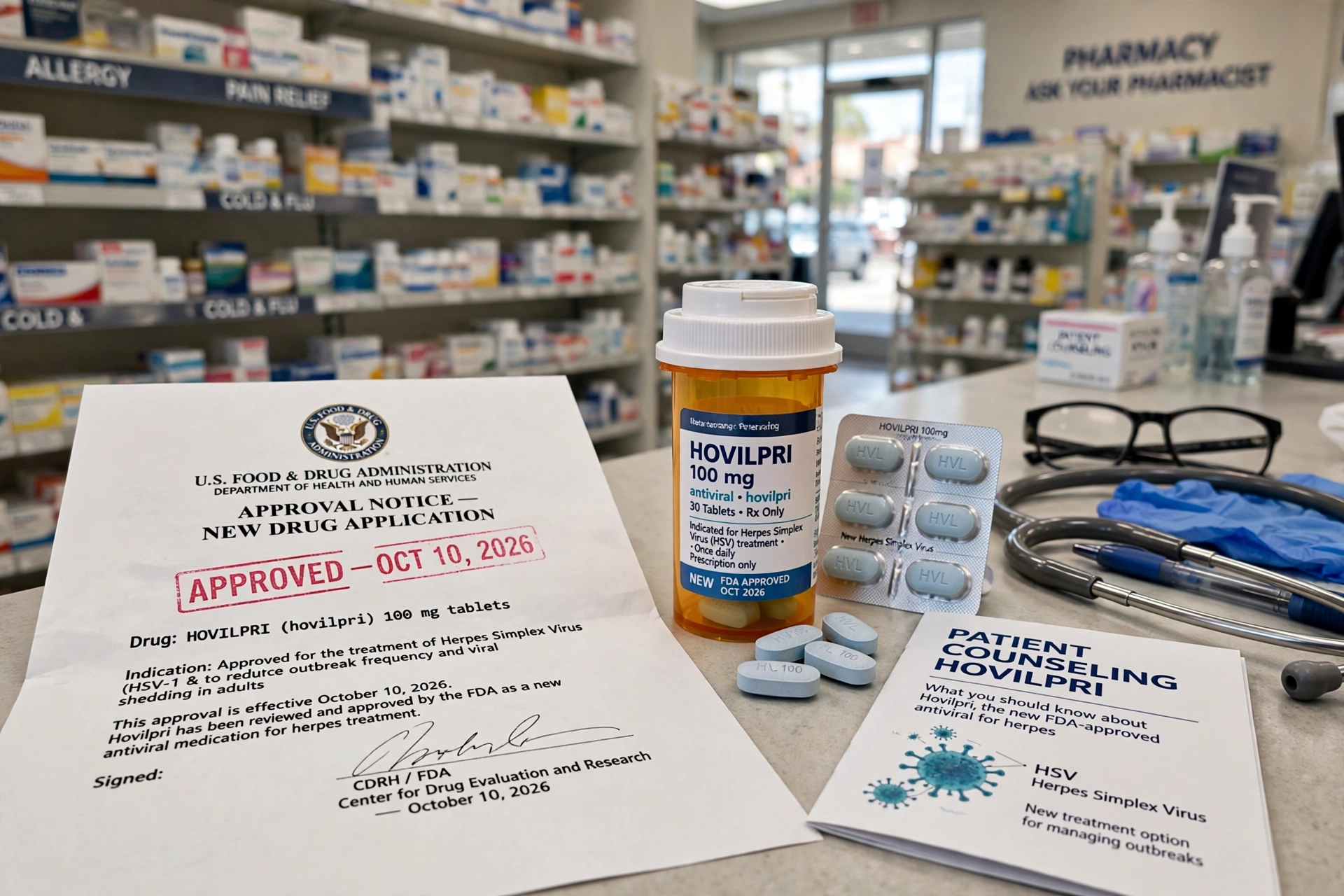
The Food and Drug Administration approved a new herpes treatment on October 9, clearing Hovilpri, known by its generic name pritelivir, for adults with weakened immune systems whose painful herpes simplex lesions did not respond to the medicines doctors have relied on for decades. The approval gives a specific and vulnerable group of patients a genuinely new option: people whose virus has grown resistant to standard antiviral drugs or who cannot tolerate them anymore.
The indication is deliberately narrow. Hovilpri tablets are approved for immunocompromised patients with mucocutaneous lesions caused by herpes simplex virus 1 or herpes simplex virus 2 after treatment with acyclovir, valacyclovir or famciclovir has failed. Mucocutaneous lesions are the fluid filled blisters that form on the skin and on mucosal surfaces, including the lips, nostrils, eyes and genitals, which then break open and crust over at the infectious site.
Who the Drug Is For
Herpes simplex is one of the most common viral infections in the world. Once a person acquires it, the infection cannot be cured. The virus can sit dormant between outbreaks or reactivate and shed contagious particles even when no symptoms are visible. For most healthy people, episodic treatment with familiar pills keeps outbreaks manageable.
Patients with compromised immune systems face a different reality. Their outbreaks tend to be more frequent and more severe, and they are more likely to carry virus that resists the drugs designed to stop it, or to suffer side effects that make those drugs hard to continue. The population covered by the new approval includes people with blood cancers or blood disorders, recipients of bone marrow and solid organ transplants, people living with HIV, patients on treatment for autoimmune and inflammatory diseases, and cancer patients whose immune systems are suppressed by therapy.
The Trial That Won Approval
The FDA based its decision on a Phase 3 study called PRIOH-1, Part C, registered under the number NCT03073967. It was a randomized, open label, comparator controlled trial designed to show superiority over existing care. A total of 101 immunocompromised adults who had not responded to acyclovir, valacyclovir or famciclovir were assigned either Hovilpri or the treating investigator’s choice among the available therapies.
Participants received their assigned treatment for up to 28 days until all mucocutaneous lesions healed, with the window extended to 42 days when lesions were improving but not fully healed at day 28. The primary measure was simple and concrete: the share of patients whose lesions had all healed by day 28. In that comparison, 63 percent of patients taking Hovilpri were fully healed, versus 34 percent of patients receiving one of the other available medications.
How It Works Differently
Pritelivir belongs to a class called helicase primase inhibitors, which attacks the virus at a different stage than the standard drugs. Acyclovir and its relatives are nucleoside analogues that interfere with viral DNA copying once replication is already under way. The helicase primase complex is part of the machinery the virus uses to unwind and prepare its genetic material before copying begins, so a drug aimed at that step can keep working against virus that has adapted to the older approach.
That difference matters most for the patients in this label, because resistance to acyclovir family drugs is exactly the problem their doctors are trying to solve. The FDA granted the application priority review, a designation reserved for treatments that offer major improvements over existing options for serious conditions.
Safety and What Doctors Will Watch
The most common adverse reaction reported with Hovilpri is headache. The prescribing information carries warnings about certain drug interactions, which means clinicians will need to review the full medication lists of patients who are often already managing complex regimens of immunosuppressants, chemotherapy or antiretrovirals. In a population where polypharmacy is the norm, that interaction review may shape real world use as much as the efficacy numbers do.
It is also worth noting the design of the trial. The study was open label, meaning participants and investigators knew which treatment was being given, and it compared Hovilpri against the investigator’s choice rather than a single fixed placebo. That structure is common in infectious disease trials where an approved standard of care already exists and withholding treatment would be unethical.
What Doctors Did Before This Approval
For years, the toolkit against resistant herpes in fragile patients has been painfully small. When acyclovir family drugs stopped working, clinicians typically turned to intravenous antivirals such as foscarnet and cidofovir, which must be given under medical supervision and carry their own risks including kidney toxicity, or they stretched and combined older oral drugs and hoped the virus stayed susceptible. Trials in this population have been hard to run because patient numbers are small and the underlying conditions vary so widely, which is part of why the approval rests on a study of 101 people rather than the thousands that are typical of new drug approvals.
Why This Approval Matters
Severe or drug resistant herpes in immunocompromised patients is not a cosmetic problem. Lesions involving the eyes can threaten vision, and HSV infections that spread beyond the skin can become medical emergencies, particularly for transplant recipients and patients with blood cancers. When first line antivirals fail, physicians have historically stretched doses of older drugs, switched among the few available alternatives or turned to intravenous therapy in hospital settings.
Having a purpose built oral option approved specifically for refractory disease changes that conversation. It gives infectious disease specialists, transplant teams and oncologists a labeled tool rather than an off protocol workaround, and the randomized comparison against the best available alternative gives insurers a clear evidentiary basis for coverage decisions.
What the Approval Does Not Mean
The label is intentionally limited, and patients without compromised immune systems should not expect to ask for it. Hovilpri is not approved for ordinary cold sores or typical recurrent genital herpes in healthy adults, and it is not a cure. Existing treatments remain the first line for the general population, and prevention counseling around transmission still applies. The FDA’s approval covers the refractory setting in immunocompromised patients only, based on the population studied in PRIOH-1.
Pricing and insurance coverage details for the new brand have not been outlined in the approval announcement, and patients in the affected group will likely need prior authorization from insurers who will want documentation that standard antivirals failed or were not tolerated.
Frequently Asked Questions
What did the FDA approve on October 9, 2026?
The FDA approved Hovilpri, whose generic name is pritelivir, as tablets for immunocompromised adults with mucocutaneous lesions caused by herpes simplex virus that did not respond to treatment with acyclovir, valacyclovir or famciclovir.
How effective was Hovilpri in the trial?
In the PRIOH-1 Phase 3 trial, 101 immunocompromised adults were randomly assigned to Hovilpri or the investigator’s choice of available treatments. By day 28, all lesions had healed in 63 percent of patients on Hovilpri compared with 34 percent on the other medicines.
Who is eligible for the new herpes drug?
Adults with weakened immune systems, including transplant recipients, patients with blood cancers, people living with HIV and those on immunosuppressive therapy, whose herpes lesions have not responded to or who cannot tolerate standard antiviral drugs.
Is Hovilpri a cure for herpes?
No. Like all existing herpes treatments, Hovilpri controls outbreaks rather than eliminating the virus, which remains latent in the body. The most common side effect is headache, and the prescribing information lists important drug interactions for clinicians to review.