



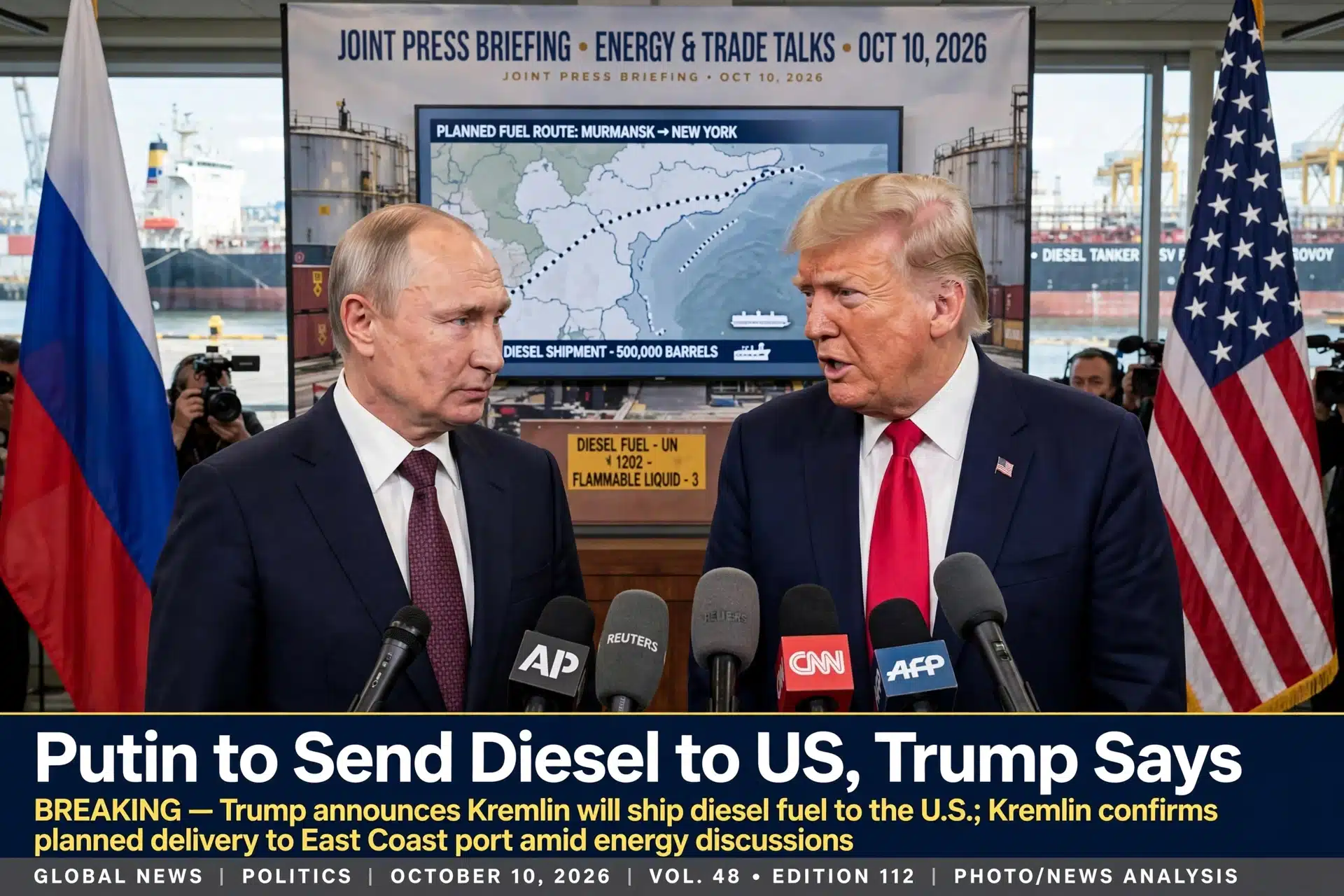
Trump’s Putin Diesel Deal: 4 Million Tons of Russian Fuel to Lower U.S. Prices
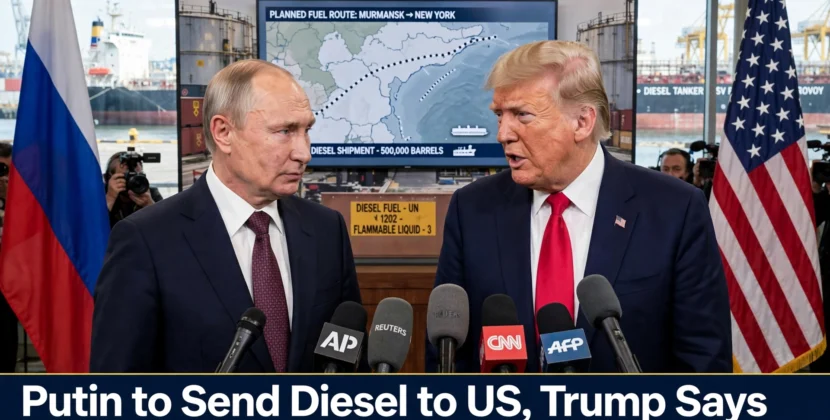
President Donald Trump announced Friday that he struck a deal with Russian President Vladimir Putin to supply more than 4 million tons of diesel to the global market, a dramatic policy reversal that suspends years of sanctions pressure on Moscow less than four weeks before the midterm elections. Trump said the agreement came together in a phone call with Putin and laid out the delivery schedule in a post on Truth Social.
Russia will immediately supply more than 300,000 tons of diesel, followed by 500,000 tons in November and 1 million tons immediately thereafter, Trump wrote. Moscow would then deliver another 3 million tons based on the condition of Russia’s refineries, a clause that ties the back half of the deal to infrastructure Ukraine has been attacking for more than a year.
The Sanctions Waiver Behind the Deal
The announcement came with paper attached. The Treasury Department issued a general license Friday that temporarily waives sanctions on Russian diesel through April 2027, the mechanism that makes the shipments legal for American buyers and financiers. The Wall Street Journal characterized the move as a policy shift that suspends some sanctions on Moscow, and NPR framed it as a relaxation of years of American pressure on Russia.
It is a remarkable turn. Washington spent years pushing Europe off Russian energy and organized a global price cap regime to starve the Kremlin of revenue from oil sales. Buying Russian diesel now, openly and with a license, inverts that posture in a single stroke, which is why the AP called it a stunning reversal even as the administration presented it as a consumer relief measure.
Why Fuel Prices Are So High
The political logic is rooted at the pump. The national average for gasoline has stood above $4 a gallon, according to NBC News tracking updated October 9, and diesel has set a string of records since the war with Iran began, including a high of $5.85 in early September that beat the previous record from June 2022, according to AAA data reported by The Hill. Diesel is the fuel that moves freight, so its price works through the cost of groceries, construction and delivery within weeks.
Two wars did the damage. Ukraine has pounded Russian refineries for months, which forced Moscow to ban diesel exports to the global market in the first place. Iran and its Houthi allies have attacked refineries in the Middle East, further constraining supply. The result is a world with less refining capacity than it needs, at precisely the moment demand is steady, and Trump has few unilateral tools to fix a shortage of physical refineries.
The Politics Before November 3
Republicans are feeling it in competitive races, including in conservative strongholds like Iowa, where farmers are watching diesel bills climb during harvest season. Trump tied the announcement directly to household costs, saying that bringing lower prices for Americans is his greatest priority, and the timing before the November 3 midterms was impossible to overlook.
The diesel deal is at least the third fuel intervention this month. Last month Trump flirted with a ban on American diesel exports, then relented after the oil industry and big business warned that a ban would simply choke supply and raise gasoline prices at home. Earlier this week he signed an executive order letting truckers use tax exempt offroad diesel on highways without federal penalties, though the order only defers the tax obligation, which left drivers wondering whether the bill arrives later.
Reaction From Kyiv and Beyond
Ukrainian President Volodymyr Zelenskyy condemned the deal immediately. Gifts to Putin will not bring peace or any benefit to the civilized world, he wrote, arguing that easing sanctions without a commitment from Russia to de escalate will only prolong the war. Russia will repay the diesel with further terror and perfidy, Zelenskyy added, calling the right to sell petroleum products an investment in a war that must be ended, not prolonged.
The criticism goes beyond the battlefield. Sanctions hawks in Congress have spent years arguing that energy revenue is the engine of the Russian war machine, and a Treasury license that legalizes diesel sales hands Moscow exactly that revenue stream. Administration officials counter that 4 million tons is a rounding error in global fuel trade compared with the price relief it could deliver to American consumers if shipments land on schedule.
Why Moscow Is Selling
The deal makes more sense from the Russian side of the table. Ukraine’s attacks on refineries have repeatedly knocked out processing plants and helped push Moscow to impose its own export ban, so Russia is sitting on distillate output it cannot fully place while it needs hard currency to keep its war economy running. A seller shut out of most markets and a buyer staring at record prices meet naturally in the middle, which is exactly the arrangement Zelenskyy warned amounts to an investment in a war that must be ended, not prolonged.
What It Means at the Pump
Analysts are measured about the immediate impact. Gregory Brew, an energy historian quoted by the Washington Post, estimated the Russian volumes amount to roughly 74,000 barrels a day in the short term, a helpful figure but a fraction of American diesel consumption, which runs near 4 million barrels a day. The first 300,000 tons move now, so any effect would show up in wholesale prices first and at retail stations gradually.
The schedule also carries contingency. The final 3 million tons depend on the condition of Russian refineries, the very facilities that have been under attack, so the deal’s biggest tranche is the least certain. Traders will also watch whether Washington quietly extends the license beyond April 2027, which would signal that this is a lasting realignment rather than an emergency patch.
For households, the practical question is whether diesel strength carries into winter, when distillate demand rises for heating oil and freight. A credible flow of Russian diesel into the global pool would soften prices on both sides of the Atlantic. If shipments slip, or if the Ukraine war intensifies after the election, the relief Trump is promising could prove as conditional as the clause attached to the last 3 million tons.
Frequently Asked Questions
How much diesel will Russia send to the United States?
Trump said Russia will supply more than 4 million tons in total: over 300,000 tons immediately, 500,000 tons in November, 1 million tons after that, and a further 3 million tons contingent on the condition of Russian refineries.
Is the Russian diesel deal legal under sanctions?
The Treasury Department issued a general license Friday that temporarily waives sanctions on Russian diesel through April 2027, making the purchases permissible for the duration of the license.
Will the deal lower gas and diesel prices?
Energy analysts estimate the initial volumes add about 74,000 barrels a day, which is helpful but modest against U.S. diesel demand near 4 million barrels a day. Prices depend on whether shipments arrive on schedule and on refinery conditions worldwide.
Why are fuel prices high right now?
Attacks on Russian and Middle Eastern refineries have cut global diesel supply, the war with Iran has pushed crude higher, and gasoline has averaged above $4 a gallon through the fall.