





Menlo Park, California.
Imagine landing at Rome’s Fiumicino Airport, getting into a cab, and receiving a street map printed only in Italian. There’s no smartphone signal and no time to type. When you look down, your glasses quietly get to work. Street names change from Italian to English, and arrows appear. You never need to touch your phone. This isn’t just a concept it’s the real interaction with the latest Ray-Ban Meta Glasses software. The technology behind it is more complex than most people realize.
How Ray-Ban Meta Glasses Became a Navigation Device
For most of their time on the market, Ray-Ban Meta Glasses were seen as lifestyle gadgets, a camera on your face, a speaker by your ear, and a stylish way to answer calls without using your phone. That view changed when Meta AI’s visual recognition feature was introduced.
This change happened gradually. In April 2024, Meta released a software update that let users take a photo of a sign and ask Meta AI to translate it into English. By December 2024, Live AI will be available in early access, allowing the glasses to continuously see what the wearer sees. By April 2025, real-time map translation wasn’t simply a test it became a feature for everyone, supporting English, Spanish, French, and Italian. When Ray-Ban Meta Gen 2 launched in September 2025, it added German and Portuguese, and users could download language packs for offline use.
The real change wasn’t just the number of languages. It was how the glasses process what you see in the real world.
The Mechanics of Real-Time Map Translation
Ray-Ban Meta Glasses uses a three-step process for instant map translation, and it works faster than most people expect.
First, the built-in camera, now upgraded to 3K resolution in Gen 2, constantly captures what you see during a Live AI session. Instead of taking a single photo, it continuously streams video. The glasses don’t wait for you to ask they’re always watching.
Second, the video stream goes to Meta AI’s processing system, which identifies words in the image, determines the language, and analyzes where the words are placed such as the position of words on a sign, the direction of arrows, or how a map legend is organized. This isn’t just regular text recognition. The system understands that layout gives meaning. For example, a word in the top-left corner of a transit map means something different than the same word in the middle of a route line.
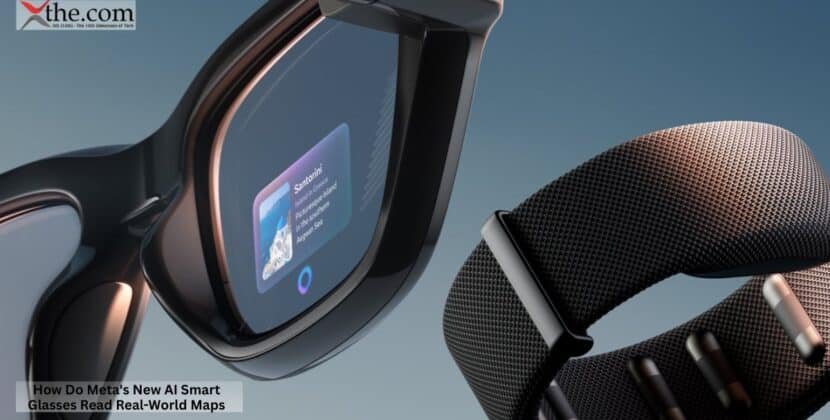
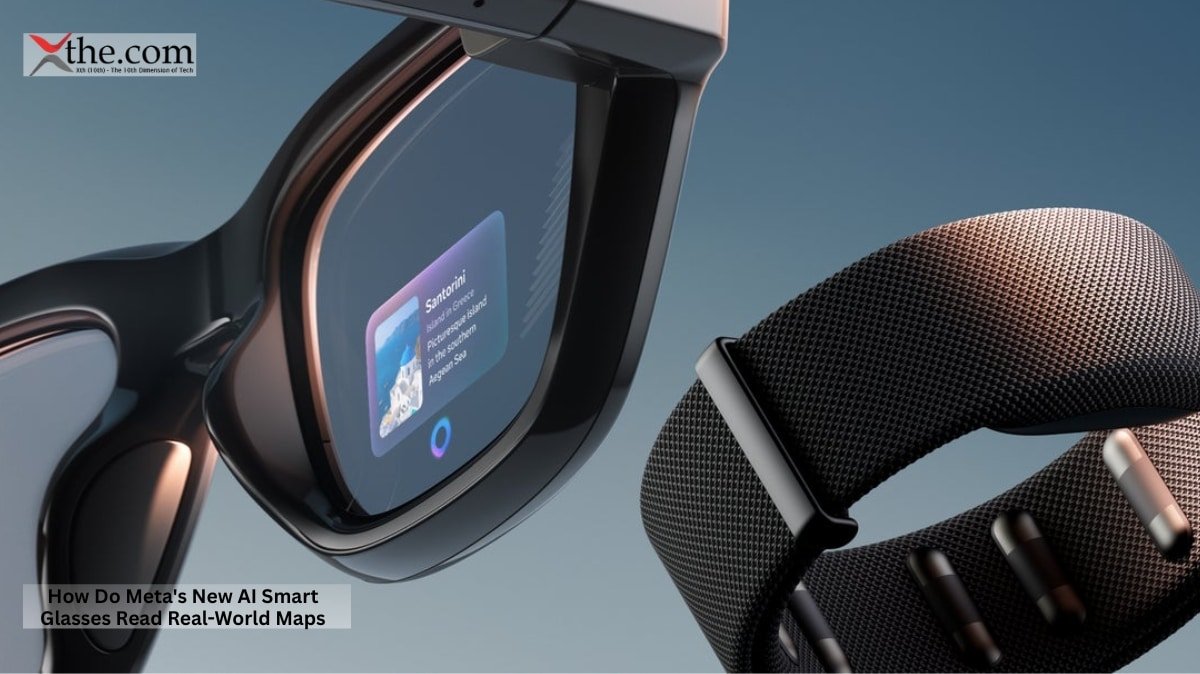
Third, and this is where the spatial overlay architecture matters, the translated output is routed back to the wearer without requiring them to look at a phone screen. On standard Gen 1 and Gen 2 models, translated speech plays through the glasses’ open-ear speakers and transcripts appear in the Meta AI app. On the Ray-Ban Display model, released for $799 in September 2025, translations appear as captions in the lower-right corner of the right lens, at 600×600 pixels with a 20-degree field of view. This lets the wearer read the translation right where they are already looking in the real world.
This is what spatial overlay means in practice: information is attached to the real world rather than removed from it. The lens doesn’t replace your view; it adds helpful notes to it.
Why Lag Was the Hard Problem
Earlier attempts at wearable real-time map translation all struggled with the same problem: lag. By the time the system took a picture, sent it to a server, processed and translated the text, and sent it back, the user had already moved on. Maybe they missed a street corner or a train door closed.
Meta’s engineers solved this in two ways. For tasks that require the cloud, they made the connection between the glasses and Meta AI’s servers faster, reducing delays during Live AI sessions. For offline situations, like airports with no signal or rural roads without data, users can download language packs so the glasses can translate locally. The Gen 2 model also has double the battery life eight hours instead of four, so longer navigation sessions are now possible.
The 123.1 firmware update, released in early 2026, improved real-time map translation by adding 14 more languages, including Hindi, Arabic, and Russian. Now, you don’t have to download language packs for these new languages. Processing is still slower for newer languages than for established ones like Spanish and French, but the intent is clear: the system aims to make all text in your view readable, regardless of the language.
Spatial Overlay Beyond Maps
Using maps is the clearest example of spatial overlay, but the system does much more. The same technology that reads a street sign in Florence can also read a restaurant menu in Tokyo, a prescription label in São Paulo, or a highway exit sign in Berlin.
The Ray-Ban Display’s in-lens caption feature, announced at Meta Connect 2025 by CEO Mark Zuckerberg, takes this idea further by working with spoken language. When someone speaks to you, captions appear in your lens, and the speaker doesn’t have to slow down or repeat themselves. Now, the spatial overlay isn’t just for text within your surroundings; it’s also linked to the person talking to you.
For business travelers in new cities, the advantages are evident. Executives working in different language markets reading contracts, checking signs, or using transit systems abroad no longer need a separate device, an open app, or extra time to focus. The Ray-Ban Meta glasses‘ real-time map translation update removes these hindrances, making everything easier on the go.
The Stakes for Wearable Computing
The Bank of America Institute predicted that over 10 million AI glasses would ship in 2025, but Omdia later estimated the real number was closer to 5 million, with 10 million likely in 2026. This gap is due to obstacles in adoption, not doubts about what technology can do.
The real-time map translation update for Ray-Ban Meta glasses is important because it helps close that gap. It gives everyday users a clear reason to wear glasses in places they might not have before, like a foreign city, an unfamiliar neighborhood, or when reading a document in another language.
The glasses aren’t a complete navigation system yet. They don’t show turn-by-turn directions on the street in front of you like a car’s head-up display. However, the technology they use text recognition, location awareness, and in-lens displays makes the feature possible from an engineering standpoint. The foundation is set, and what happens next depends on how quickly the technology improves.
When your glasses can read the world faster than you can check your phone, the phone starts to feel slow by comparison.
Source: Meta Newsroom