



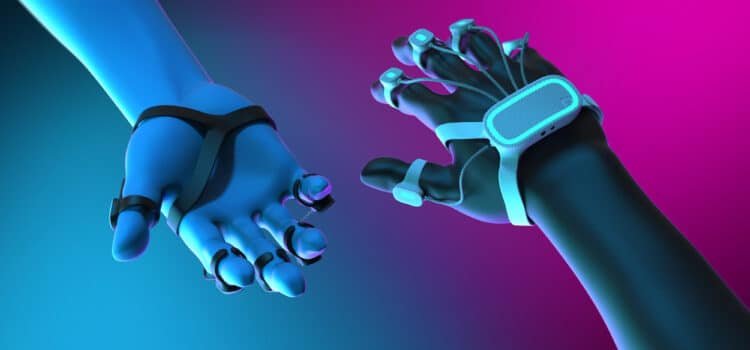
Amazon holds several patents for gesture-based control systems in devices such as drones, wearables, and home entertainment products. Technologies intend to make it easier to interact with machines using simple, touch-free movements.
Below are key details about Amazon’s gesture-control patents.
- Gesture-recognizing drones: Amazon’s drone system patent could make drone delivery easier by allowing users to interact with drones via gestures and voice commands. The drones’ ability to respond to human movement may help make deliveries safer and more user-friendly.
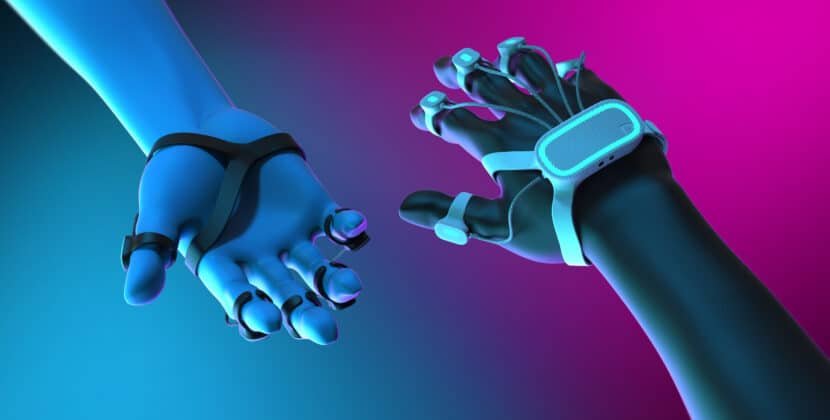
- Warehouse wristbands: The ultrasonic wristband patent aims to increase operational efficiency in Amazon warehouses by improving picking speed and accuracy. This patent is relevant to optimizing inventory management, thereby lowering costs and improving overall warehouse productivity.
- Child-appropriate interface selection: This patent helps ensure user safety by automatically adapting device interfaces for younger users based on hand size. It is relevant to digital well-being, providing age-appropriate experiences that protect and simplify children’s technology use.
- Media device control: This patent allows users to operate media devices using hand gestures for a more intuitive, remote-free experience. It is relevant as it could enhance accessibility and user interaction by reducing dependency on physical remotes.
These patents, reflecting Amazon’s innovation, were developed primarily by its Lab 126 division.
Building on its previous advancements, Amazon first impressed millions with Alexa’s intuitive capabilities. Now, the company’s latest project could let drones respond to human hand signals. Recently, Amazon was granted a new patent by the US Patent and Trademark Office (USPTO) for aid delivery.
Amazon aims to develop a fleet of unmanned aerial vehicles to deliver packages to customers in 30 minutes or less. The patent specifies that the drone can change its behavior in response to various gestures, such as a thumbs-up, shouting, or waving arms. According to the patent, the drone can release its package, alter its course to avoid obstacles, ask people questions, or cancel the delivery.
Giving Commands To The Machine
The patent includes several illustrations. In one, a person stands outside a home, waving their arms to show how someone might signal a drone. Overhead, a voice bubble from the man’s mouth suggests he is giving commands to the drone.
The human recipient and/or other humans can communicate with the vehicle using hand gestures to guide it along its path to the delivery location. The patent says
Another diagram shows the steps the drone would follow to read human body language during deliveries. Receive a human gesture, access the gesture database, and determine the human gesture based on the gesture database. Proceed in accordance with the determined human gesture and delivery instructions.
The drones’ communication system would use several sensors, including a depth sensor and cameras that detect visible, infrared, and ultraviolet light. The drones could recognize hand and body gestures, human voices, and movement, such as someone walking toward or away from the drone.
Other Devices Using Gestures to Control
Specifically, according to the patent, if drones are authorized to deliver, they can either drop packages with extra padding from the air or land and hand them over.
Since announcing its plans for air delivery, Amazon has filed several patent applications. These include giant airships that could act as flying warehouses and drones that self-destruct in emergencies. Amazon has not said when, or even if, the gesture-recognition drones will be available.
For example, Amazon made its first autonomous drone delivery to a customer in the United Kingdom in 2016. Additionally, the company is currently conducting a private customer training trial for drone delivery in Britain.
Source: Latest Amazon Patent Includes Gesture-Recognizing Drones