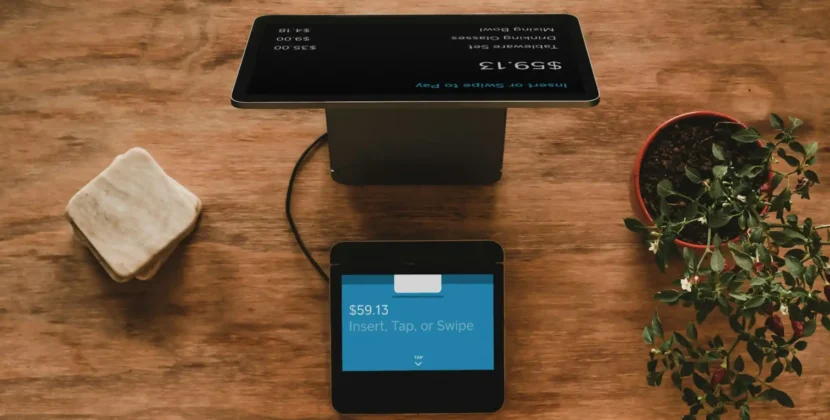





Retailers everywhere are quickly swapping out old counter POS systems for portable mobile-based sales tools thanks to advances in 5G, eSIM technology, and retail software. Everyday devices like phones and tablets now serve as fully functional POS systems.
Earlier, we explored the popularity of tablet POS. Nowadays, many retailers use smartphones for sales.
The iPhone is now among the most widely used POS systems, supported by many iOS sales apps. The mobile POS (mPOS) industry is changing in-person retail from stalls to chains.
Email receipts are replacing printed ones, and contactless payments now surpass cash. Likewise, mPOS systems show how wireless technology is changing shopping.
The Rise Of Mobile Point Of Sale (mPOS)
The 2018 iPhone XR enabled Apple Tap to Pay, allowing iPhones to function as full POS terminals for contactless payments.
Handheld POS systems, such as iPhones, offer numerous opportunities. However, these new formats introduce challenges that retailers must address to fully benefit from mPOS.
What To Look For In A New POS System
Whether new or established retailers should select an APOS system based on store type, desired customer experience, and location. Four key factors warrant contribution:
- Modern POS software manages sales, receipts, inventory, and staff timesheets in a single package. iPhones use many retail apps from the App Store, like Shopify and Square, and can add more for specialized needs. Some require external card readers; others work directly on the iPhone.
- Customer experience: the POS system is often the last point of contact with customers, so it strongly shapes their impression of your store and service. Apple POS systems are familiar and seen as a gold standard in consumer tech, which helps build trust during transactions. Because iPhones and iPads are portable, staff can complete sales anywhere in the store, reducing queuing time and making the experience more personal than with fixed terminals.
- Data migration is a major challenge when upgrading POS systems, especially preserving old transaction records. Cloud solutions like iOS POS prepare retailers for the future and ensure data transfer, cloud storage, and iCloud backups make switching easy. Providers like 1Global use remote SIM provisioning to quickly set up new iPhone POS systems, enabling teams to work efficiently.
- Connectivity: Every POS system needs a reliable, fast, and secure internet connection. Most fixed terminals with internet have replaced wireless devices using eSIMs. These devices, whether dedicated POS systems or iPhones, can connect to the internet and work anywhere with mobile data as more stores use eSIMs. In-store mobile connectivity has become a sensible option, especially with retail-focused services like 1Global SafeRetail.
Why Retailers Are Turning to Mobile POS
- Rapid Market Entry And Expansion
Many new retailers are surprised that consumer technology now matches the capabilities of dedicated point-of-sale hardware. This phenomenon is sometimes referred to as “disbelief mPoster syndrome”.
More retailers are adopting mobile POS, newer iPhone models, and fast wireless connections now offer the same features as traditional POS systems, all in a compact device.
Established brands with existing POS systems benefit from the low cost and quick setup of widely available iOS devices. According to WooCommerce, businesses can set up Tap to Pay on an iPhone in just two minutes.
The flexibility helps brands expand into new markets. It also provides a backup if devices are lost or damaged. The rise of pop-up shops and short-term retail is another benefit, as brands can test new formats and reach different customers without investing in permanent stores. Pop-ups help brands enter new markets and capitalize on seasonal events such as festivals, conventions, and trade fairs.
- Scalability
Retail is competitive. Brands need POS solutions that grow with them, using cloud-connected devices such as iPads or iPhones, and reduce IT and accounting costs. This makes it easier to expand and stay connected with regular updates.
For multinational chains, MPOS can use a simple global provider, such as 1Global, to support services worldwide. This eliminates complex contracts in each country and speeds device deployment. The resulting savings let brands offer better consumer prices.
IOS is familiar to developers. There are now hundreds of POS apps and services for retailers, many tailored to specific needs. Shopify and Zettle let merchants manage offline and online sales in a single app, reducing the need for extra hardware.
This is in contrast to the ring‑fenced world of fixed-line systems; unlike traditional POS systems, which are limited to a few companies, the open iOS platform enables retailers to create custom mPOS apps tailored to their exact needs, including on iPads. Retailers must purchase a separate NFC reader.
iPhone POS systems lower costs and reduce hardware needs. Any iPhone XR or newer can act as an NFC card reader without extra devices.
- Familiar UI and Faster Onboarding
Training staff on new POS systems takes time, especially for short-term seasonal roles. A familiar interface like iOS helps reduce building errors and shorten training time. iOS is the most popular smartphone OS in the USA. In self-checkout stores, a familiar user experience is very valuable.
Apple Tap to Pay
A key difference between iPad and iPhone POS systems is Apple Tap2Pay. With this feature, iPhones can accept contactless payments from cards or mobile wallets like Apple Pay, Samsung Pay, or Google Pay. No extra hardware is needed. iPads still require an external card reader for payments.
Tap2Pay works anywhere with a mobile internet connection when paired with a service like 1Global Safe Retail iPhone POS. Let’s vendors process transactions almost anywhere while staying secure. Tablet POS terminals already have lower setup costs than traditional systems, and mPOS options cut costs even further by eliminating the need for additional hardware.
Is an iPhone POS Secure?
Can a personal phone really match the security of dedicated sales hardware? Apple Tap to Pay offers the same merchant security as a traditional POS system. No card details are stored on the device. All transactions happen within Apple‑approved POS apps. They also meet the latest PCI standards.
Nonetheless, vendors and clients take additional steps to safeguard their own security and their customers’ information when using iPhones. The convenience of mPOS systems can make them a potential target for the future.
Another key step is to use a secure wireless data connection. This is especially important when processing transactions on the move. Avoid unknown Wi‑Fi networks. When traveling or running a temporary stall, use a secure mobile data service like Safe Retail from 1Global to keep all data safe and reliable.
How Mobile POS Improves the Customer Experience
Budget reduction efforts can sometimes hurt the customer experience. For example, while automated chatbots may save brands money at first, they can degrade customer care quality and erode trust over time.
MPOS systems stand out for lowering merchants’ costs and improving the customer experience. Long wait times hurt sales and drive customers away. mPos systems help in two main ways.
- Portability: employees can carry a pocket-sized iPhone and process transactions anywhere in the store. This removes the need for a fixed checkout, avoids bottlenecks during busy times, and lets staff offer a more personal experience, including payment.
iPhone and iPadOS systems with eSIM use mobile data, not just Wi‑Fi. This allows them to work anywhere with a mobile signal and lowers the chance of outages. Services like Safe Retail and 1Global automatically reconnect devices to the next network for smooth sales.
While mPOS still faces some challenges, the future looks bright for iOS retail. The latest iOS update, iOS 26 Real, reaffirms Apple’s commitment to eSIM connectivity by introducing several new eSIM features.
iPhone can’t yet process swipe cards, gift cards, or cash, nor print physical receipts. Still, as shopping becomes more digital, mPOS is expected to keep growing from small vendors to global chains. Handheld POS systems open new business opportunities and accelerate expansion. Possessing a reliable network provider like 1Global is key to building a sustainable retail model.
Source: How iPhones and Mobile Point of Sale systems are reshaping retail