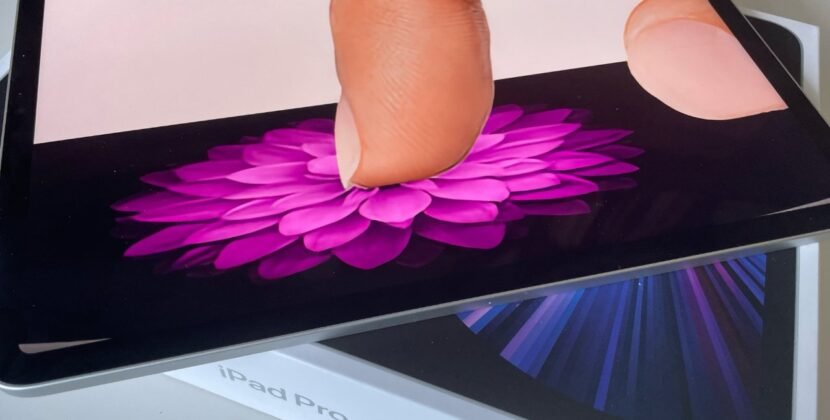





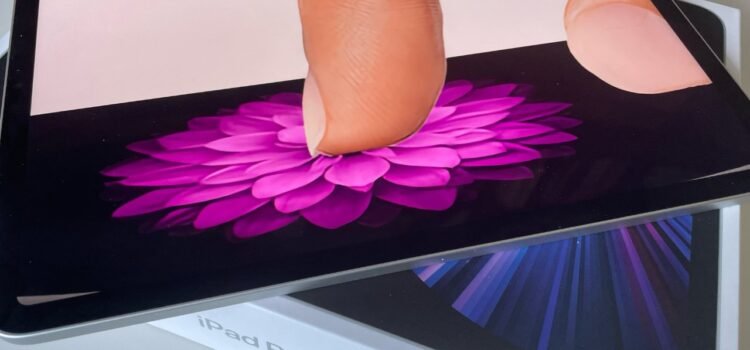
Apple holds patents for haptic display technology that enables users to feel virtual buttons, textures, and interface elements on touchscreens. These inventions address the lack of tactile feedback on flat screens with localized vibrations and shape-fitting displays.
Main features of Apple’s Haptic Play patents
- Instead of vibrating the entire device, Apple’s patent proposes a grid of piezoelectric actuators or electrodes beneath the display. These elements provide controlled tactile feedback at specific locations, enabling users to feel the outlines or boundaries of virtual buttons through local vibrations.
- The technology mimics material textures by altering friction or vibration frequency. As users move their fingers across the screen, they feel different surfaces.
- Dynamic surface deformation: patent 9600070 describes a user interface with changeable topography. In which electromechanical components push or pull on a flexible display to create 3D shapes. This can form raised buttons, scroll wheels, or ridges for fun navigation.
- Temperature control. The patents mention temperature-control devices such as Peltier devices to simulate material feel. Users could sense the metal’s coolness or the wood’s warmth, enhancing tactile realism.
- Force-sensitive input. The haptic layer works with force-sensing technology. So the display detects light versus firm touches and triggers different actions.
Possible Applications
- Enhanced accessibility. Users with visual impairments could feel UI elements like apps, sliders, and controls.
- Virtual keyboards simulate the feel of a mechanical keyboard on screen, improving typing speed and accuracy by providing key feedback.
- Gaming and UI design form distinct 3D shapes on the screen for game controls, tools, or sliders that change dynamically by app.
In summary, these patents demonstrate Apple’s sustained research into haptic technology, dating back from 2008 to 2012. They indicate a future where ritual interfaces might feel as real as physical buttons.
On March 22, Apple Insider reported that Apple had received a US patent for technology that allows dynamic shape and configuration changes in a portable device’s display to provide a tactile user experience.
Patent 9,600,070 lets user interfaces change shape, enabling devices to adapt physically to user needs.
The patent says an iPhone screen could use components under the display to push or pull a flexible surface, providing a different tactile experience.
Device shape modifications correspond to UI elements. For example, screen elevation changes can represent calculator buttons, map routes, or navigation arrows for media playback.
This technology enables the physical simulation of virtual objects, improving interaction and accessibility for visually impaired users and offering tactile control without requiring direct visual attention.
Shape transitions are achieved through a matrix of configurable nodes beneath the display. These nodes collectively form patterns and tactile cues that align with interface elements.
The patent describes several types of mechanical brakes, including electromechanical pistons, nickel-titanium alloys, and piezoelectric crystals. While piston brakes are easy and easier to manage. Materials that respond to heat, electricity, or magnetism can offer more exact control over or shape changes.
Actuated brakes physically alter the display dash by stretching, protruding, or deforming it. The effect depends on material properties and stimulus. This method results in bidirectional surface modifications.
Brakes can also induce kinking, rotation, or movement of the flexible display for further tangible UI transformations.
Devices integrate various brakes to modify dimensions (height, width, length), structures, textures, or layouts for rich, versatile surface changes.
The technology may also apply to components like MacBook touchpads or iPod touch displays, enabling 3D interface effects beyond virtual buttons.
The patent contemplates using larger displays and scaling tactile interface elements to achieve potentially pixel-level resolution with high responsiveness. One seal breaks for complex surface geometries.
Filed in 2008, this patent’s technology may not be imminent in production. Apple continues to advance user interface design.
Source: Apple Obtained The Patent Of Screen Deformation, Mobile Devices Provide True Haptic Feedback