Redmond, Washington
A stolen database is no longer the worst-case scenario in cloud security. The greater risk is in RAM. Attackers now focus on active workloads because most cloud systems briefly expose sensitive data during processing. Even milliseconds of visibility into system memory allow sophisticated intruders to attract and extract encryption keys, financial records, medical images, or defense intelligence from running servers.
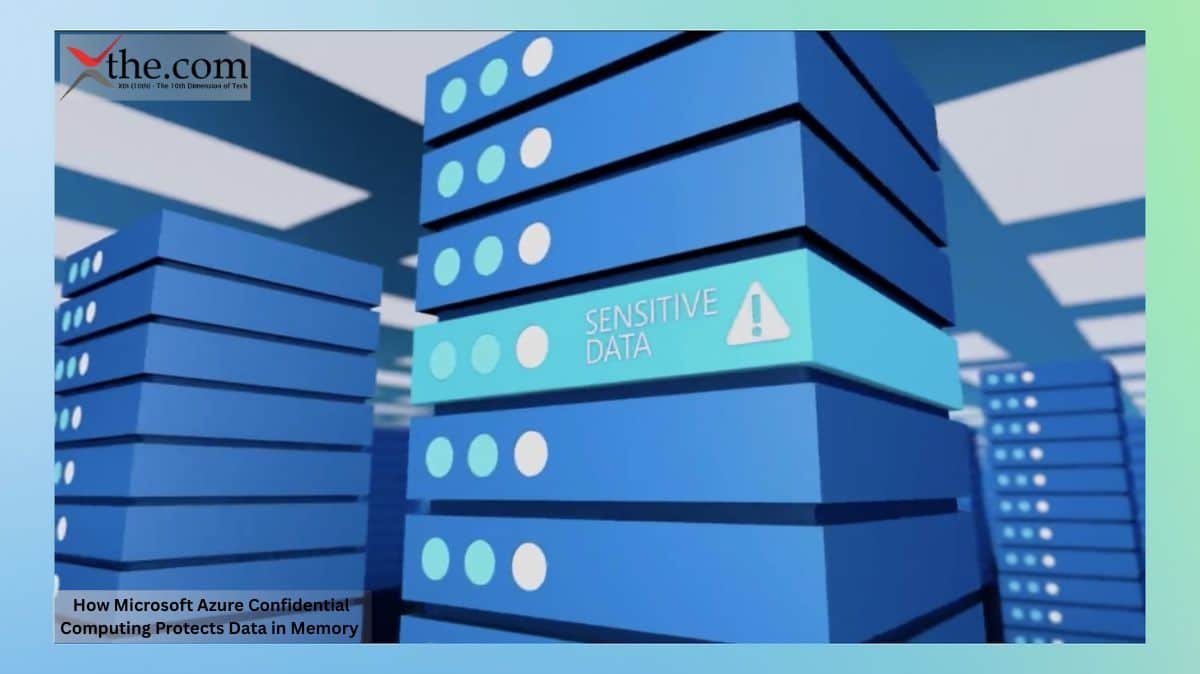
This exposure is central to Azure confidential computing. Microsoft’s latest architecture aims to eliminate the traditional window in which data in memory becomes readable during computation. Instead of decrypting information from a virtual machine, Microsoft processes workloads in hardware-protected environments that isolate data from the cloud administrators, hypervisor, malware, and certain operating system functions.
This technical shift is important because modern cyber attacks rarely target idle storage. Instead, they focus on execution.
Why Traditional Cloud Encryption Falls Short
Most enterprises already use strong enterprise encryption standards for stored files and network traffic. Healthcare providers encrypt patient records, and banks encrypt transaction traffic in transit. However, once a workload runs, this information is typically stored in plain text in memory for the processor to perform calculations, creating a significant attack surface.
Memory scraping attacks, speculative execution exploits, and prevalent insider threats all exploit this operational window. High‑profile vulnerabilities in the past decade have shown that attackers can extract cryptographic keys or sensitive workloads directly from processor memory without accessing the encrypted storage layer.
For organizations subject to federal compliance regulations, this risk is often unacceptable. Defense contractors handling classified simulations, financial institutions processing real-time trails, and healthcare networks analyzing image data cannot allow temporary exposure during computation.
Microsoft developed Azure confidential computing to address this gap.
How Secure Enclaves Change Cloud Security
The core of Microsoft’s architecture is secure enclaves. These enclaves are isolated execution environments embedded directly into supported Intel and AMD processors.
With these protected regions, workloads remain encrypted during execution, even if an attacker compromises the operating system, hypervisor, or administrator account. The end clerk prevents access to the protected computation area.
Microsoft provides processor‑level protections through attestation services that verify enclave integrity before workloads launch.
This model is consistent with modern zero‑trust cloud principles. No layer is automatically trusted, including the host operating system, infrastructure administrator, or Microsoft itself, during active processing.
The system relies on hardware isolation rather than relying solely on software permissions. Azure confidential workloads use silicon‑enforced memory boundaries to isolate execution. The processor encrypts enclave-protected memory regions using hardware‑generated keys inaccessible to external applications.
This approach is fundamentally different from conventional virtualization in standard cloud environments, where privileged system components often have memory visibility. In Microsoft’s enclaves‑based design, this observability is remote. Applications decrypt data only within the enclave during execution, and these operations are isolated from the wider infrastructure.
The Mechanics Behind Microsoft’s Enclave Encryption Model
Microsoft has expanded support for confidential virtual machines and enclave-enabled containers across Azure infrastructure. These systems use technologies such as AMD, SCV, hyphen, SNP, and Intel TDX to create encrypted execution perimeters around entire workloads.
The architecture of Microsoft Azure confidential computing enclave encryption models relies on several coordinated layers:
- Hardware routed, trust anchored inside the processor.
- Remote attestation services to validate workload authenticity.
- Encrypted memory segmentation is inaccessible outside the enclave.
- Secure key management is tied to verified clear states.
For example, a digital payments company performing real-time credit card fraud analysis would, under traditional infrastructure, have decrypted transaction streams that briefly reside in exposed memory during processing. With Azure Confidential Computing, the workload executes within a protected enclave, keeping memory pages cryptographically isolated from the surrounding environment and preventing exposure.
Even Microsoft administrators cannot access that active memory region.
This distinction significantly changes enterprise risk assessments.
Why Financial, Defense, and Healthcare Firms are paying attention
The highest demand for data in memory protection comes from industries that handle regulated or nationally sensitive information.
Financial funds
Increasingly, use confidential computing for fraud analytics and secure multi-party computation. Healthcare networks deploy enclave-based AI models to analyze patient imaging without exposing raw medical records to cloud operators. Defense contractors use isolated compute environments for simulation of workloads that involve controlled technical information.
The wider market trend shows increasing skepticism toward shared cloud infrastructure. Executives no longer assume that virtualization alone provides sufficient separation between tenants.
This shift explains why enterprise encryption strategies now go beyond disks and databases to include runtime protection layers.
For many CIOs, hardware isolation is now seen as the missing component in cloud security architecture. Traditional perimeter defenses cannot prevent attacks that target memory-level execution states.
The Future of Zero-Exposure Cloud Processing
Microsoft’s investment in zero-trust cloud infrastructure signals a wider industry transition. Cloud vendors are increasingly recognizing that encryption must persist continuously, not only when data is at rest or in transit, but also during active computation.
This evolution will likely reshape procurement standards across regulatory industries in the next five years. Enterprises evaluating cloud platforms increasingly ask whether providers can guarantee runtime confidentiality at the processor level.
The answer increasingly relies on confidential computing systems built around secure, endless, and silicon-enforced encryption boundaries.
For cloud providers, the challenge is no longer limited to safe data storage. It now includes proving that no additional confidential data is ever visible at any stage of execution, not even to the underlying infrastructure.
Source: Microsoft Source