




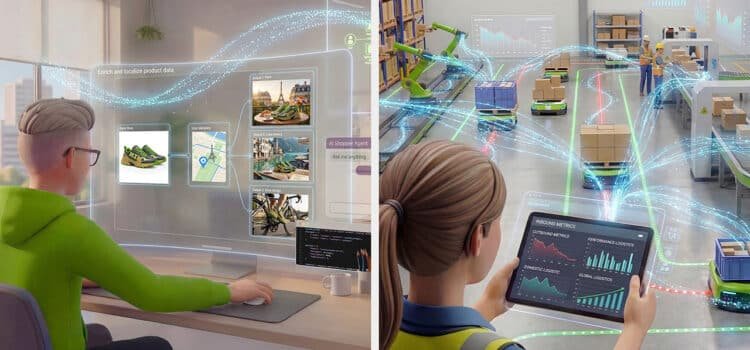
NVIDIA has received a new patent that sets a fresh standard for how distributed computing systems work together to solve complex problems. Released in April 2026, the patent describes a multi-agent coordination framework that manages many autonomous digital actors at work in a single environment, unlike older models that rely on a central controller to make every decision. NVIDIA’s system uses a decentralized approach: individual agents specialized software units that can think for themselves work together by negotiating, delegating, and synchronizing their actions in real time. This well-structured protocol for electronic collaboration addresses a major challenge in automation, enabling different systems to collaborate on complex tasks without constant human intervention.
The Mechanics Of Independent Delegation
At the heart of the patent is a special orchestration layer that acts as a first communication channel for autonomous agents. In traditional automation, scaling up often creates excessive instructional overhead, leaving the main processes bogged down by too many small decisions. NVIDIA’s framework addresses this by using a hierarchical task-decomposition model. When faced with a big boom, like running the logistics of a global shipping port, the system breaks it into smaller, feasible tasks. Specialized agents then build for these tasks based on their availability, access to local data, and the efficiency with which they can process them.
Delegation operates via incentive-based protocols. Each agent seeks to complete tasks efficiently with minimal resources. When two agents conflict, such as two self-driving vehicles needing the same charger, the system triggers rational negotiation. Agents exchange their priorities and deadlines, resolving issues in milliseconds. The process mirrors human collaboration but coordinates thousands of agents nearly instantly.
Runtime Synchronization and Environmental Mapping
An outstanding feature of the multi-agent system (MAS) is its capacity to maintain a shared world model in a changing environment such as a smart factory or an electric trading floor. Conditions change rapidly; for an organized effort to succeed, every agent must have access to the same current state of reality. The Nvidia patent describes a distributed ledger of states in which every significant change detected by one agent, whether a mechanical failure on a conveyor belt or a sudden change in market volatility, is instantly propagated to all other relevant agents in the cluster.
This synchronization ensures the group can pivot its strategy without waiting for a global refresh. If a scout agent in an autonomous search and rescue mission detects an obstacle, it doesn’t stop. It broadcasts the coordinates of the navigator and transport agent. The navigator immediately calculates a new path while the transport agent adjusts the speed to maintain the optimal formation. This level of collective intelligence allows the system to remain resilient in the face of uncertainty, as the failure of a single agent does not compromise the mission. The remaining agents simply re-evaluate the shared world model and redistribute the missing agents’ workload.
Securing Safety and Operation Guardrails
As digital systems become more capable of cooperating and making decisions independently, strong safety measures are more important than ever. The patent describes a special compliance and ethics layer that serves as a built-in set of rules for the group of agents. This layer keeps track of all negotiations and task assignments to ensure they remain within set statutory and safety limits. For example, if an agent proposes something that violates a key safety rule, such as a warehouse robot moving too fast near people, the compliance layer sends an immediate override command to stop the action while letting the rest of the system keep running.
The system also uses verifiable audit trails to record every decision made by agents, since all interactions are saved in a decentralized ledger. Human supervisors can review the data through a post-action analysis to see exactly why the system made certain choices. This level of transparency is especially important in disciplines such as healthcare, aviation, and finance, where tracking decisions is required by law. By keeping a clear record of the steps the system takes and recording video, this helps address the black-box problem in automation, ensuring these systems are both independent and easy for people to evaluate and understand.
Scaling the Architecture for Global Infrastructure
The patent’s long-term goal is to use this multi-agent system to oversee large-scale infrastructure worldwide. NVIDIA imagines a time when smart cities, energy networks, and supply chains are run by these connected digital agents. For example, in a smart city, traffic lights, public transit, emergency services, and energy providers would work together to keep everything operating efficiently. During busy times, traffic agents could prioritize buses while energy agents direct power to charging stations, all without human involvement. This kind of systemic orchestration is the main aim of Nvidia’s 2026 digital roadmap: a world that functions smoothly and efficiently.
The Crystalline Pulse Of Coordinated Logic
As we remain at the threshold of this new era in distributed intelligence, we are witnessing a quiet structural transformation. We are entering a new era in which our relationship with technology is quietly changing. Machines are starting to communicate with each other, moving from isolated commands to working together with a mutual objective. Soon, machines may not need to be told how to cooperate; they will form a kind of digital community, noticing problems and solving them on their own. Team terms like ‘manual updates’ or ‘manual movement involvement’ could become outdated as our tools learn to work together more smoothly. One day, we might walk through our cities and notice how calm and efficient everything feels, knowing that reliable, tireless logic is maintaining everything running in harmony.