






OMB Memorandum M-25-03, Implementation Guidance for the Federal Data Center Enforcement Act, was released on January 14, 2025. It gives federal agencies, including the Department of Energy (DOE), direction on improving the reliability, security, and resiliency of data centers.
Below are the main points about OMB Memorandum M-25-03:
- Purpose: To put the Federal Data Center Enhancement Act (FDCEA) of 2023 into action, replacing the earlier Data Center Optimization Initiative (DCOI).
- The memorandum tells agencies to go beyond consolidating data centers and focus on cybersecurity, resiliency, availability, and environmental impact (such as energy and water use).
Key Requirements:
- Centralized management: Agencies need to put data center acquisitions and management under their Chief Information Officer (CIO).
- Sustainability: Agencies should review how much energy and water their data centers use and consider efficiency when designing or upgrading facilities.
- Security: Agencies are required to follow Interagency Security Committee (ISC) standards for physical security and FISMA rules for information security.
Application & Timeline: The Policy covers both Agency Run and Contract Run Data Centers, but some Cloud Services are excluded. New Data Centers must meet these requirements within one year of the Memorandum’s release by January 14.
The rules in this memorandum will end on September 30, 2026.
Related DOE actions (for February 2026 and 2025):
In February 2026, the DOE is working on procurement, including a class deviation (PF 2026-03) on a revolutionary FAR overhaul to improve acquisition processes.
- AI is still the main factor shaping data industry trends in 2026.
- The industry is growing faster, but power, water, and land are becoming harder to secure.
- Efforts to improve sustainability are increasing as the environmental impact of data centers grows.
- Efficiency is now measured by more than just PUE, with greater attention to the amount of computing power delivered per unit of energy.
- Edge and modular data centers are becoming more common to handle the demands of AI workloads.
- Cooling strategies are moving towards liquid cooling using AI to manage temperatures and reusing heat.
No matter how long you’ve worked in data centers, you’ve likely noticed how quickly things change as we get ready for another year of progress. Let’s look at the latest technology trends and new priorities that will shape data centers in 2026.
AI Is Still The Driving Force Forming The Data Center Industry
Last year, we called AI the most disruptive force in the data center industry. That prediction came true as AI affected nearly every part of the data center, increasing performance demands and putting more pressure on energy efficiency, IT systems, and cooling.
In 2026, the pace will only speed up the trends we see now. They build directly on last year, but with more focus and bigger challenges. Leading data centers won’t just have the most equipment; they will have the smartest, most efficient, and sustainable setups created for large-scale AI.
The growth of AI infrastructure raises three important questions for the year ahead:
What macro trends are shaping data center operations in 2026?
Which deployment models are gaining ground to support AI growth?
How far has cooling technology advanced to meet AI-driven thermal demands?
How Must Cooling Adapt: 3 Key Data Center Cooling Trends
The rise of AI is prompting data center operators to rethink how they cool their facilities, especially since cooling already accounts for about 40% of total energy use. The cooling innovations that began in 2025 will continue to advance in 2026, with operators focusing more on scalable, efficient, and sustainable solutions.
Here are three of the latest trends in data center cooling technologies:
Liquid Cooling Becomes Mainstream
Liquid cooling meets almost all the cooling needs of AI data centers. It transfers heat better, making it more effective for high-density GPU workloads, and usually uses less energy than air cooling. This helps with sustainability and lowers costs.
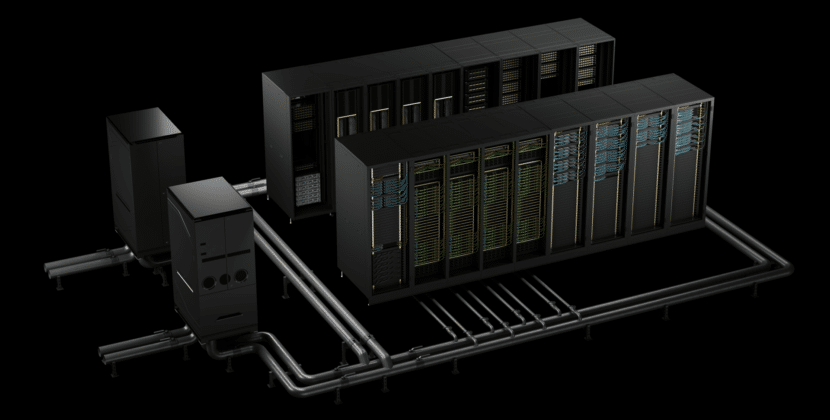
Because of these benefits, liquid cooling must become much more common in 2026. This includes direct-to-chip cooling, immersion cooling, and CDU-based systems that efficiently distribute coolant at a large scale.
AI Steps In To Cool AI
Traditional cooling methods can’t keep up with the heat produced by AI environments. However, using AI to manage cooling is changing the landscape, and more AI-focused data centers are emerging in 2026.
Cooling systems that use AI can constantly monitor workloads and automatically adjust cooling as needed. This makes cooling flexible so it fits the real thermal needs of AI computing, leading to:
- Reduced energy waste.
- Higher overall efficiency.
- Less need for on-site intervention.
- Proactive maintenance enabled by predictive analytics.
- Extended system longevity.
Heat Recovery Becomes A Strategic Priority
With sustainability now a key performance indicator, heat reuse is becoming a practical way to lower environmental impact rather than releasing waste heat into the air. Most operators are capturing it and using it for district heating, agriculture, industrial processes, and heating nearby buildings.
By 2026, more AI data centers will likely include heat recovery systems in their new facilities when paired with liquid cooling. This makes it easier to capture heat. This approach helps cut emissions, improve ESG performance, and turns AI computing waste heat into something useful.
Strengthen Your Cooling Strategy For 2026
Today, AI is changing every part of the data center, and its influence on the industry will continue to grow. This means operators will need to adapt even faster to stay ahead.
As these trends change, the data center industry is leading the way in cooling innovation. Our solutions are designed for high-density AI-powered environments. Check out our PowerOne products for HPC data centers and contractors to see how we can help with your cooling plans for 2026 and beyond.
Source: Data Center Trends & Cooling Strategies to Watch in 2026