






San Jose, California
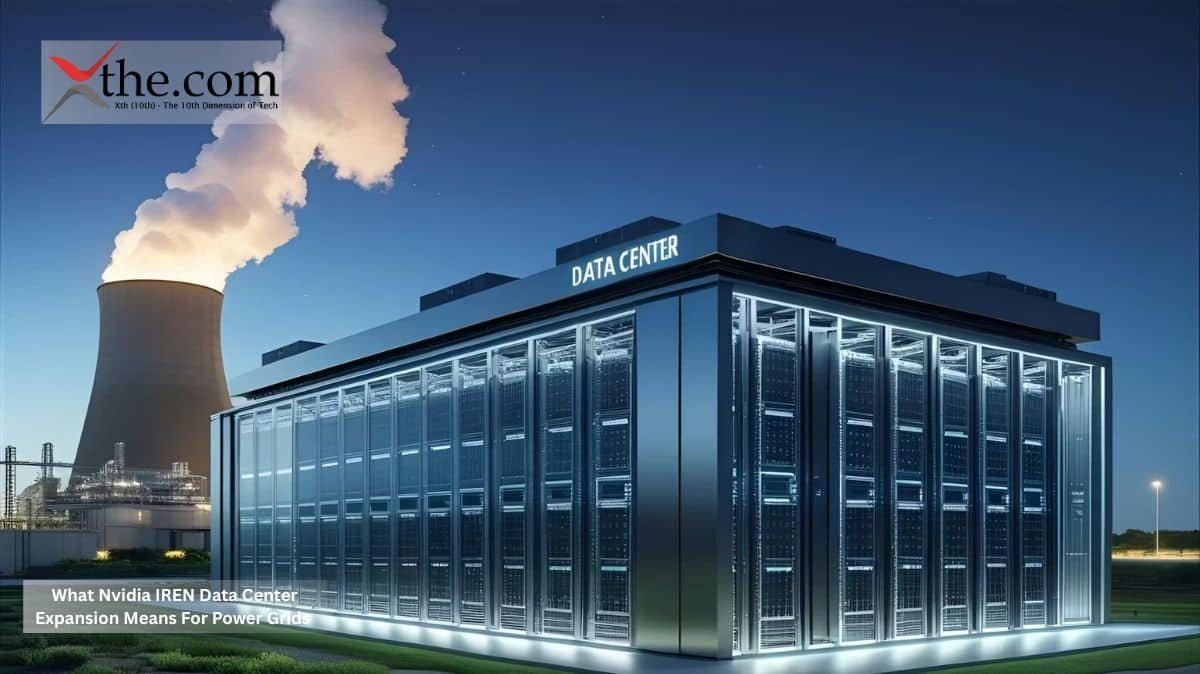
In the past, most American data centers used about 5 to 10 megawatts of electricity. Now, NVIDIA’s latest AI campuses talk about power in gigawatts. A single site can use as much electricity as a mid-sized city. This huge jump in demand is at the heart of the NVIDIA‑Iren data‑center partnership, which marks a new stage in the push to build generative AI infrastructure before the power grid reaches its limits.
In the past, data center executives sought land with strong fiber connectivity and tax breaks. Now, having the right to connect directly to utilities is more important than the size of the land. A property with direct access to substations that can handle hundreds of megawatts can be as valuable as prime downtown real estate.
The market has changed. The main limits are no longer computer chips, but electricity, cooling water, and transmission infrastructure.
The Nvidia-Iren Data Center Partnership Changes the Economics of AI
The NVIDIA‑Iren data center partnership focuses on building large-scale AI computing campuses that use Blackwell GPU systems. Iren, known for its Bitcoin mining infrastructure, already controls large energy‑connected sites in regions with abundant renewable power. NVIDIA supplies the compute architecture. Together, the companies aim to support a multi‑gigawatt cluster deployment that could eventually reach 5 gigawatts in AI capacity.
This scale completely changes the discussion.
A typical cloud region might use 300 to 500 megawatts. Building out 5 gigawatts for AI is on the same scale as a utility. Utilities now have to consider upgrading transformers, expanding high‑voltage transmission, adding backup generators, and improving water infrastructure simultaneously.
This is where the pressure from AI infrastructure power‑grid limits becomes impossible to ignore.
Northern Virginia is already dealing with transmission bottlenecks because of rapid data center growth. Some areas of Texas struggle to balance power during peak seasons. Arizona and Nevada face water supply issues linked to cooling systems. The growing demand for AI exacerbates all these problems.
Why Blackwell Clusters Push Electrical Systems to the Edge
Latest NVIDIA Blackwell racks offer a lot of computing power in a small space. This high density creates tough engineering challenges for operators pursuing aggressive NVIDIA Blackwell cluster scaling strategies.
One advanced AI rack can use over 100 kilowatts of power. When you multiply that by tens of thousands of GPUs, the total power needed rises fast. A facility running advanced training models might need dedicated substations connected to 230 kV or 345 kV transmission lines, redundant transformer yards, liquid-cooling distribution networks, backup gas turbine generation, and on-site battery storage systems.
Cooling is just as challenging. Older data centers mostly used air cooling, but Blackwell systems require operators to use direct‑to‑chip liquid cooling and advanced heat-rejection systems, as traditional airflow cannot remove enough heat.
Now, the conversation about data center cooling capacity goes beyond just HVAC engineering. Water rights, thermal discharge rules, and city infrastructure planning are becoming increasingly important for securing site approvals.
Imagine a 1 gigawatt AI campus in the Midwest. Even with advanced liquid cooling, operators might need millions of gallons of water each day. During heat waves, utilities have to supply both residential air conditioning and AI clusters that use steady large amounts of power. This quickly adds significant stress to the system.
Power Access Has Become the New Silicon Valley
For years, tech companies competed for skilled workers and access to venture capital. Now, they are competing to be close to two substations.
This change shows why the NVIDIA‑Iron data center partnership is important beyond just NVIDIA. The deal highlights a bigger trend in the infrastructure market. Future AI leaders will need to secure access to energy before they can control computing power.
Land close to high‑capacity transmission lines has suddenly become very valuable. Old industrial areas with unused utility infrastructure are attracting renewed investor interest. Now, energy developers, utilities, and AI computing companies are working together more often instead of one after another.
This also helps explain why there is growing interest in small nuclear reactors, on-site power generation, and renewable energy campuses specifically built for AI facilities.
Now, the main question for operators is whether they can buy GPUs. It is how to secure power capacity for AI data centers before grid connection wait times become too long.
In some places, getting approval to connect to the utility grid can already take 5 to 7 years. This slow process does not match the fast pace that AI markets require.
AI Infrastructure Power Grid Limits Create Political and Economic Tension.
The pressure from AI infrastructure power grid limits extends beyond engineering. It creates political debates as regulators decide whether to prioritize industrial AI campuses or residential growth.
When a governor approves a multi‑gigawatt AI project, they are also agreeing to new transmission lines, changes in land use, and higher water use. More communities are starting to ask if their local grids should take on the risks that come with private AI expansion.
At the same time, economic benefits remain difficult to overlook. Large AI campuses create jobs, bring in utility revenues, and add long-term tax income. States that want AI investment know that waiting too long could mean losing billions of potential capital to other places.
This tension defines the next phase of infrastructure planning. Companies that pursue NVIDIA Blackwell cluster scaling need far more than semiconductors. They also need political support, a partnership with utilities, and reliable energy resources.
The competition to lead generative AI will not be settled in software labs alone. It will be decided at substations, along transmission lines, and in cooling plants where electricity is the true currency of computing power.
Source: Nvidia Newsroom








