






Austin, Texas.
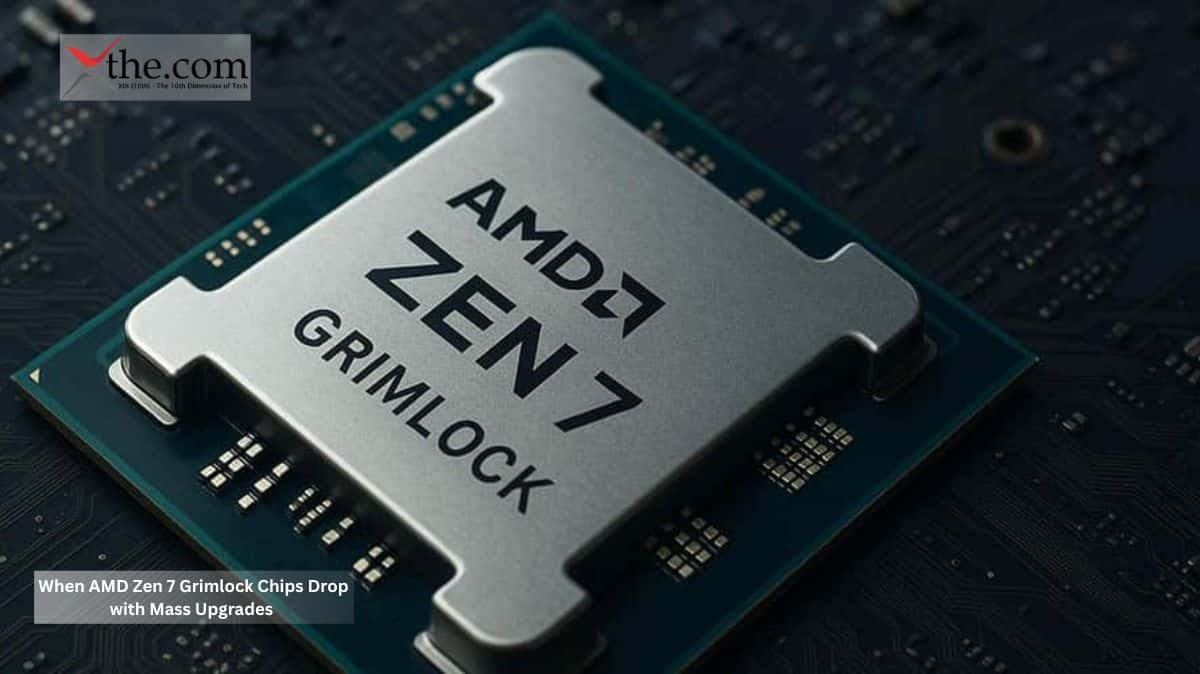
For years, PC gamers have focused on squeezing out small frame‑rate improvements, but a new report from Taiwan’s supply chain hints that AMD could be preparing something much bigger. The latest AMD Zen 7 Grimlock leak suggests a major leap in processor design that might transform high‑end gaming PCs and local AI tasks sooner than anyone expected.
People connected to motherboard makers and packaging partners say AMD plans to use the advanced TSMC 1.4 nm process‑node silicon strategy for Zen 7 “Grimlock” CPUs. This is important because making transistors smaller is not just about adding more cores. It also affects latency, power use, heat management, and how much cache memory can sit next to the processor cores.
If you play games like Cyberpunk 2077 on ultra settings or work with local AI models, this rumored architecture could deliver a significant performance boost for gaming processors.
The AMD Zen Grimlock Leak Signals a Major Manufacturing Shift
AMD’s current Zen lineup already competes strongly with Intel for gaming and workstation power. Zen 7 looks set to go even further. Reports from Taiwan suggest AMD might skip small upgrades and move straight to TSMC’s 1.4 nm process node silicon technology sooner than many thought.
The main reason this change is important is density.
A smaller manufacturing process lets AMD fit more transistors into the same space and reduce power loss. Engineers can use the extra room for more cache, AI features, or even better scheduling hardware.
The most eye‑catching rumor involves cache capacity. Multiple reports suggest AMD could place an enormous 224 MB cache structure on a single compute die. If accurate, that would dramatically expand AMD’s desktop core complex die’s memory capabilities compared with today’s enthusiast processors.
This could have effects that go far beyond just better benchmark scores.
Modern games constantly move textures, geometry, and physics data between different types of memory. A bigger on-chip cache means less need to use slower system RAM. This lowers latency and helps keep frame rates smooth during demanding scenes where today’s CPUs can struggle.
If you play esports on a 360Hz monitor, you might see fewer frame time spikes. Content creators who render AI-generated videos on their own PCs would get faster results without relying on cloud servers.
How Next Gen 3D V-Cache Tech Could Redefine Gaming CPUs
AMD has already shown how useful vertically stacked cache can be with its X3D chips. Processors like the Ryzen 7 7800X3D became popular because games perform much better with bigger cache sizes.
Zen 7 reportedly pushes that concept much further with next‑gen 3D V‑cache tech.
Rather than just making small improvements, AMD might change how the cache connects to the processor cores. People familiar with the design say there will be closer vertical integration and better heat management, which has been a problem for stacked cache in the past.
This could let AMD hit higher clock speeds without running into heat problems.
Imagine a future open‑world game that streams huge environments in real time. Today’s systems often struggle when Big Maths, AI, and physics calculations collide simultaneously. An expanded desktop core complex per memory channel would allow the processor to keep more game data closer, reducing slowdowns and maintaining steady performance.
This benefit also helps with running AI tasks directly on your PC.
More and more people are running AI tools right on their desktops. Voice models, image generators, and coding helpers all work better with faster memory. More cache means less waiting for data. For anyone trying out local AI engines, Zen 7 could feel much quicker if the rumors are true.
Why the Gaming Processor Performance Jump Could Extend Beyond Gaming
Calling these chips “gaming CPUs” doesn’t really cover everything they can do anymore.
Modern processors handle streaming, AI acceleration, multitasking, and creator workloads simultaneously. The rumored gaming processor performance jump attached to Zen 7 could spill over into several adjacent markets.
Small developers making AI apps on their own PCs could get workstation-level power without paying for expensive hardware. Streamers might be able to encode video and run AI moderation simultaneously. Engineers using simulation software could also see better performance with larger cache sizes.
The timing is also consistent with the rising demand for edge AI computing. Firms increasingly want local processing rather than sending sensitive data to public cloud systems.
AMD appears positioned to capitalize on this shift if the AMD Zen 7 Grimlock leak proves accurate.
When Will the AMD Zen 7 Processors Be Released?
AMD has not confirmed the launch timing publicly, but supply chain estimates suggest late 2027 remains the most realistic target. That estimate matches the expected availability for advanced TSMC 1.4 mm process node silicon production capacity.
Questions about when AMD Zen 7 processors will be released continue to circulate as motherboard manufacturers reportedly began early compatibility planning sooner than expected. That usually signals confidence in architectural stability even as final specifications remain fluid.
Even so, it’s wise to be cautious with leaks.
Plans in the chip industry change frequently. Issues with packaging, heat, or costs can mean last‑minute redesigns. Still, the amount of talk about Zen 7 suggests AMD is working on something much bigger than a typical update.
If even some of these rumors are true, the next generation of desktop processors could do much more than just add cores or boost speeds. They might completely change how PCs handle gaming, AI, and memory‑heavy tasks for years to come.
Source: Investor Relations The Industry’s High Performance and Adaptive Computing Leader








