






Cupertino, California
A commuter in Chicago glances at her phone, which displays a photo from a friend. In Texas, a student follows a lecture with real‑time spoken captions. These situations are no longer rare; they are becoming the norm, thanks to Apple’s intelligent accessibility features, now central to the company’s software strategy.
Apple’s Intelligence Accessibility Features Are Changing How People Use Their Devices Every Day
In its latest announcement, Apple put the spotlight on usefulness instead of flashy hardware. The company expanded Apple Intelligence accessibility features to more iPhone models with its newest AI technology, showing a clear move toward more inclusive computing.
The heart of this is a simple idea: a phone should do more than show information. It should help make sense of it.
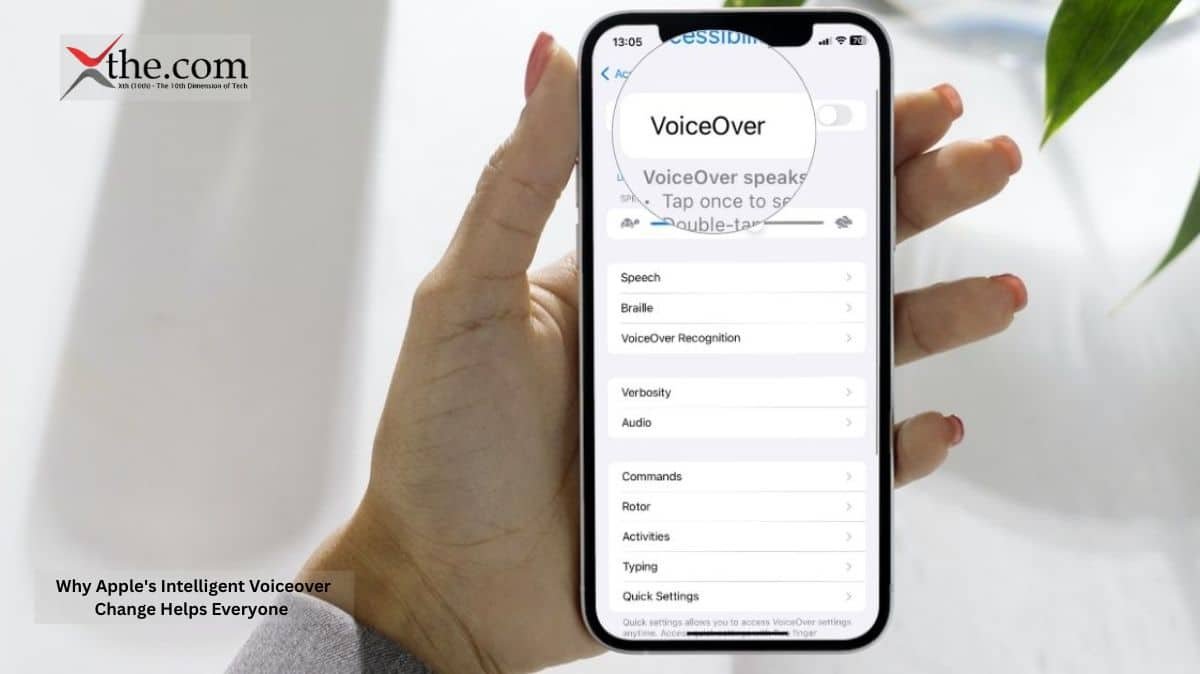
Now, this interpretation includes voiceover, screen reader, and image descriptions. The system no longer relies solely on static labels or preloaded data; it analyzes the screen in real time and describes even complex visuals in detail. For example, a chart in an earnings report is explained out loud, and a busy social media photo is described clearly. The aim is to make it easier for everyone to understand what they see.
On-Device Intelligence Changes the Privacy Equation
A big part of this equation is the new on-device neural processing, which moves heavy computing from remote servers to the phone itself. This change is important for both speed and privacy.
For example, someone in a hospital waiting room can point their phone at a medical form and hear spoken applications, all without sending private data to the cloud. The phone handles everything on its own, which means less delay and better privacy.
This setup also makes voiceover screen reader image descriptions work quickly for many people. The phone analyzes visual content right away, so users looking at a transit map or a restaurant menu get faster, more natural feedback.
Real-time Speech Becomes a Second Layer of Vision
One of the biggest changes is real-time audio subtitle generation. Apple’s system now listens to live audio from calls, videos, and even in-person conversations and quickly converts it to spoken or displayed text.
For people who are hard of hearing, this changes how they receive information in groups. They can immediately delay classroom discussions, understand customer service calls more easily, and even keep up with conversations in noisy places.
Earlier captioning systems often struggled with timing and punctuation. The new model uses an on-device neural processing upgrade, enabling it to retain context in the middle of a sentence rather than waiting until the end.
The Role Of The Consumer Software Update Rollout
Apple is delivering these changes through a staged consumer software update rollout rather than a single global switch. That decision reduces server strain and enables incremental tuning across device generations.
In real life, this means two people in the same city might get new features at different times. One might already have real-time audio subtractive generation, while another is still waiting. This staggered release also helps Apple improve the system, especially in places where different languages, accents, or fast speech can be tricky for AI.
How to Use Apple Intelligence Voiceover Updates in Daily Life
Many people want to know how to use Apple Intelligence VoiceOver updates without having to change their daily routines.
Someone who is visually impaired can turn on enhanced VoiceOver screen reader image descriptions in accessibility settings and start getting better descriptions of apps, emails, and images right away. A student can use real-time captions during lectures, and a traveler can get spoken navigation with helpful explanations about their surroundings.
The system does not require new apps or workflows. It integrates directly into the operating system, which is why the consumer software update rollout matters as much as the features themselves. The value gradually becomes embedded in the tasks people already perform.
Risk, Opportunity, and Impact
The main opportunity is clear. Cool technology that used to need special assistive devices is now built into regular smartphones. This shift makes these tools available to many more people, thanks to widely used software instead of rare hardware.
The risk lies in over-reliance and accuracy. Misinterpreted image descriptions or delayed subtitles can create confusion in critical situations. Apple’s emphasis on local processing through its on-device neural processing upgrade reduces some of that risk, but not all of it.
Even so, the trend is clear. Accessibility is no longer just an extra feature. It is becoming a basic part of how devices work.
The result is a phone that feels more conversational. It can speak, listen, and understand with increasing skill. As Apple’s accessibility features improve, the line between device and assistant will keep fading, not through flashy changes but through small, useful updates that quietly make daily life easier.
Source: Apple TV to broadcast first major professional live sporting event shot entirely on iPhone 17 Pro








