




San Francisco
Atomic Answer: Salesforce has published new deployment guidelines for its Agentforce platform, shifting the focus from human-in-the-loop to autonomous agentic workflows. According to internal testing, these updates enable real-time data grounding via the Data Cloud, reducing AI hallucinations in customer-facing procurement bots.
A regional bank’s customer service team cut response times by 41% after adding AI support agents. Even after six months, executives still wondered whether the investment was worth it. Automation improved some numbers, but dashboards did not show where the value came from. Most tickets were closed, but customer retention remained about the same. Labor costs fell in one area, while compliance inspection costs went up elsewhere.
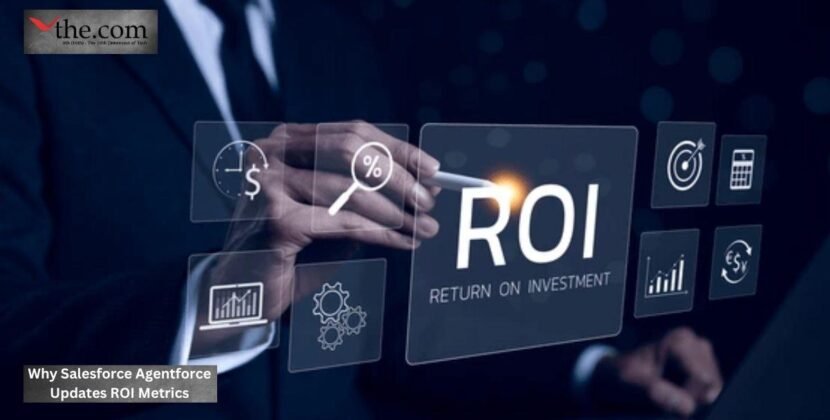
This disconnect is why Salesforce Agentforce is pushing companies to rethink how they measure AI ROI.
For a long time, enterprise software was measured by factors such as seat licenses, automation rates, and cost per transaction. But these metrics don’t work well when AI starts making its own decisions. Now companies look at how AI affects customer behavior, speeds up operations, and keeps revenue steady across the business.
Why Salesforce Agent Force Changes Traditional ROI Models
Most enterprise software projects follow a predictable pattern. Companies buy software, reduce manual work, and track the labor they save.
Salesforce Agentforce is different because it brings coordinated autonomous agents to core business systems. These agents don’t just automate repetitive tasks. They understand context, make decisions, handle exceptions, and coordinate work between departments within the CRM.
This changes how the economics work.
For example, a retail company using AI agents for customer support might cut live agent workload by 30 percent, but the bigger financial benefits could show up in other areas. Faster problem-solving might boost customer renewals. Better product recommendations could lead to more upsells. AI-generated service summaries might also save time on legal reviews.
Traditional ROI models often miss these extra benefits.
The Shift From Automation Metrics To Outcome Metrics
Early enterprise AI projects were all about automating tasks. Leaders wanted to see clear labor savings. That’s still important, but now companies care more about overall business results than just efficiency. A company managing thousands of daily shipment exceptions before AI integration, human coordinators manually reviewed delays, customer notifications, and routing changes. With workflow orchestration capabilities integrated with Salesforce Agentforce, agents and AI agents can identify disruptions, notify customers, recommend alternatives, and automatically escalate high-risk accounts.
Now, the real value isn’t just from saving on labor. It’s also about keeping customers and protecting revenue.
This is why measuring AI ROI has become more complex. New Companies now look at things like:
| Matric | Traditional software model | AI agent model |
| Labor savings | Primary KPI | Secondary KPI |
| Customer retention | Limited impact | Direct impact |
| Revenue expansion | Indirect | Measurable |
| Decision speed | Minor factor | Major factor |
| Operational continuity | Rarely measured | Core metric |
How Data Cloud Expands AI Visibility
AI agents work best when company data is consistent across all departments. When systems are fragmented, decisions become fragmented too.
This challenge is why data cloud infrastructure is becoming more important in the Salesforce AgentForce ecosystem. AI agents need unified customer histories, transaction records, service interactions, and operational signals to work well.
If data isn’t centralized, AI agents can make costly mistakes.
Picture a tech telecom company where billing, service tickets, and contract records aren’t connected. An AI agent could offer discounts to customers flagged for fraud or escalate simple service issues by mistake. The technology might look smart, but it can quietly increase risk behind the scenes.
An integrated data cloud helps address these blind spots by providing AI systems with better context.
The Real Challenge Of Measuring AI Effectiveness
The phrase measuring ROI for Salesforce Agentforce, and autonomous agents now appears frequently in boardroom planning discussions because enterprises struggle to isolate AI-generated business value.
The challenge is that AI’s effects often overlap in different parts of the business.
For example, if an insurance company uses AI agents to help with claims, claims are resolved faster. Customer satisfaction rises slightly after a few months. Fraud detection improves because the AI spots unusual patterns in older claims data.
Therefore, which one of these improvements should count most when measuring ROI?
That also depends on what matters most to company leaders. Some focus on efficiency, others on customer retention or compliance. AI now impacts all these areas at once.
Because of this complexity, finance teams need to use broader ways to measure enterprise AI investments.
Why CRM Strategy Now Depends on AI Coordination
Traditional CRM systems just organized customer information. Now, AI-powered platforms help coordinate customer interactions in real time.
This difference is important.
An AI-driven CRM isn’t just a passive database anymore. It acts as a command center where autonomous agents manage workflows, suggest actions, and continuously monitor customer behavior.
For sales teams, this has a real business impact. AI agents can spot stalled deals, suggest follow-ups, and automatically focus on accounts most likely to convert. Managers spend less time collecting data and more time acting on useful insights.
These changes go beyond just sales productivity. AI coordination also affects how companies assign staff, choose which accounts to focus on, and manage customer risk.
Why Executives Are Rewriting AI ROI Expectations
The first wave of enterprise AI projects was mostly experimental. Boards approved pilot programs with little accountability because expectations weren’t clear.
That phase is coming to a close.
Now, executives expect AI systems to deliver clear results that impact profits, customer retention, and business continuity. Salesforce, Agent Force shows this shift by making AI agents active parts of operations, not just separate software tools.
Companies that get the most out of this change will measure AI’s impact more thoroughly. They’ll look at how AI affects decision speed, customer stability, compliance risks, and workforce allocation simultaneously rather than focusing solely on automation.
In the future, enterprise software competition may be less about who uses AI first and more about who best measures its economic impact.
Enterprise Procurement Checklist
- Procurement Intelligence: Pricing models are shifting from seat-based to “per-conversation” or “per-outcome” metrics.
- Infrastructure Risk: Reliance on real-time Data Cloud syncing increases API call volumes and potential latency in low-bandwidth regions.
- Deployment Bottleneck: Security teams must establish new “agent permissions” to prevent unintended data exposure by autonomous bots.
- ROI Implications: Initial setup costs are high due to the required data cleaning phase, but long-term OpEx for support centers decreases.
- Operational Action: Audit existing CRM data permissions before enabling autonomous agentic access.
Source: Salesforce News