NEW YORK, NEW YORK —
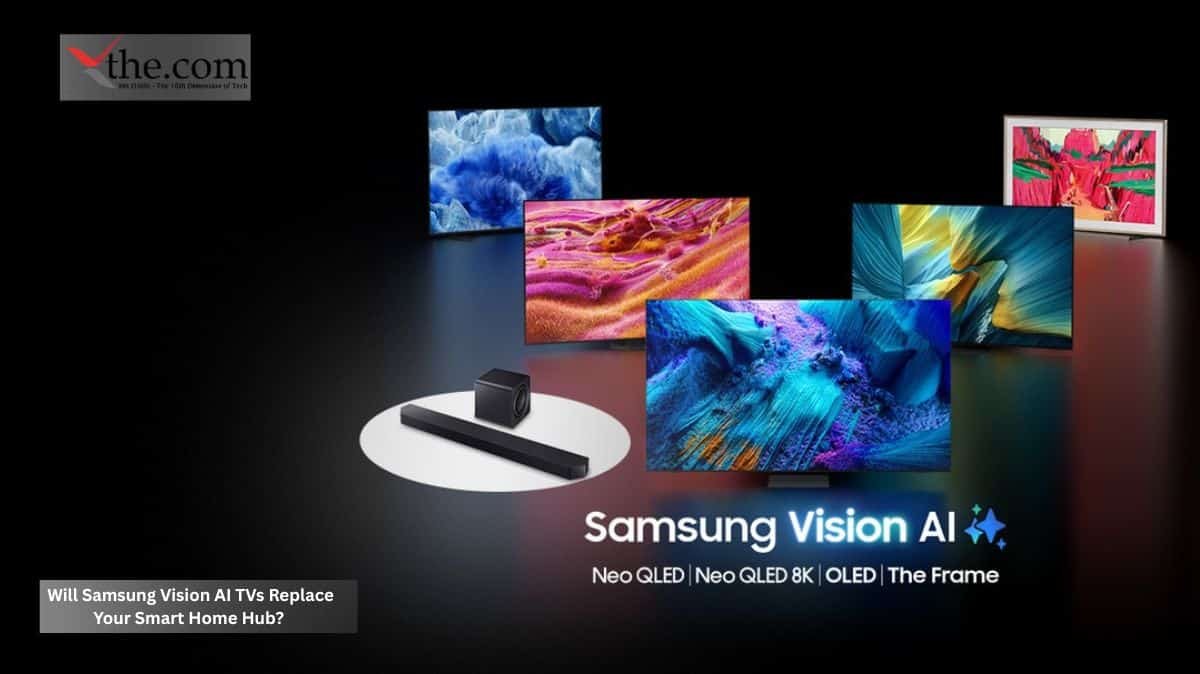
Samsung Vision AI is no longer simply a television feature; it is a full platform bid to become the primary intelligence layer of the modern American home. The 2026 Samsung Vision AI Companion TV lineup, anchored by the flagship Micro RGB TV series and extending across OLED, Neo QLED, and Mini LED models, integrates Bixby, Perplexity, and Microsoft Copilot directly into a single screen that simultaneously manages entertainment, answers questions, controls connected appliances, and coordinates smart home devices through SmartThings positioning Samsung’s premium television lineup as the most serious challenge to Amazon Alexa and Google Nest hubs that the consumer electronics market has seen in a decade.
What the Vision AI Companion Platform Actually Delivers
Vision AI Companion brings together Samsung’s broadest range of AI service platforms, including Bixby, Perplexity, and Microsoft Copilot, to make the TV experience more intelligent and personalized, designed to work alongside users as an entertainment companion that can help guide what to watch, what to eat, and what to listen to, extending the role of the TV beyond viewing alone.
The three AI platforms embedded in the Vision AI Companion architecture serve distinct functions that, together, cover the full scope of what a household information hub is expected to do. Bixby handles conversational interaction and smart home control through natural language commands. Perplexity delivers deep search and research capabilities directly on-screen without requiring the viewer to open a separate browser or device. Microsoft Copilot and Perplexity are also available as separate apps, giving viewers yet another way to engage with their television as an intelligence platform. The combined effect is a television that functions as simultaneously an entertainment display, a research terminal, a smart home controller, and a productivity assistant, all accessible without leaving the couch.
Samsung Micro RGB TV and the Display Technology Foundation
Samsung’s Micro RGB TV lineup is the crowning achievement of Samsung’s 2026 investment in display technology, and it serves as the hardware platform on which the Vision AI Companion delivers its highest performance. The R95H and R85H Micro RGB series use the Vision AI Companion paired with the Micro RGB AI Engine Pro, which optimizes color, motion, and depth, and the Micro RGB Precision Color 100, which produces richer, more lifelike colors. The televisions will also feature the Micro RGB Color Booster Pro and the Micro RGB HDR Pro, which optimize colors and contrast on a scene-by-scene basis.
The display intelligence embedded in the Micro RGB TV architecture will use AI Upscaling Pro technology, which has been one of the most frustrating parts of owning a modern TV. AI Upscaling Pro uses artificial intelligence to analyze and upscale low-resolution content, adding greater detail, depth, and contrast in real time. In addition, Color Booster Pro uses color categories to analyze the content of individual frames, resulting in vibrant, lifelike colors. This means that for consumers who subscribe to streaming services, the lower-resolution content of older movies and shows will be improved to match the visual quality of natively produced new content.
Neo QLED, AI Upscaling Pro, and the Broader Consumer Electronics Rollout
Samsung’s Vision AI Companion TVs are much broader than the flagship Micro RGB TVs. They are now available for mainstream consumers in Neo QLED and Mini LED form factors. The Neo QLED QN70H is offered in sizes from 55 to 85 inches (140cm to 215cm). These TVs feature Real QLED technology to deliver 100% Color Volume and accurate color and clear detail even in brightly lit environments, and Quantum Mini LED technology that provides both depth and clarity in all scenes. The Neo QLED QN70H also features Vision AI Companion Technology, 4K Upscaling, and a 144Hz refresh rate, powered by the New NQ4 AI Processor.
The breadth of the 2026 rollout 72 models spanning Micro RGB TV, OLED, Neo QLED, Mini LED, and Crystal UHD configurations reflects Samsung’s strategic determination to embed Samsung Vision AI capability at every price point rather than confining it to flagship hardware accessible only to premium buyers. Samsung is extending Vision AI Companion features across its TV lineup in 2026, offering AI-powered viewing experiences across more categories and screen sizes to meet the demands of consumers looking beyond exceptional picture quality and sound.
The Smart Home Center Question
The most consequential strategic question the 2026 lineup raises for consumers and investors is whether a Samsung Vision AI television can functionally replace the dedicated smart home hub that currently occupies a shelf or counter in millions of American households. The Vision AI Companion transforms Samsung TVs into interactive smart home hubs that respond to on-screen content in real time, from suggesting recipes to assisting travel planning, with Samsung positioning itself against Amazon Alexa Care Hub and Google Nest in the projected $174 billion smart home market.
The technical infrastructure supporting that ambition is already deployed at scale. SmartThings now fully supports Matter 1.3, the new standard that unifies all smart home ecosystems, meaning consumers can use Matter devices from any manufacturer, including Apple, Google, Amazon, and IKEA, without restrictions, with Samsung supporting Matter over Thread and Matter over WiFi. As of December 2025, SmartThings serves more than 430 million users a user base that gives Samsung the ecosystem depth and behavioral data that competing smart home platforms have not yet matched. Samsung Vision AI Companion lets viewers ask their TV anything and get instant, personalized answers, whether about a scene playing on screen, ideas for dinner, or help planning an upcoming trip. The platform is supported for up to 7 years of OS updates, ensuring continued access to the latest apps and services.
Conclusion
Samsung Vision AI has formally expanded the definition of what a television is expected to do in 2026, and the Samsung Vision AI Companion TV lineup features that the Micro RGB TV, Neo QLED, OLED, and Mini LED models deliver collectively, making the case that the living room screen is the most natural location for a Smart Home Center to operate from. AI Upscaling Pro, Color Booster Pro, and the multi-agent Bixby, Perplexity, and Microsoft Copilot platform address picture quality, information access, and smart home control simultaneously through a single interface that 430 million SmartThings users are already equipped to adopt. Whether Samsung Vision AI fully replaces the dedicated smart home hub depends on how much of the household’s connected device management consumers are willing to anchor to a screen, but the 2026 lineup makes a stronger argument for that transition than any consumer electronics platform has previously assembled.
Source: Samsung Newsroom