






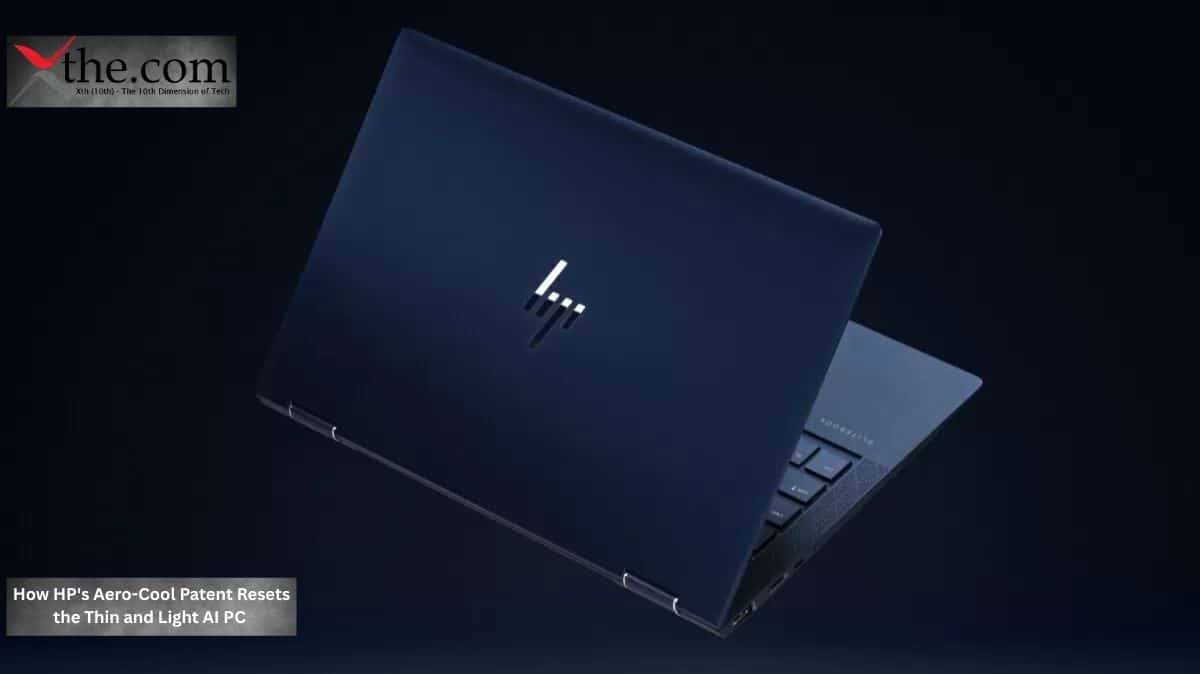
Palo Alto, Calif. The main challenge in making AI available everywhere isn’t the chips themselves, but managing the heat they produce. As NPU’s reach 80+ TOPS, they create so much heat that older ultrabooks couldn’t handle it. Mobile professionals have often had to choose between carrying a heavy workstation or using a slim laptop that slows down to avoid overheating. Now, a new USPTO filing shows that HP may have solved this problem with a new cooling design. HP’s AI PC can handle demanding tasks without overheating.
The Engineering Behind Thermal Management
Most laptops use copper pipes and fast-spinning fans for cooling, but these can be loud and take up a lot of space. HP’s new Aero-Cool system uses several cooling methods, including advanced liquid-metal cooling. Unlike regular thermal paste, which can dry out and lose effectiveness, liquid metal creates a much better connection between the chip and the radiation. This helps move heat away from the processor almost twice as fast as older systems.
The biggest innovation in this laptop design is a phase change chamber that works with the liquid metal. This keeps the NPU and GPU at the right temperature, even during demanding AI tasks like local LLM training or real-time video upscaling. By keeping things cool, HP Inc. (HPQ) is making these thin laptops more reliable than ever before. Good thermal management now means the processor can perform at its best, not just avoid overheating.
Unlocking Performance with NPU Overclocking
One of the most interesting aspects of the Aero-Cool patent is that it enables NPU overclocking. Overclocking used to be something only gamers or desktop power users did. Now, in 2026, temporarily boosting NPU speeds is important for AI tasks that need a lot of power quickly. For example, when someone runs a big data analysis, the system can safely increase its performance because Aero-Cool can handle the extra heat right away.
This capability defines the next-gen cooling tech for high-performance AI laptops in the US markets. It allows a 13-inch ultraportable to compete with 16-inch workstations in short burst tasks. For the executive on the move, this means having the power of a data center in a device that fits a slim leather portfolio. HP Inc (HPQ) has recognized that the AI PC is only as good as its ability to stay cool under pressure. Without this mechanical innovation, the software side’s gains in AI would be essentially trapped by the physical limits of the hardware.
The Strategic Advantage Of Localized Intelligence.
The move to local AI comes from the need for better privacy, faster response times, and lower costs. Using the cloud for every AI task is expensive and can expose sensitive company data. By making the HP AI PC great at handling tasks locally, HP offers a secure space where important data stays on the device. The Aero-Cool system quietly enables this, turning the laptop into a personal AI server.
The USPTO patent also describes a smart fan system that uses AI to predict when the laptop will get hot. By observing what the user is doing, the system can increase cooling before a heavy task starts, rather than waiting until the laptop is already hot. This proactive approach keeps the laptop running smoothly, no matter how complex the task. It’s a smart combination of hardware and software that changes what’s possible for thin-and-light laptops.
A New Benchmark For Mobile Productivity
These new software and hardware advances show that we’re entering a time when laptops won’t need to slow down to stay cool. Gone are the days when your laptop fan sounded like a jet engine during a video call. Now, your device can quietly provide the power you need without the problems of heat or noise.
People who use these advanced systems will see a real boost in productivity. As AI tools become an increasingly important part of our work, the need for robust local computing will continue to grow. Companies that invest in powerful, well-built devices now will be ready to take full advantage of future AI breakthroughs. HP’s focus on better cooling means the future of AI will be smart, quiet, and easy to carry.
Source: Hp News








