






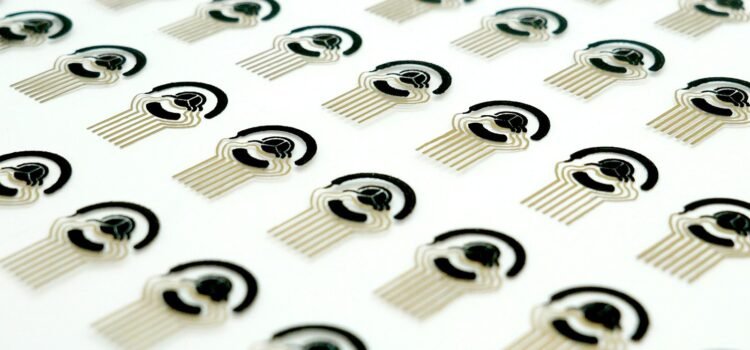
Caltech researchers have developed a novel 3D printing technology called Hydrogel Infusion Additive Manufacturing (HIAM). This process enables the fabrication of microscale, intricately detailed metallic structures much smaller than previously possible. It could advance the development of high-performance wearable technologies, biomedical devices, and microelectromechanical systems (MEMS).
Highlights Of Caltex Micro-Metal Printing
- HIAM begins by additively manufacturing a hydrogel template, which is subsequently infused with metal precursor ions such as copper or nickel.
- The construct then undergoes dual-stage thermal processing. This eliminates the polymer matrix, sinters the metal, and isotopically shrinks the component by up to 90%, yielding dense, miniaturized, and highly precise features.
- Microscale metallic components produced in this manner often exhibit nanoscale porosity and grain boundary networks. Surprisingly, these microscopic structural defects yield parts that are three to five times stronger and more fatigue resistant than those of conventional alloys.
How This Affects Wearables and Smart Technology
- This process facilitates the fabrication of miniaturized metallic devices, such as microelectromechanical sensors and actuators, which are critical components of microphones in advanced wearable systems.
- Caltech is collaborating with Meta Inc to apply this research toward the development of new augmented reality and virtual reality wearable devices.
- This technique also enables the fabrication of flexible, reconfigurable electronic devices, including biosensors and physiological monitoring.
The research group led by experts such as Julia R. Greer has demonstrated print resolution to 150 nanometers comparable to the size of the influenza virion. This capability suggests applications in ultra-precise biomedical implants and sensing platforms.
These advancements are enabled by a water-based process developed by Caltech engineers, as highlighted in a recent Nature paper published on October 20.
This new method works with many metals. The additive manufacturing approach is compatible with multiple metals and alloys and permits compositional gradients within a single manufactured part with marginal modification. It presents potential for miniaturized components in microelectronics, transportation, aerospace, thermal management, and medical fields. Manufacturing creates items layer by layer. This allows for shapes that conventional techniques, such as forging, molding, etching, or milling, cannot make. Most current 3D metal printers use lasers to melt metal powders, achieving detail down to about 100 microns, roughly the thickness of two sheets of paper. Resolution refers to the smallest detail the process can produce.
One challenge is that metals like copper conduct heat very well. Even with a focused laser, the heat spreads and melts powder outside the intended area, reducing the level of detail achievable.
To overcome these barriers, Caltech’s team, including Max Saccone, Rebecca Gallivan, Daryl Yi, and Kai Narita, took an innovative path. Rather than print materials directly, they used hydrogels as scaffolds for metal-containing liquids. Kai Narita has since founded 3D Architect to commercialize this technology licensed from Caltech.
“We need to develop a different approach as we cannot rely on heat to construct our structures,” said Saccone.
Hydrogels are made from flexible polymers. Hydrogels composed of hydrophilic polymer networks remain intact in aqueous environments and are used in products such as soft contact lenses. Ultraviolet photopolymerization induces crosslinking in liquid polymers, forming solid structures in prescribed patterns. Immersing hydrogels in metal ion solutions results in uniform volumetric ion loading. Calcination at 700 to 1,100 degrees Celsius, depending on the metal, combusts the polymer matrix. Since the metal’s melting point exceeds the calcination temperature, metallic integrity is preserved. The hydrogel also causes the entire piece to shrink, resulting in an even smaller metal part. This method allows the team to 3D print pure metals, alloys, and mixed metal systems with features as small as 40 microns, which is less than half the width of a human hair. They have printed structures from copper, nickel, silver, and various metal alloys.
The hydrogen infusion additive manufacturing process, or HIAM as we coined it, establishes a means to create metallic materials in an entirely new, much more environmentally friendly way at unrivaled precision levels, says Greer, Ruben F., Donna Mettler Professor of Materials, Science, Mechanics, and Medical Engineering, and Director of the Kavli Neuroscience Institute.
The research received funding from the US Department of Energy, the Resnick Sustainability, the Massa On Foundation, and Caltech’s AI4science initiative.
Source: New Process Allows 3-D Printing of Microscale Metallic Parts


