




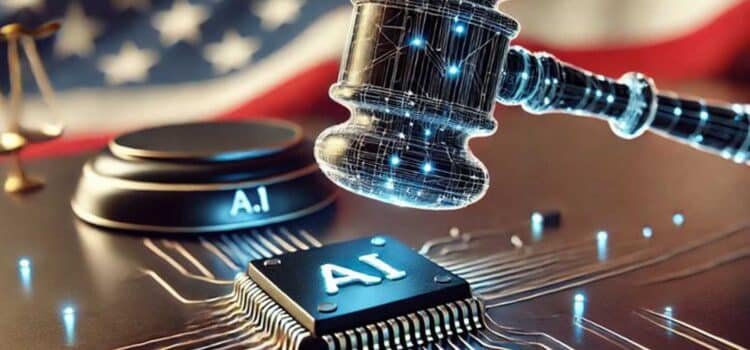
The U.S. government is beginning to impose more restrictions on exporting advanced forms of AI technology worldwide, indicating a major shift in the global climate regarding the Development of Artificial Intelligence. The AI technology that had been developed cooperatively & openly has now turned into National Security & Geopolitical strategies.
New information from federal Government agencies shows that AI is viewed not just as a business tool but as a Strategic Asset with wide-reaching effects.
What the New Policy Direction Indicates
Signals emerging from the U.S. government indicate that we can expect an increase in the use of stricter regulatory measures with respect to:
- Control over the export of high-performance artificial intelligence (AI) systems
- Access to advanced AI training systems
- The cross-border transfer of AI capabilities
The controls are intended to work like the existing regulations used to control semiconductor exports, in that access will be monitored and restricted based upon U.S. national security interests.
Why Is AI Now Considered A Security Threat?
Artificial Intelligence is much more than an invention; artificial intelligence supports a wide range of applications in many different contexts, including many that directly support U.S. Government-sponsored efforts, including:
- Cybersecurity and cyber warfare
- Surveillance and intelligence operations
- Military training and defense capabilities
- Economic strategy and policy making
It is the dual-use nature of artificial intelligence that will compel governments to enact much tighter controls on the distribution of artificial intelligence capabilities.
Impact on Global Technology Companies
These changes will present additional layers of complexity for global technology organizations. Companies will be required to navigate the following challenges:
* Restrictions on the international marketplace for AI-related products
* Increased compliance requirements for AI products
* Delayed deployment of AI systems across borders
Companies that operate internationally must carefully evaluate and understand the regulatory environment (which can vary substantially by jurisdiction) when developing their business strategy and operating model.
The Risk of a Fragmented AI Ecosystem
One of the most significant risks associated with tighter export controls is the potential fragmentation of the global AI ecosystem. Instead of having one global AI ecosystem, we may observe the emergence of:
* Geographically specific AI models/platforms
* Decreased opportunity for cross-border collaboration
* A reduction in the speed of innovation due to limited opportunities for knowledge transfer
If these trends continue, the evolution of AI will take a different turn from what was originally anticipated, moving from a model that fosters open research to one that encourages controlled development.
Who Stands to Gain and Lose
The policy shift creates both opportunities and challenges.
Potential winners include:
- Domestic AI firms in regulated markets
- Governments seeking technological independence
- Regions investing heavily in local AI ecosystems
Potential losers include:
- Startups relying on global markets
- Open-source AI communities
- Countries with limited access to advanced infrastructure
The balance of power in AI development may shift significantly depending on how these policies are implemented.
A Broader Geopolitical Strategy
The move reflects a larger trend in global technology policy. Just as semiconductors have become central to geopolitical competition, AI is now emerging as a critical battleground.
By controlling access to advanced models, governments can influence:
- Technological leadership
- Economic competitiveness
- National security capabilities
This positions AI at the center of global strategic planning.
Conclusion
The restrictions imposed on AI exports represent an important change in how artificial intelligence evolves. AI, which used to have no boundaries, will now increasingly be influenced by regulation, government policy, and national goals. The message to developers, companies, and governments is clear: access to AI will be determined not only by capability but also by regulation and geographical location.
Source-Press Releases


