






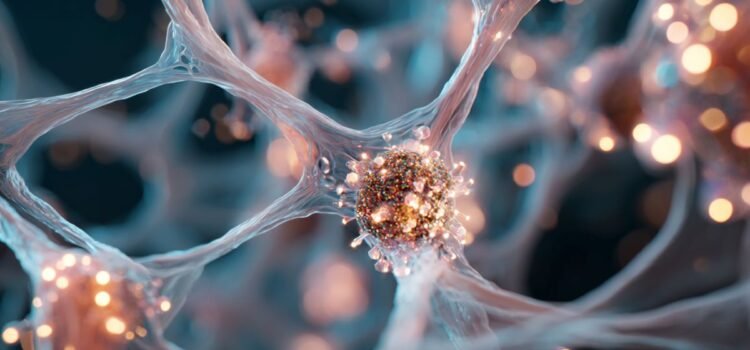
Scientists have pioneered a method to cultivate conductive polymers within living neural tissue, opening a path to transformative human-machine communication. This biocompatible approach uses the body’s own chemical reactions, maintaining the health of surrounding cells, and represents a significant advance in connecting the nervous system to devices.
Advancing Neural Interfaces
Existing brain-computer interfaces rely on electrodes that encounter issues like tissue rejection and signal loss. The new technique enables polymers to grow directly with neurons, fostering stable and natural connections for reliable detection and stimulation of brain activity, precisely enhancing communication between the brain and external devices.
By using the body’s natural chemicals as catalysts for polymer formation, researchers can create stable, conductive pathways that replicate the mechanical properties of neural tissue. In addition, the development of this method reduces the risk of immune reactions and/or tissue damage, thereby addressing long-standing issues in neurotechnology research.
Conductive Polymers and Biocompatibility
The main advancement here is the development of conducting polymers that self-assemble within the body without requiring external assistance. These conducting polymers are also biocompatible; therefore, they can safely function within the body’s tissues and conduct electrical signals from neurons to devices.
These polymers can be tuned to match the electrical and mechanical properties of the surrounding tissue, creating a smooth connection. This is essential in the field of brain-computer interfaces, neuroprosthetics, and permanent therapeutic electrical stimulation, as precision and safety are extremely important.
Potential Applications in Medicine
Introducing these polymers offers new ways to stimulate or monitor neural activity for conditions like Parkinson’s disease, for seizure control, spinal cord injury treatment, and enhancing neuroprosthetic performance, such as robotic limbs and sensory aids.
These polymers allow researchers to study neuronal networks in vivo with higher resolution and detail. This can lead to a better understanding of brain function and disease and enable personalised therapies and new neurotechnologies.
Enhancing Brain-Computer Interfaces
For many years, the use of brain-computer interfaces was limited by the physical and biological constraints of implanted electrodes. The ability of a polymer to grow within an animal and thus conform to the changing state of surrounding tissue is known as “in-body polymer growth” and is a new technology that enables the creation of dynamic interfaces, thereby increasing the stability and longevity of a BCI.
Polymers can create conductive pathways directly between neurons, enabling high-resolution, continuous recording and/or stimulation of brain cells. As a result, BCIs will now be able to transmit information between human brains and other physical devices, such as computers and prosthetics, with much greater speed and accuracy than previously possible and will provide humans with completely new ways to interact with these devices.
Overcoming Traditional Barriers
Neural engineering’s major roadblock has always been tissue rejection and inflammatory response to foreign materials. Replacing these materials with the body’s natural processes will limit the risk of rejection or inflammation since the polymer will form biochemically in a “natural” environment, i.e., within the body, and will micro-adhere to existing tissues as it does so.
Not only has this approach minimised risk, but it also allows fewer surgical procedures because the polymers can be created at the site of need, thereby reducing the frequency, length, and/or invasiveness of the procedures required to implant these devices. This could greatly reduce the associated risks, costs, and recovery time for any patient who needs a neural interface and/or therapeutic device implanted.
Future Research and Development
Investigations are underway into methods to improve the growth of polymers and control their conductivity. With the goal of expanding compatibility with various forms of neural tissue, researchers have been working on increasing the fidelity of signals generated from these devices, improving the long-term reliability of performance, and ensuring that they integrate well with newly developing forms of neurotechnology, such as prosthetics and cognitive assistance devices that utilise artificial intelligence.
In addition, scientists are working to combine these polymers with wireless solutions and embedded electronics to design a complete, fully integrated, and minimally invasive brain-machine interface system.
Ethical and Safety Considerations
Like all neurotechnologies, there are ethical issues that arise when creating new ones. Researchers are currently studying potential risks associated with neurotechnology, including unintended neural effects, long-term safety, and privacy concerns. Creating safe, consensual, and secure human-computer interactions will be an important part of the responsible development of new neurotechnologies.
It is necessary to develop a regulatory framework and conduct clinical trials before widespread human use; however, initial results suggest that neurotechnologies have a good safety profile and integrate well with living tissue.
Expanding Human-Machine Capabilities
Synthesising polymers inside the brain may allow humans to directly control machines, interface with computers, and experience virtual environments, significantly expanding the range of human-machine interactions beyond medical uses.
This technology could facilitate augmented cognition, where users extend their memory, processing, and sensory perception by directly communicating with AI systems or physical devices via their neurons.
Implications for Neuroprosthetics
Neuroprosthetics need accurate and responsive interfaces to work with your nervous system. This could be achieved through in-body polymer growth, which allows for more natural and precise control of your limb via a neuron-connected prosthetic or limbs. This would also allow the user to receive responsive sensory feedback, which could improve the quality of life for those who have lost a limb or are experiencing nervous system issues.
Neuroprosthetics will use a more durable, adaptable method of connecting to peripheral nervous system neurons, allowing them to require fewer calibrations and have a longer useful life.
Advancing Neuroscience Research
Another way to study the brain’s function in a living host is to use the polymers mentioned above. The researchers have access to fine-scale measurements of neural circuits, can track disease progression, and can evaluate the impact of experimental treatments using this method. These tools can be very useful for advancing understanding of complex neurological disorders and for developing new approaches to personalised medicine.
Additionally, the technology can be used for cognitive science research, education, and brain plasticity experimentation, thereby advancing our understanding of how the brain processes information.
Challenges and Limitations
Although this technology shows great potential, it faces numerous obstacles that must be overcome before it can be implemented on a larger scale. These are controlling polymer growth within the complex structure of tissues, providing consistent conductivity when used in different types of tissue/organ environments and being able to utilise polymers as long-term solutions to electrically stimulating tissues by working together with existing electronic devices, AI systems and medical devices all require collaboration among material scientists, neuroscientists and engineers to develop and implement into widespread use. Moreover, research will be needed to determine the durability/safety of these polymers after several years of implantation.
Future Outlook
Successful in-body brain-control polymers could revolutionise neural interfaces by providing precise, adaptable links for prosthetics, cognitive enhancement, and integration with AI systems.
As research continues to advance, the innovations we can create will redefine how we communicate with machines via our brains, enhancing many therapeutic applications and opening new possibilities for human enhancement.
Conclusion: Bridging the Brain and Technology
In vivo, body-catalysed polymer development marks a turning point for neuroscience and artificial intelligence, enabling robust, direct, and safe brain connections that may lead to advanced medical devices, prosthetics, and richer human-technology interaction.
As researchers continue to develop the process, the creation of safe technology connections to the human nervous system makes seamless brain-computer integration increasingly feasible. This development represents an important milestone in the evolution of human-machine collaboration, enabling work that was previously impossible.
Source: https://phys.org/


