

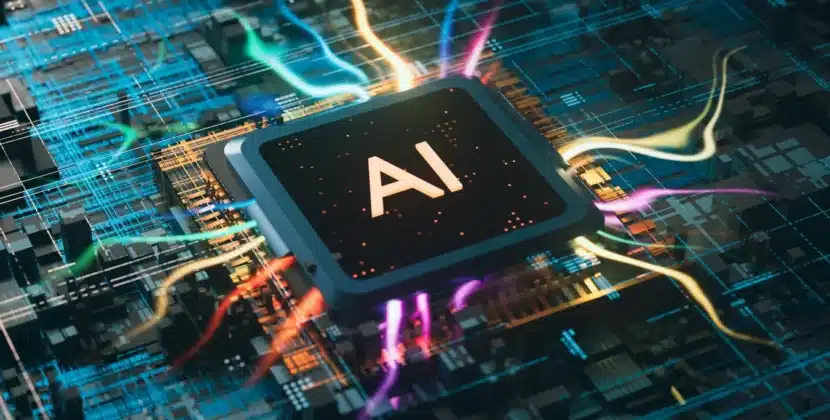




The balance of global power is shifting because of a new and costly resource: high-performance computing. As artificial intelligence moves from novelty to an essential part of the global economy, the hardware that supports it has become a highly contested asset. The so-called infrastructure war is not only about building the best software, but also about which countries and companies can secure the chips, electricity, and water needed to run these systems. Right now, the United States holds about half of the world’s AI computing power, but other nations are racing to build their own data centers. This article explains why computing power is now the most important strategic asset for the coming decade.
The Foundation Of Human Intelligence: AI Infrastructure Explained
To understand today’s global competition, we must examine what enables digital intelligence. In 2026, AI infrastructure consists of three main parts: hardware accelerators, large-scale data centers, and electric grids. Unlike older cloud computing, which uses general-purpose CPUs, modern AI depends on parallel processing. Only specialized chips provide this power. These hardware components act like industrial machines of our digital era. They turn raw data into useful insights.
The Role Of Specialized Hardware
At the center of this infrastructure is the graphics processing unit (GPU). Once used for gaming computers, GPUs are now vital for national security. By early 2026, the rising demand for GPUs in AI will have strained the industry. NVIDIA’s Blackwell B200 series now leads the way. These chips deliver up to ten times more output per megawatt than the previous generation. They are the most in-demand hardware ever. Without these advanced chips, training the latest AI models would take impractically long.
Data Center Density and Scaling
The next challenge is where to house all these chips. By early 2026, AI data centers in the US reached a record capacity of more than 19,800 megawatts. These centers are much more than simple server warehouses; they are now complex systems that manage huge amounts of heat. One modern AI rack can use over 100 kilowatts of power, so advanced liquid cooling is needed to keep the hardware safe. Because of this high density, major cloud providers plan to spend almost $7 trillion on building and upgrading data centers in the next five years.
GPU Demand AI: The Scarcity Driving Worldwide Strains
The unstable GPU market has made silicon almost like a new kind of digital currency. In early 2026, high-end computer power is so scarce that B200 instances rent for $4 to $6 per hour on special platforms. Although supply chains have improved since the 2024 shortages, syncing data across large clusters remains a challenge for companies. A steady supply of GPUs is now essential to remain competitive in sectors such as finance and drug discovery.
The Blackwell Transition And Performance Leaps
The launch of the Blackwell architecture has widened the divide between top performers and those falling behind in computing. Then, these new chips offer 8 TB of memory bandwidth, a big improvement over the 2 TB in older A100 models. This boost means models that once took three months to train can now be completed much faster. For countries, this speed leads to more rapid scientific and military advances, making Blackwell units a national priority.
The GPU Rental Economy
For many businesses, the high cost of buying hardware, which can be over $30,000 per chip, has led to a fast-growing rental market. Cloud providers such as AWS, Azure, and Google Cloud compete to deliver the best performance and reliability. In early 2026, the GPU rental market grew by 29% as more small companies chose operational expenditure (OPEX) models. This approach makes it easier to scale up, but it also means companies rely on the changing prices set by major cloud providers.
Global AI Infrastructure Race: Ranking the Superpowers
The global AI infrastructure race is currently a lopsided contrast, but the rankings are shifting as nations realize that sovereign AI, AI infrastructure fully controlled and operated within national borders, is necessary for independence. The United States remains in the top position, driven by private-sector giants such as OpenAI, Meta, and NVIDIA. However, the rest of the world is investing heavily to ensure they are not simply renters of American intelligence. The race is now measured in gigawatts of power and the number of top-tier AI universities.
| Rank | Country | AI infrastructure score (out of 100) | Primary strength |
| 1 | United States | 82 | Chip design and cloud scale |
| 2 | China | 59 | Manufacturing and education |
| 3 | Singapore | 37 | Academic quality and talent |
| 4 | South Korea | 35 | Semiconductor memory, HBM |
| 5 | United Kingdom | 33 | Safety Research and Policy |
| 6 | India | 32 | Youth Talent and Digital Skill |
The Rise Of Sovereign AI Clusters
Countries such as India and Singapore are working on sovereign AI plans to protect their data and cultural identity. In India, more than 65% of the population is under 35, making them the focus of large-scale AI training programs. Although India ranks sixth globally, its infrastructure score is just 0.65 out of 16.67, underscoring the need for more local data centers. To address this, the government is investing heavily in content creator labs and AI-focused tools to prepare the next generation of workers.
Europe’s Regulatory and Infrastructure Struggle
Europe faces its own challenge: balancing strict regulations with the need for greater computing power. In 2024, the EU produced only three major AI models, while the US produced 40. But Europe still leads in ethical regulation to address zoning and power issues in older cities. European countries are turning to modular portable data centers. This approach creates a more decentralized system, placing data centers closer to where data is generated, thereby improving privacy and reducing delays for people in Europe.
AI Data Center Growth USA: The Domestic Boom
Within the borders of the United States, the geography of power is shifting. The AI data center growth in the USA is no longer confined to Northern Virginia; it is expanding into states with cheap land and reliable power. Texas and Ohio have become the new hubs for the AI era. Dallas-Fort Worth now accounts for 11% of the total US data center market, with over 425 MW currently under construction. This regional diversification is necessary to prevent a single point of failure in the national digital backbone.
The Power Grid Challenge
The primary constraint on AI data center growth in the USA is no longer chip availability, but the capacity of the electrical grid. In 2026, AI workloads are expected to consume forty-four GW of power, surpassing non-AI workloads for the first time. This has led hyperscalers to invest directly in nuclear power and large-scale solar farms to ensure a dedicated supply. Some data center projects in Nevada are projected to increase local capacity by 950%, placing immense strain on the water resources used for cooling.
Economic Impact On Local Communities
These facilities attract investment but also come with high costs. The average cost per square foot of a data center is now $1,000, which is 50% higher than in previous years. As a result, building data centers has become a high-risk real estate challenge. Local governments want the tax revenue, but residents worry about noise and resource use. Even with these concerns, over 60 major projects worth $50 billion are set to start in the first half of 2026.
Why AI Needs GPUs: The Technical Mechanical Necessity
To understand the AI infrastructure explained here, it’s important to know why AI relies on GPUs. Traditional CPUs are designed to handle a single complex task at a time. In contrast, training AI models requires billions of simple math operations, such as matrix multiplications, to run in parallel. GPUs have thousands of tensor cores that can perform these tasks in parallel, making them the best choice for deep learning.
The Parallel Processing Advantage
Training a modern large language model (LLM) on a standard CPU would take centuries. The need for GPUs in AI arises from physics and processing speed. For example, a B200 chip can reach 4,500 TFLOPS of FP8 performance, a rate that was unimaginable just five years ago. This allows researchers to update models daily and test new designs and safety measures much more rapidly.
Memory Bandwidth As A Bottleneck
The speed of an AI system is largely determined by its memory. As a result, AI computing heavily relies on high bandwidth memory (HBM3e). Data must move swiftly between memory and the processor. If bandwidth is insufficient, the GPU cannot operate efficiently; this issue is referred to as being memory-bound. Consequently, companies such as SK Hynix and Samsung are as integral to AI infrastructure as NVIDIA.
The Social and Labor Dimensions of the Infrastructure War
The global race to build AI infrastructure is about more than just technology; it’s about the people behind it. Labor markets are feeling demographic pressure. Countries like the US and UK, with older populations, struggle to find enough skilled technical workers. At the same time, younger countries, such as India, are graduating millions of people to enter the AI workforce. As a result, skilled workers are moving to places where AI development is booming.
Demographic Shifts And Workforce Resilience
In the UK, openings for AI and data roles in finance grew 12% in 2025, while clerical jobs fell, a sign of a wider trend. As populations age and labor shrinks, countries automate routine tasks with AI, shifting human focus to regulated or caring roles. Those that integrate young workers into AI gain a clear economic edge.
Diversity in the AI Labor Market
Policymakers are paying close attention to diversity in the AI infrastructure workforce. In the US, Black and Hispanic workers have long been underrepresented in top engineering jobs compared to their share of the population. For instance, in early 2026, Black workers made up about 7–9% of the tech workforce, even though they are 13% of the population. Recognizing this, efforts are being made to make sure the growth of AI data centers in the US leads to fair economic opportunities and does not repeat old patterns of inequality. This focus on inclusion shapes how societies benefit from the expansion of AI.
The Critical Significance Of The AI Infrastructure War
The competition for AI computing power is the biggest industrial change since the electrical revolution. We are not just making new tools. We are creating the foundation for how we think and work as countries and companies vie for control of this infrastructure. They are positioned to shape economic growth, security, and scientific progress for years to come. These dynamics make the race for AI resources even more critical as the gap widens between those who own computing resources and those who must rent them.
Going forward, the main challenge is ensuring this power is used fairly and responsibly. The goal is a time when technical problems are rare, and services run smoothly and reliably. The AI infrastructure described here forms the hidden backbone of our digital world, quietly supporting our progress. Now, our advances depend on systems that understand both our goals and our data. We are building a world in which machines can finally keep up with the way we think.
Sources: GPU Market Analysis 2026: Prices, Availability, and Predictions
GPU Market Analysis 2026: Prices, Availability, and Predictions


