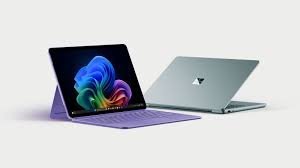
Microsoft is updating its Surface line to highlight the new trend of AI-first personal computers, where AI is more important to performance than just specifications like speed or graphics. Recent Surface products focus on AI in hardware, indicating how PCs will change in their design, marketing, and use.
Also, many people are using more AI in everyday life, including integrating it into all areas of work, such as productivity, communication, and data creation and analysis. Microsoft no longer measures PC performance by CPU speed; instead, it measures it by the amount of neural processing power and how well the PC integrates with AI, creating an ecosystem that sets its hardware apart from other companies.
Redefining What Makes a PC Powerful
Traditionally, when evaluating personal computers over the past several decades, they were assessed using a variety of metrics, such as processor speed, RAM, and storage capacity. Even today, these factors remain significant for personal computers, with the emergence of AI. Artificial Intelligence, new benchmarks on measuring performance have begun to be developed, with a focus on machine learning capabilities.
The introduction of dedicated Neural Processing Units (NPUs) in the design of devices like Microsoft’s Surface devices enables these devices to perform AI workloads very well, allowing for the integration of real-time AI without relying heavily on cloud processing.
Therefore, performance on a personal computer now depends as much on how well the device supports A.I.-driven applications as on traditional computing applications.
The Role of On-Device AI
The AI-first PC strategy relies heavily on on-device AI, enabling faster response times, improved privacy, and greater reliability than cloud-dependent solutions. By running AI tasks locally on the device, tasks such as voice recognition, image processing, and contextual assistance can be completed in real time without an internet connection, providing users with a better experience and enabling new types of applications.
In addition, Microsoft has designed its ecosystem around this functionality and subsequently encourages developers to produce software specifically for performing AI processing locally.
Integration with Windows Ecosystem
The transition to PCs using AI as the primary focus is happening alongside the evolution of Windows as an operating system. Microsoft is embedding AI capabilities into its OS, so users can access these features across a wide range of applications.
AI capabilities include intelligent agents, automated processes, and improved search functions driven by on-device AI. By integrating AI into the OS as part of its foundation, Microsoft has ensured that its Surface devices can fully leverage their hardware capabilities.
By integrating AI and Windows at this level, Microsoft has created a seamless system that delivers advanced functionality through hardware and software working together.
Changing User Workflows
New AI-first personal computers are changing how people interact with their devices. They allow users to leverage artificial intelligence to automate tasks previously done manually, such as summarizing documents, analyzing data, and creating content.
As a result, professionals will be more productive and efficient in their day-to-day tasks. Students will have a much more interactive and customized learning experience. These new devices have also been built specifically by Microsoft for this new workflow and to use AI regularly when you use your computer.
Hardware Design for AI Performance
AI-first PC design requires a unique method for developing its hardware systems. The devices need NPUs, power management systems, and memory systems specifically designed for continuous AI operations.
AI workloads demand significant system resources, which makes battery life an essential factor to consider. Manufacturers need to strike a balance between product performance and energy consumption to make their products suitable for real-world use.
Microsoft has developed a solution to these problems by improving its hardware designs, which enable continuous AI operation while maintaining device portability.
Competitive Landscape in AI PCs
The technology industry experiences competitive pressure because AI-first computing has become the new standard. Multiple companies are introducing devices with integrated AI capabilities, hoping they will become the dominant products in this new market segment. Microsoft’s Surface products serve as a Windows reference platform that other manufacturers use to develop their own AI-capable products. The growing competition between companies will drive faster technological progress, leading to more advanced AI-powered personal computers that are easier to use.
Challenges in Adoption
AI-first personal computers face multiple obstacles that prevent their users from adopting the technology. The new device interaction methods require users to learn different ways to operate their devices, as many applications still lack full AI optimization.
High-end devices become more expensive because advanced hardware components drive up their costs. Organizations need to clearly demonstrate the advantages their AI features offer before achieving widespread user acceptance.
Microsoft is addressing these problems by expanding its software ecosystem and improving accessibility across its platform.
The Future of Personal Computing
The transition to AI-first personal computers marks a major milestone in the development of personal computing. All devices will feature AI capabilities because these technologies will become standard in the future.
Future PCs will introduce advanced AI assistants that will optimize performance through predictive capabilities and establish stronger connections with cloud-based services. The system will establish a smart computing environment that adapts to user needs.
Microsoft leads the industry transformation by developing new technologies that will define future market trends.
Conclusion: A New Era for PCs
Microsoft’s Surface devices mark a complete transformation in personal computer design and evaluation methods. Microsoft has established a new standard for PC performance by making AI capabilities the main focus of its testing process.
The growing use of AI in everyday work tasks will make AI-first PCs essential for future computing, as they introduce new features and change how users engage with technology.
Source: Meet the new Surface PCs