






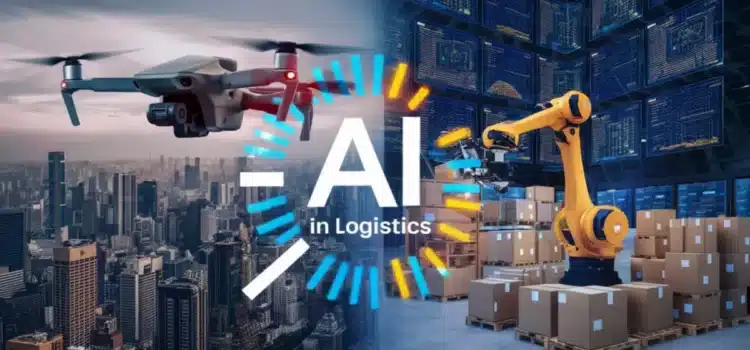
Logisteed utilises Artificial Intelligence (AI), machine learning (ML), and real-time analytics to create a connected logistics network to improve sales & purchasing international freight shipping between the US & ASIA. Additionally, the AI technology Logisteed uses in its interconnected solution provides suggested shipping/routing options, improving delivery times and overall supply chain efficiency. The new international logistics network, International Logistics, is advancing quality, speed, accuracy, reliability, and cost.
Optimizing Transpacific Logistics with AI
The Logisteed’s machine learning system employs predictive algorithms to forecast demand, identify operational constraints, and optimise transportation routes along the US-Asia trade corridor. With this tool available, shippers and logistics partners are better able to make more informed decisions based on an understanding of port congestion, weather conditions, and cargo volume data, leading to more effective ways to save on operational costs and reduce delays.
The system uses proactive methods to improve delivery speed, which makes it easier for businesses to meet their delivery commitments. AI-driven optimisation works especially well on major trade routes, since even small efficiency gains lead to significant financial savings and shorter delivery times.
Enhancing Supply Chain Visibility
The Logisteed platform provides complete supply chain visibility. The system enables businesses to monitor their shipments through live tracking and smart tracking systems, helping them identify issues and handle unexpected events.
AI builds a single dashboard that displays future predictions to help logistics managers working with multiple shipping companies, ports, and transport systems. The system provides clear visibility, reducing uncertainty and enhancing planning precision while building trust between shippers and their customers.
Reducing Costs and Environmental Impact
The AI network enhances operational efficiency, reducing costs and enabling sustainable operations. The implementation of optimisation reduces environmental impact, thereby lowering transportation expenses.
Logisteed establishes its sustainable logistics operation by combining economic and environmental advantages that reflect current market trends. Companies can achieve their corporate social responsibility targets while enhancing their international trade capabilities and profitability.
Supporting Scalability and Growth
Logisteed’s AI-based logistics system operates at capacity to manage rising US-Asian trade volume. Machine learning models use past and current data to learn continuously, which leads to better predictions and enhanced network performance.
The business can expand its operations because the system supports growth without affecting delivery speed or reliability. The AI-powered automation system reduces the need for manual labour, allowing logistics teams to focus on strategic planning and decision-making.
Integration with Enterprise Systems
The platform provides full compatibility with both enterprise resource planning (ERP) systems and transportation management systems (TMS) to deliver usable AI insights that operate within everyday business activities. The system enables organisations to achieve optimal results in shipment planning, inventory management, and supplier coordination through its automated scheduling, predictive alerts, and data-based recommendations.
The system enables different departments, carriers, and partners to work together more effectively, resulting in a unified supply chain that responds to changes more quickly.
Competitive Advantage in Global Trade
International logistics operations are becoming increasingly complex, requiring AI-based solutions to help companies gain a competitive advantage. Businesses that implement predictive, automated logistics systems will experience reduced delays and lower operational expenses while improving service standards.
The Logisteed network enables companies to conduct their trade activities with both dependability and flexibility by helping them manage market changes, port delays, and geopolitical issues. The electronics, automotive, and consumer goods industries depend on this capability because their operations require fast delivery to meet their business needs.
Challenges and Implementation Considerations
To implement AI in their logistics operations, organisations will need to ensure operational continuity by continuously providing high-quality data and establishing a robust system infrastructure. Organisations will also need to provide their employees with education on interpreting AI outputs and applying that information to make organisational decisions.
To support international logistics operations, there are three major components of an organisation’s AI modelling, sensing procedures, and security standards. The system’s ultimate operational efficiency is achieved through the successful execution of its deployment process in accordance with international trade regulations.
Future Outlook for AI in International Logistics
Transpacific logistics operations will see rapid growth in AI adoption driven by rising trade volumes, growing customer demand, and the need to build resilient supply chains. The development of machine learning systems, predictive analytics tools, and autonomous technologies will improve operations, reduce hazards, and enhance global trade.
AI-powered platforms such as Logisteed’s will become key components in developing international shipping solutions, as companies seek faster, more reliable, and more environmentally friendly logistics services.
Redefining Global Supply Chains
By providing advanced, data-enabled logistics on a global scale, Logisteed’s AI-driven logistics network represents a significant milestone in the logistics industry and has established an effective link between the U.S. and Asia. Combining real-time data, predictive analytics, and optimised routing capabilities enables businesses to exert greater operational control, improve operational efficiency, and support their international trade sustainability initiatives.
AI-driven logistics solutions set new benchmarks for operational speed and reliability while also delivering sustainable environmental benefits, helping businesses manage their complex international supply networks.
Source: Logisteed News


