




At 12:56 PM CDT on Monday, four Artemis II astronauts set a new space flight record. They reached 248,655 miles from Earth, surpassing Apollo 13’s distance in 1970. Orion will peak at about 252,756 miles before returning. This marks a milestone in human space travel.
Six days into the first crewed Artemis mission, astronauts Wiseman, Glover, Koch, and Hansen continued taking photos of the moon as they traveled farther from Earth.
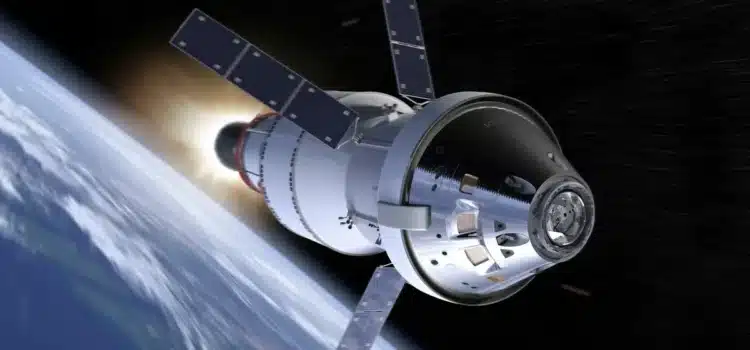
At NASA, we dare to reach higher, explore farther, and achieve the impossible. That’s embodied perfectly by our Artemis II astronauts, Reid, Victor, Christina, and Jeremy. They are charting uncharted territories for all humanity, said Dr. Glaze, Acting Associate Administrator, regarding the Exploration Systems Development Mission Directorate at NASA Headquarters in Washington. Their commitment is about more than breaking records. It’s powering our hope for a bold future. Their mission is to carry out our pledge to return to the moon’s surface, this time to stay, as we build a moon base. Following their historic achievement, NASA’s Orion spacecraft launched on April 1 using the Space Launch System rocket from Kennedy Space Center. The next day, Orion performed engine burns to leave Earth’s orbit and head to the Moon.
After setting the new record, the crew shared brief, heartfelt remarks. Canadian astronaut Jeremy Hansen spoke to the world from aboard Orion.
From the cabin of Integrity here, as we surpass the furthest distance humans have ever traveled from planet Earth, we do so in honoring the extraordinary efforts and feats of our predecessors in manned space exploration. We will continue our journey even further into space before Mother Earth succeeds in dragging us back to everything that we hold dear. Most importantly, we chose this moment to challenge this generation and the next. Make sure this record is not long-lived.
Along with breaking the spaceflight record, the crew suggested naming two lunar craters, one after their spacecraft, Integrity, and another honoring Wiseman’s late wife, Carol. After the mission, these names will be submitted to the International Astronomical Union, which oversees the naming of astronomical features. Looking ahead, the crew will pass within about 4,067 miles of the moon’s surface. They will be the first to see some areas on the far side and witness a solar eclipse. During this phase, NASA expects a 40-minute planned communications blackout as the moon blocks signals between Orion and Earth. Once Orion emerges, it should quickly reconnect with flight controllers in Houston.
During the lunar flyby, many cameras will capture images of the Moon, including areas never seen before. The astronauts will use different digital handheld cameras to take high-resolution photos of the lunar surface. Artemis II gives the crew a chance to collect valuable data. Direct observations are a powerful tool for studying the Moon’s features in varying lighting and texture.
Photos, videos, telemetry, and communication data from this test flight will guide future Artemis missions as NASA works to build its moon base.
The Artemis II astronauts have passed the halfway point of their mission. The crew is expected to splash down off the coast of San Diego at about 8:07 PM EDT (5:07 PM PDT) on Friday, April 10. After the splashdown, recovery teams will retrieve the crew by helicopter. They will then transport the astronauts to the USS John P. Murtha. The astronauts will receive post-flight medical exams in the ship’s infirmary. Later, they will return to shore and board the aircraft for NASA Johnson.
Through the Artemis initiative, NASA aims to return humans to the moon and establish a sustainable presence there. The program will send astronauts on progressively challenging missions to explore more of the lunar surface. Artemis missions will advance scientific research, foster economic development, and help lay the foundation for the first crewed missions to Mars.
For the latest mission progress, visit https://www.nasa.gov/artemis-II.
Source: NASA’s Artemis II Crew Eclipses Record for Farthest Human Spaceflight


