

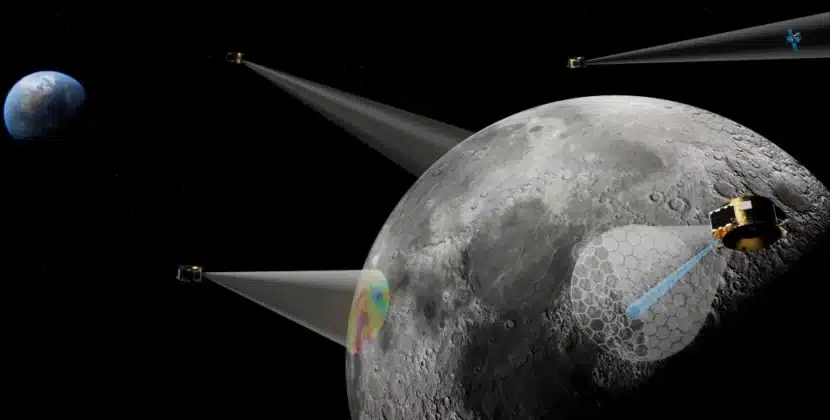




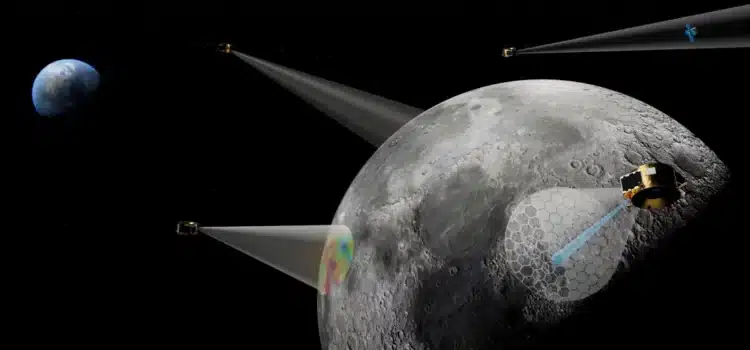
Firefly Aerospace has integrated NVIDIA’s Jetson AI platform into its lunar mission systems. By moving decision-making away from traditional Earth-based methods for on-orbit spacecraft, this integration serves as an essential capability for autonomous space transportation. Onboard AI will leverage real-time image processing via the Jetson AI platform to enable intelligent decision-making on lunar missions, eliminating communication delays that compromise the time-critical nature of many missions.
The onboard AI will be used through Firefly’s lunar imaging and data services, enabling it to process and analyze data as it is generated before human operators are involved. By providing onboard computing capabilities to enable edge AI to drive and develop autonomous space infrastructures, Firefly is at the forefront of this transformational change in the aerospace industry.
Bringing AI to the Edge of Space
For decades, most of the data processing for space missions has been performed on the ground using Earth-based resources. The raw data obtained from space is then transmitted back to Earth for processing before being used to convey commands to the spacecraft. This creates time delays of several seconds to minutes, depending on orbit distance and mission design.
The addition of NVIDIA Jetson technology to Firefly’s lunar systems transforms much of the ground-based data processing into onboard operations. This allows near-real-time interpretation of captured data, such as image processing, real-time terrain mapping, and immediate adjustments to the spacecraft without waiting for data from Earth.
This shift is extremely valuable for missions to the Moon because of rapidly changing surface conditions and the limited time available to establish a two-way communication link with Earth; therefore, it is imperative that lunar missions be performed autonomously.
What Edge AI Changes for Space Missions
Edge AI refers to computers that analyze their own data on-site rather than sending it to a central location for processing. In space exploration, spacecraft will be able to perform independent sensor analysis and respond immediately without needing to send all data back to Earth for processing.
The Firefly lunar camera service demonstrates how Edge AI will improve space mission operations. The camera could assist in detecting hazards, analyzing surface features, and optimizing landing paths, among other tasks. Edge AI enables data savings by transmitting processed insights to Earth rather than sending complete sensor data.
These efficiencies enable improved communication with deep-space vehicles, as the number of communication pathways far exceeds the number of available channels.
NVIDIA Jetson’s Role in Space Computing
Jetson by NVIDIA has been created specifically for power-efficient, compact, high-performance AI computing. Primarily designed for use in drones, robots, and autonomous machines operating in Earth environments, their inherent ability to manage heavy-duty AI workloads while conserving power has led to an increasing number of applications in the aerospace and defense industries.
Firefly’s design relies on the Jetson platform because it enables the spacecraft to run onboard machine learning models that perform image classification, object identification, and environmental analysis.
This capability is extremely beneficial for lunar missions because the three largest engineering challenges will be power consumption, weight, and reliability.
Firefly’s Push Toward Autonomous Lunar Systems
Firefly Aerospace is among a host of expanding private-sector space companies creating commercial infrastructure on the surface of the Moon and is devoted to using AI as part of a trend across the industry toward the development of autonomous systems in support of space exploration.
As the increasing complexity of space exploration missions requires real-time navigation and control during surface operations or extended periods in orbit, autonomous systems with AI will be necessary to scale space exploration efforts.
Firefly is embedding intelligence directly into spacecraft to reduce reliance on ground stations for mission design flexibility.
Why Real-Time Processing Matters in Lunar Missions
Mission planners are tasked with developing and executing mission plans that will be accomplished as quickly as possible while adhering to very tight time constraints and significant communication delays. A small amount of latency in decision-making can have major adverse effects on landing accuracy, data quality, and the overall mission’s safety.
Spacecraft use their onboard AI system to handle unexpected events, which include surface anomalies and navigation errors. The technology will enhance mission success rates by enabling autonomous landers and orbiters to conduct mapping and reconnaissance activities.
Onboard AI enables dynamic planning of mission objectives; i.e., spacecraft can modify their objectives based on new data obtained in real time, rather than following pre-programmed objectives.
A Step Toward Fully Autonomous Space Infrastructure
Spacecraft that utilize AI computing platforms such as Jetson are poised to provide a fundamentally new perspective for fully autonomous spacecraft. In addition to collecting and gathering data through an onboard system, future space vehicles will also be capable of autonomously interpreting, making decisions based on, and acting on that data.
This transition to an increasingly autonomous spacecraft architecture supports the long-term objectives of an ongoing and permanent presence on the Moon and, ultimately, deep-space travel, both of which are impeded by the inability to effectively communicate in real time with human operators due to the timing of interplanetary communications.
As AI integration into advanced space technology advances, onboard intelligence will become a standard feature of all advanced spacecraft systems.
Industry Implications and Future Applications
With their joint efforts, Firefly Aerospace and NVIDIA could create a model that may inspire many other aerospace companies to evaluate incorporating edge AI into their operations. Future examples of this type of system could be found in Mars missions, asteroid exploration, and Earth-observing satellites.
Beyond exploration, real-time AI capabilities in orbit could also support commercial satellite services such as environmental monitoring and disaster detection and enable global imaging systems.
The success of these types of integrations will ultimately be a significant contributor to the timeline of when autonomous spacecraft will become a major component of commercial spaceflight.
Conclusion: Intelligence Moves Beyond Earth
Firefly has successfully combined NVIDIA Jetson capabilities with its lunar exploration system, enabling autonomous exploration through real-time AI processing while reducing Earth’s ground control requirements.
With increasingly advanced missions planned for our solar system, onboard intelligence will begin to rival propulsion and navigation systems in importance, completely transforming our method of planetary exploration beyond Earth.
Source: Firefly Aerospace Enables On-Orbit Processing for Moon Imaging Service with NVIDIA Jetson


