

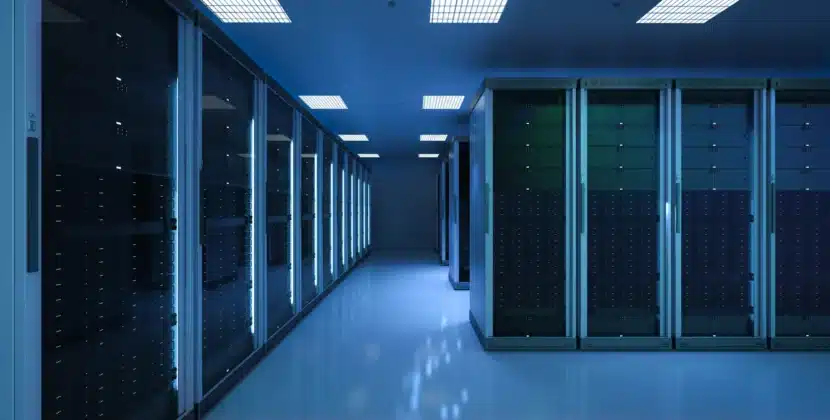




Microsoft has launched a standardized physical infrastructure designed to extend advanced computing capabilities to the network edge. The “modular rack” architecture enables rapid deployment of high-density server clusters in environments such as remote industrial sites, shipping terminals, and geographically distributed healthcare facilities. The primary objective is to minimize the spatial and thermal footprint of advanced data processing units, distributed hardware architecture facilities, low latency, and site-specific decision-making.
The Engineering of Modular Scalability
Building on this, the new system uses a “blade on rail” design, so you can swap or upgrade individual compute modules without turning off the whole rack. Each module has its own cooling and power controls. This setup means that if one part fails, it won’t affect the rest of the system. It also lets you combine different processor types as needed.
The chassis is built to fit inside standard shipping containers or small utility closets. Its tough exterior shields the hardware from dust, moisture, and vibration, making it well-suited for industrial use. This sturdy design allows the equipment to operate in harsh environments without the need for a climate-controlled room. Inside, the layout uses a vertical chimney effect to help airflow and naturally carry heat away.
Liquid to Air Thermal Management
Switching focus to thermal management, a specialized liquid-to-air heat-exchange system maintains the rack’s temperature. This approach removes the need for big, power-hungry external chillers. A non-conductive coolant flows through the heat sinks on the powerful processors, carrying heat up to a large radiator at the top of the rack. Big, slow-moving fans then blow air over the radiator to cool the liquid.
This closed-circuit system works efficiently in many different climates. It keeps the hardware cool even in hot places like deserts or factory floors. Because the cooling fans use less extra power, the rack gets a better energy efficiency rating. This is especially important for remote sites with limited power, ensuring that most of the electricity is used for computing.
Moving from hardware to software, integrating distributed intelligence protocols becomes essential.
A specialized software layer, Edge Orchestration, manages the modular compute racks. This protocol coordinates thousands of racks into a unified distributed supercomputing cluster. It assigns tasks based on data source proximity, optimizing workload distribution. For example, a rack at an airport runs local security analytics, while another at a nearby logistics center focuses on baggage automation.
This architecture minimizes transmission of raw data to a centralized cloud infrastructure. Local processing enhances privacy, reduces latency, and cuts bandwidth consumption. The orchestration layer enables predictive failover: When a rack detects potential hardware faults, it proactively migrates workloads to adjacent racks, maintaining continuous system availability without downtime.
Security And Identity At The Hardware Edge
Each hardware blade incorporates a Trusted Platform Module (TPM) that enforces secure boot by permitting only verified cryptographically signed software to execute. If the physical chassis or firmware is tampered with, the system immediately locks the stored data. Differential privacy algorithms embedded in the silicon protect individual data points while enabling statistical analysis for actionable insights.
Biometric access panels installed on rack doors enforce physical security. Before maintenance, users must complete multi-factor authentication to prevent unauthorized access to remote or unsupervised sites. Racks are equipped with active ensure: If a breach or unauthorized movement is detected, the system immediately deletes internal encryption keys from storage.
Extending Connectivity via Satellite
Integrated satellite uplinks ensure rack operation in environments lacking reliable terrestrial connectivity. High-throughput satellite links provide communications redundancy when primary fiber links fail (which is crucial for mobile developments, deployments such as ships or remote extraction sites). During off-peak hours, the system synchronizes its global state data with the central platform to keep edge models up to date.
Satellite connectivity enables secure over-the-air (OTA) firmware updates, eliminating the need for on-site technician visits for routine maintenance. The system autonomously downloads and installs update packages during scheduled maintenance windows. Automated self-healing and self-updating routines lower total operating expenditure and increase edge rack autonomy.
The Quiet Resonance Of The Edge
As these digital systems expand, we observe a subtle but important change. The environment adapts more directly to our needs. An automated system now aligns with local requirements. We are approaching a time when control is decentralized and distributed among several operational centers. Gradually, distinctions between cloud technology and the physical world may diminish.
In the future, daily life may be supported by multiple networked connections. These systems will use both user inputs and data to provide relevant support. The environment will become more automated and efficient, with local support always available. The goal is to integrate technology into daily life in a seamless, supportive way with reliable systems operating nearby.
Source: Google Patent US


