






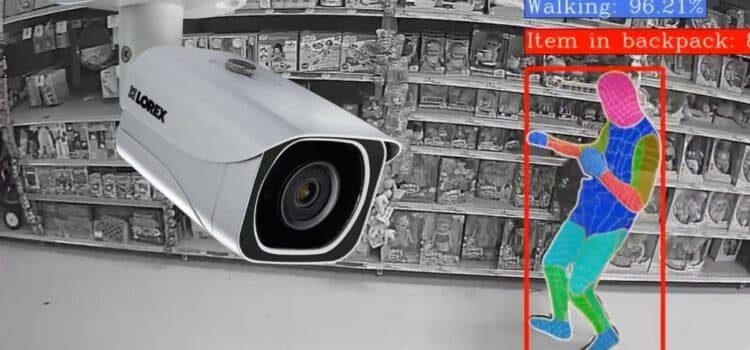
Retailers in the United States face rising threats from organized retail crime and shoplifting, leading to increased losses that threaten profits and even business survival. By 2025, theft will no longer be a simple nuisance but a direct threat to staying open.
With profit margins so tight and old methods straining to keep up with evolving theft tactics, it is increasingly urgent for retailers to evolve. This challenge sets the stage for understanding the limitations of traditional security methods.
Why Traditional Retail Security Falls Short?
For years, retailers have relied on security guards, cameras, and locked displays. While these tools still help to some degree on their own, they are no longer enough to address today’s heightened risks.
- Soaring shoplifting rates — ome smaller retailers like Winters Market in Northern California report losses of up to $40,000 annually due to theft (CBS News). For many businesses, numbers like these represent the difference between staying open and closing their doors.
- Staffing challenges: posting employees in every aisle or hiring additional security teams is neither practical nor financially feasible. Labor shortages add to the difficulty.
- Limited deterrence from legislation: Criminology studies consistently show that the likelihood of being caught is a stronger deterrent than the severity of punishment. This means legislation alone cannot solve the issue.
Given these mounting issues, the need for a new approach becomes clear. This leads to a closer look at how technology is changing the game in retail security.
The Rise of AI-Powered Security
In response to these escalating threats, artificial intelligence is becoming a key tool in fighting retail crime. AI systems connect with existing camera networks and act as smart filters, watching for suspicious movement patterns in real time.
Key features of AI-powered security include:
- Movement analysis: rather than focusing on facial recognition, AI evaluates gestures such as concealing items or leaving unusual objects in aisles.
- Live alerts: suspicious activity is flagged instantly, with video clips sent directly to staff for quick, knowledgeable decisions.
- Privacy first: by analyzing movement rather than personal characteristics. These systems reduce bias, concerns, and avoid profiling.
- Flawless integration: AI overlays onto existing CCTV infrastructure, enabling retailers to modernize without major hardware upgrades.
Thus, the adoption of AI marks a turning point, enabling stores to better manage security needs. Actual case studies illustrate these improvements in action.
Early Success Stories
Consequently, retailers using AI-based security are already seeing real results.
- Winters Market (California): after losing nearly 40,000 dollars annually to theft, the store implemented AI monitoring. Staff now receive immediate alerts, permitting early intervention and reducing losses. (CBS News)
- Laurel Ace Hardware (San Francisco): Reported a 50% drop in theft following AI adoption, a critical improvement that allowed the business to remain visible in a high-crime area. (San Francisco Chronicle)
- High-risk categories: national retailers report shrinkage reductions of up to 60% in targeted sections such as health and beauty. within just months of AI deployment (Business Insider)
These real-world experiences highlight that this technology is moving beyond experimental stages and is now a proven tool for retailers. The benefits also reach beyond loss of prevention alone.
Benefits Beyond Loss Prevention
AI security does more than just reduce losses. It brings many benefits to both businesses and their communities.
- Loss reduction: shrinkage in vulnerable departments can drop by half or more.
- Improved safety: column staff is alerted only when theft is likely, cutting down unnecessary confrontations and improving workplace safety.
- Customer confidence: a secure shopping environment reassures customers and promotes repeat visits
- Law enforcement support: time-stamped video evidence streamlines investigations and strengthens prosecutions
- Together, these advantages enable retailers to better navigate today’s security landscape and prepare for the challenges ahead, especially as 2025 approaches and industry standards evolve.
Why 2025 Denotes A Turning Point
This shift is becoming more urgent as retail crime now costs US businesses over $100,000,000,000 each year. With tight margins and rising costs, retailers can no longer see AI as simply an option for the future.
Therefore, as this technology becomes standard by 2025, businesses will find that adopting AI security systems could be critical to their continued success. The implications extend even further when considering the broader retail environment.
The Bigger Picture
Retailers do not have to make this change on their own. Technology partners and solution providers are helping businesses fit AI into their overall security plans. By combining AI surveillance with access control, intrusion detection, and safety systems, organizations can build a more integrated approach to protection.
The future of retail security is more than just catching thieves after the fact. It is about building stores where shoppers feel safe, staff are supportive, and losses are kept under control. AI is now a key part of strengthening retail businesses. Explore how AI solutions can protect your store, reduce losses, and create a safer shopping environment.
Source: Retail Security in 2025: Why AI Is Becoming the New Loss Prevention Partner


