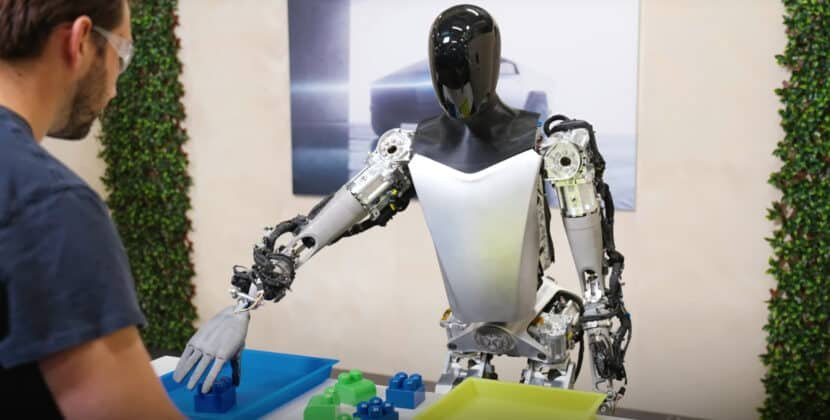




Tesla has received a new patent that represents a major step forward in how humans and robots interact. Released to the public in April 2026. The patent describes a system that enables humanoid robots to understand non-verbal cues, allowing them to read human body language in real time rather than relying solely on voice commands or set physical triggers. This technology focuses on the small details of posture, gestures, and even subtle movements by adding spatial perception to its robots. Tesla hopes to make interactions increasingly natural and safe, allowing machines to pick up on human needs and respond to social signals almost as smoothly as people do.
The Mechanics of Non-Verbal Interpretation
At the heart of the patent is a specialized gestural recognition engine that uses high-definition cameras and depth-sensing devices. While older vision systems just spot objects in a room, this one maps the human skeleton in 3D. It tracks how joints move, like the tilt of a shoulder, the way a palm is turned, or how tense someone’s posture is. The robot then uses this information to infer what a person might want or need by turning the motion into intent signals.
For instance, the patent gives an example where someone carrying a heavy object starts to lose their balance. The robot’s sensors detect the sudden shift in the person’s center of gravity and their quick movements. Even before the person says anything, the robot can spot these signs of trouble and move in to help steady the load. This kind of anticipatory response is a big change from robots that only react, turning machines into active partners in busy or team-based environments.
Increasing Safety Through Social Awareness
This technology makes shared workspaces safer in factories or warehouses. Robots must navigate unpredictable human movement. The Tesla patent details a safety buffer that shifts based on what the robot senses about people nearby. If someone appears distracted or looks away, the robot keeps a greater distance or slows down. This helps prevent accidents. If a person signals stop or acts aggressively, the robot quickly switches to defensive or idle mode.
Social awareness enables collaborative handoffs. According to the patent, the robot observes how a person offers an object, such as their hand, speed, and grip angle, to ensure smooth transfers. If someone moves slowly or hesitantly, the robot adjusts its grip and speed to move. This response helps large machines feel less intimidating to workers.
Adaptive Learning and Customized Interaction
The patent also includes adaptive learning. The robot adjusts to each person’s body language, recognizing that people and cultures move differently. Baseline mode lets the robot learn someone’s unique gestures over time. It distinguishes between casual waves and the supervisor’s commands, supporting smoother teamwork.
Personalization aids in environmental contextualization. The robot understands that body language varies across environments. By linking physical cues to context, it knows how to respond. In medical or home care settings, if someone is slumped or moves slowly, the robot may recognize tiredness or illness and act accordingly, such as alerting a caregiver. The robot closely observes well-being by noticing small changes in movement and mood.
Scaling The Technology For Mass Production
This patent comes as Tesla works to mass-produce its third-generation humanoid robot by addressing the problem of non-mobile communication. Tesla is helping make robots more practical for homes and service jobs. For robots to be helpful in places like houses or stores, they need to handle social situations without always needing spoken instructions. This patent describes how a robot can gauge the atmosphere and integrate into human society with social awareness.
The Mute Exchange of the Future
As these digital assistants appear in workplaces and homes, we see a new kind of communication between people and machines. These robots can detect subtle gestures such as a head tilt or a hand movement almost as clearly as spoken words. Over time, the gap between what we think and what happens may get smaller as machines help us more naturally in our daily lives. One day, the robots we create might become very good at understanding us, paying close attention to our actions and valuing our nonverbal cues as much as our words.
Source: https://www.uspto.gov/


