






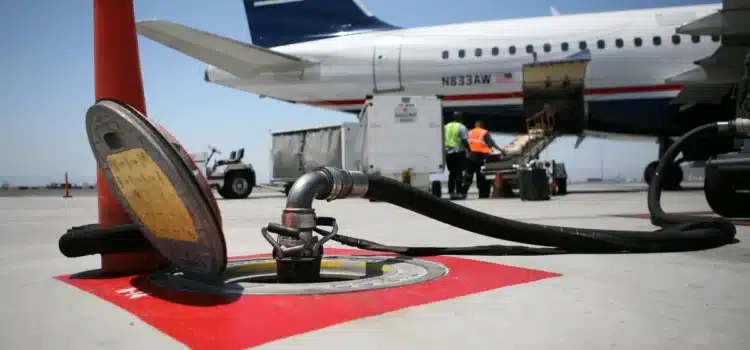
Waste Energy Corporation has developed a recycled-materials processing system powered by artificial intelligence. The system will enable the conversion of municipal and industrial solid waste into sustainably produced aviation fuel. The company’s use of advanced sorting technology, machine learning algorithms, and chemical processes to convert waste into sustainable fuel will help reduce the amount of waste sent to landfills while providing the aviation industry with environmentally friendly fuel options. This project also demonstrates a significant increase in the use of artificial intelligence in sustainability and renewable energy applications.
Transforming Waste into Sustainable Aviation Fuel
Waste Energy Corporation employs intelligent sensor technology and machine learning algorithms for its AI recycling system. Intelligent sensor technology and machine learning algorithms can detect and separate the various types of waste generated during the recycling process. Additionally, intelligent sensor technology and machine learning algorithms will utilise chemical conversion processes to create aviation-grade fuel from either organic or synthetic materials after they have been sorted.
Waste Energy Corporation developed a recycling system that operates with greater accuracy and repeatability and promotes environmental sustainability through intelligent sensors that use machine learning to monitor the entire recycling process.
The aviation industry continues to face pressure to reduce its overall carbon footprint; therefore, the availability of alternative fuel sources that meet current performance standards and environmental regulations will benefit the industry. Airlines can reduce their carbon footprint without negatively impacting operational efficiency by using Waste Energy Corporation’s AI recycling technology.
Advanced AI and Automation
Central to the process is AI-based automation. The machine-learning models will analyse large-scale datasets of waste characteristics, enabling the automated material-processing system to identify the most efficient sorting methods, reduce cross-contamination, and maximise them at a much higher speed and accuracy than would be achieved with human intervention alone.
The AI algorithms will continuously learn from the material streams; thus, the material-processing system will improve over time. The material-processing system can identify new types of waste, adjust material-sorting strategies as needed, and ensure that feedstock quality meets the requirements for producing aviation fuel.
Environmental and Economic Benefits
The AI recycling initiative has many positive environmental impacts. By diverting waste from landfills, greenhouse gas emissions from decomposition are reduced. Creating aviation fuel from waste also replaces jet fuel derived from fossil fuels, supporting a transition to lower-carbon energy sources.
Using this technology economically creates a circular solution for waste management and fuel production. Both municipalities and industries will find this a cost-effective way to manage their waste, and the aviation industry will have a renewable energy source. Through both actions, environmental and economic sustainability is supported.
Supporting the Aviation Industry’s Decarbonisation Goals
The AI utilises sustainable fuels. Waste Energy Corp has created an AI model that produces a fuel compatible with commercial airlines based on two characteristics: 1) Energy content – combustion efficiency, or 2) Greenhouse gas emissions.
Using this technology, Waste Energy Corp can create a reliable and scalable supply of sustainable aviation fuel to help airlines transition to a cleaner operational approach while continuing to meet safety and performance requirements. In addition, this model supports a range of decarbonisation strategies and regulatory compliance measures.
Real-Time Monitoring and Quality Control
Scientists use AI systems to monitor and trace fuel production methods through sophisticated tracking capabilities. This allows for real-time monitoring of the chemical composition, temperature, and production conditions of fuel production by the AI system using sensors and predictive algorithms, thereby automatically correcting any deviations so that fuel will be produced at a consistent level of quality and production.
The level of monitoring described above minimises waste generated during fuel production, increases safety, and guarantees that the final product meets industry standards for aviation fuel. The system then uses continuous feedback loops to continually refine its operation to achieve maximum efficiency and production yield.
Scaling Sustainable Solutions
Waste Energy Corporation’s objective is to expand the use of its Artificial Intelligence (AI) recycling systems at many sites throughout the United States. The AI system aggregates data from multiple facilities to enable predictive maintenance and process optimisation.
Waste Energy will soon expand its current capabilities by adding more efficient, higher-capacity facilities, increasing the amount of aviation fuel available to the supply chain. The immediate ramp-up of these additional facilities across the United States will also support our country’s broader sustainability goals by providing greater amounts of alternative energy, reducing our current dependence on traditional fossil fuels, and directly leading to decreased environmental degradation.
Industry Collaboration and Innovation
The company works with local governments, airlines, and fuel suppliers to ensure its technology meets the real-world needs of supply/distribution/regulatory compliance through collaboration. It establishes partnerships that help adopt AI recycling solutions and promote innovation in both renewable fuel production and waste management.
By developing relationships with various sectors, Waste Energy Corp supports positioning AI Recycling as a major contributor to a more sustainable aviation and energy ecosystem.
Challenges and Considerations
While waste-to-fuel technology driven by AI holds great promise, operational and regulatory obstacles continue to prevent widespread implementation of AI-powered W2F technologies. Achieving consistency in feedstock quality, controlling complicated chemical processes, and meeting governmental fuel specifications require thorough monitoring and oversight.
Infrastructure and funding investments are also essential to the successful expansion of these technologies. Organisations need to weigh the immediate costs against the long-term benefits (e.g., environmental improvements, cost savings, fuel savings, and opportunities for tax credits).
Future Outlook
AI in recycling and fuel production should continue to proliferate because of its potential to advance the larger goal of decarbonising transportation and reducing landfill waste. In addition, advancements in sensor technologies, machine learning, and chemical engineering will drive the ongoing evolution of these three areas by increasing efficiency, yield, and scalability.
As these technologies mature, AI recycling has the potential to become an integral part of a sustainable fuel supply chain, complementing other renewable solutions and helping achieve industrial goals to meet stringent climate targets.
Source: Waste Energy in the News


