




Armonk, New York
IBM’s own engineers cannot read your data. This is not simply a marketing claim, but a fact built into the physical server design now used in IBM’s enterprise hosting centers. Compliance officers in every regulated industry should stop and absorb. The company that created the mainframe industry has now deployed IBM secure cloud infrastructure controls so strict that even administrator accounts are physically blocked from accessing client records. The real question is not whether the technology works, but who confirmed it does, and what that validation means for the corporate databases it protects.
The Architecture Behind IBM’s Zero Trust Commitment
IBM Z, the company’s main mainframe platform, is known as the most reliable server on the market, with an average annual downtime of less than a third of a second. This hardware reliability is well known. What is less known, and more important for enterprise security teams, is the layered isolation model that supports these uptime numbers.
The IBM secure cloud infrastructure framework does not use a perimeter model. It does not verify whether a user is on the correct network or has a valid badge. Zero trust strategies are made for the complex, wide-area networks most organizations use today, and IBM’s approach takes this idea as far as possible. Isolated hardware memory partitions keep sensitive corporate files separate from shared internet connections at the silicon level. These are not just software rules; they are physical boundaries that the server enforces, no matter what any software above it says.
How Cryptographic Defense Keys Lock Out Even IBM’s Own Teams
The most striking part of this setup is not what it blocks from the outside, but what it keeps away from insiders.
IBM’s enterprise partition security model assigns independent cryptographic defense keys to each isolated workload partition. Those keys do not live in any centralized key store that a database administrator can query during a maintenance window. They are bound to the hardware partition itself, which means a maintenance technician running a routine system check cannot decrypt the contents of a client’s data volume even if that technician has full root access to the operating environment surrounding it.
A zero-trust workflow links each main component in a continuous decision loop. When someone requests access, identity and access management first checks who they are, then the policy engine reviews the request and makes a real-time decision based on set rules and context. IBM’s physical key binding adds one more layer below the policy engine. Even if the policy layer is compromised, for example, by a malicious insider or a hacked vendor account, the cryptographic defense keys that control data isolation stay secure. No policy override can force the hardware to release an encryption key it was never meant to share.
This difference is very important for corporate tech compliance teams. The threat that worries database managers most is not outside hackers, but insiders such as contractors with high-level access, third-party maintenance vendors, or unhappy engineers. IBM’s architecture handles this risk at the hardware level, where software-based controls cannot help.
Testing the IBM Secure Cloud Infrastructure Zero Trust Deployment
IBM announced the general availability of three new Z software tools in June 2026, designed to tackle not only current security challenges but future threats, including frontier model attacks. Among those tools, IBM zSecure Detection provides enterprises with comprehensive capabilities to detect, investigate, and respond on z/OS to strengthen their security posture, monitoring IBM Z activity for behaviors such as ransomware signatures and anomalous access patterns. IBM zSecure Secret Manager addresses certificate lifecycle management by providing secure, continuous monitoring for z/OS environments in IBM Z and LinuxONE, powered by IBM Vault Self-Managed for Z.
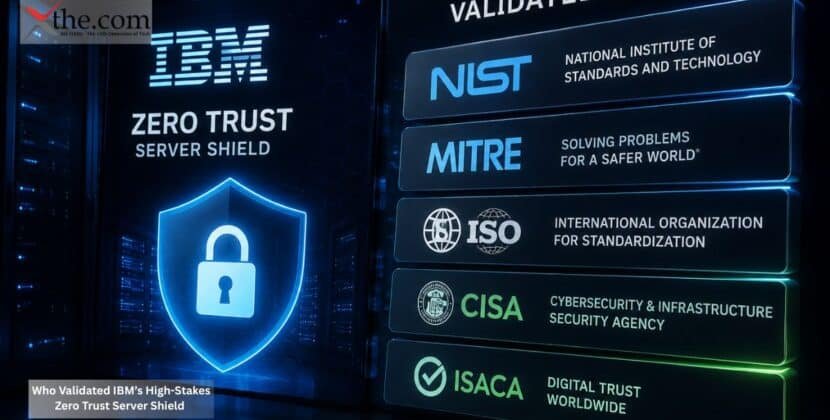
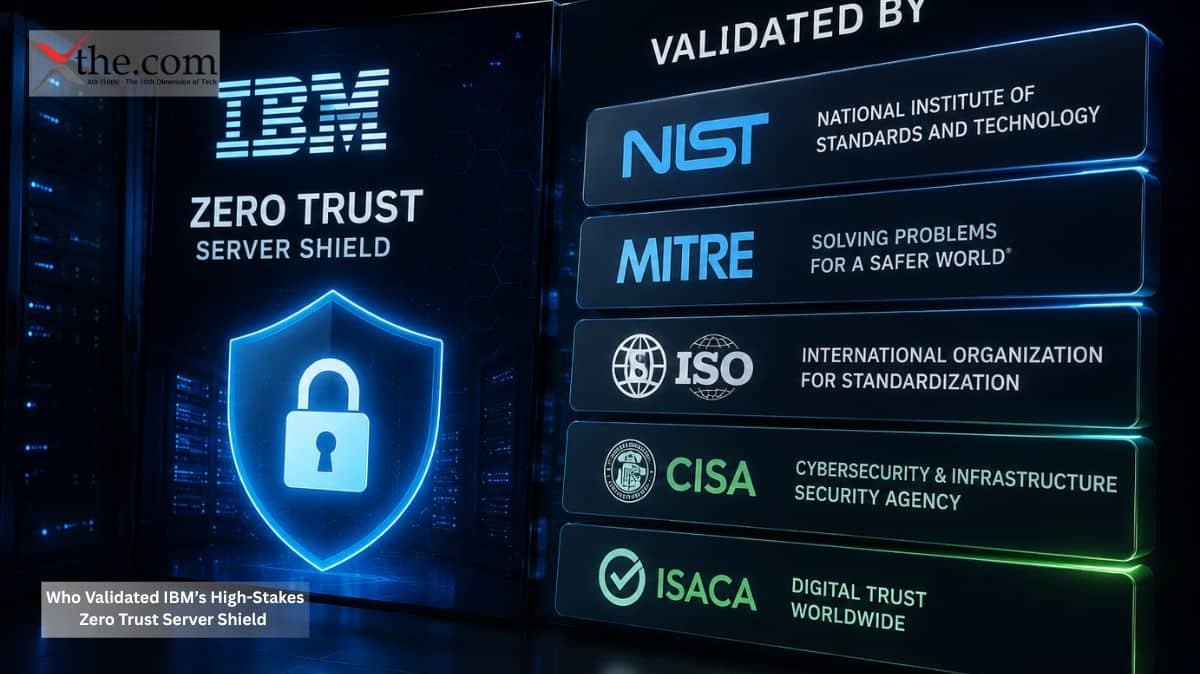
The IBM secure cloud infrastructure zero trust deployment framework is based on established federal standards. NIST Special Publication 800-207 sets out the main ideas of zero trust, such as stronger identity checks that allow access only to trusted zones and micro-segmentation, which prevents attackers from moving through the entire system if they breach one part. IBM Z’s physical partition model puts both of these ideas into practice at a level that most software-only solutions cannot match.
Independent validation came through IBM’s conformity to FIPS 140-2 cryptography standards. AES encryption for IBM environments fully supports FIPS 140-2-compliant key management, including OASIS KMIP-compliant key managers the same standards that federal agencies must meet under the 2021 executive order directing all US government bodies to adopt zero trust architectures.
What the Sovereign Cloud Implications Mean for Enterprise Compliance
Hardware-level data isolation changes how organizations must think about regulations when storing sensitive records in a shared cloud. The usual worry in enterprise compliance is simple: if the cloud provider’s staff can possibly access your data, then your data is not truly isolated. Audit reports, penetration tests, and contracts help, but they do not remove this possible access.
IBM’s enterprise partition security design closes that access window. According to the IBM Cost of a Data Breach Report 2024, organizations with strong zero trust systems saved an average of $1.76 million per breach compared to those without zero trust. These savings assume a breach happens. IBM’s point is that its architecture prevents a whole category of breaches, such as privileged insider access and maintenance window exposure, from occurring at all.
Automated key and certificate management will improve data protection and build faith in digital systems, according to IBM’s 2025 security roadmap. The zSecure Secret Manager now makes this automation real by removing certificate management as a manual step, where mistakes or insider tampering could break the chain.
The Standard That Other Providers Now Have to Meet
IBM’s deployment has both competitive and regulatory effects. When a company as large as IBM offers hardware-enforced data isolation as a standard feature and gets it validated against NIST and FIPS standards, it changes what enterprise customers can expect from any cloud provider.
A corporate database manager who reads this architecture specification and then checks their current cloud service agreement will notice something important: most agreements talk about administrative access controls as policies, not as hardware features. That difference is now clear. The IBM secure cloud infrastructure zero-trust deployment model has made the distinction between ‘our policy prohibits admin access to your data’ and ‘our hardware prevents admin access to your data’ very clear. One is a promise, the other is proof. IBM Z clients continue to use the platform for their most sensitive and mission-critical applications, especially with new sovereignty and regulation requirements. Now that the June 2026 toolset is available, the standard for mission-critical protection has changed.
For organizations operating under HIPAA, SOC 2 Type II, FedRAMP, or new state-level data sovereignty rules, IBM’s architecture exceeds current requirements. It also prepares for future rules that regulators have not yet written.
Source: IBM Newsroom