





Montgomery County, Missouri?
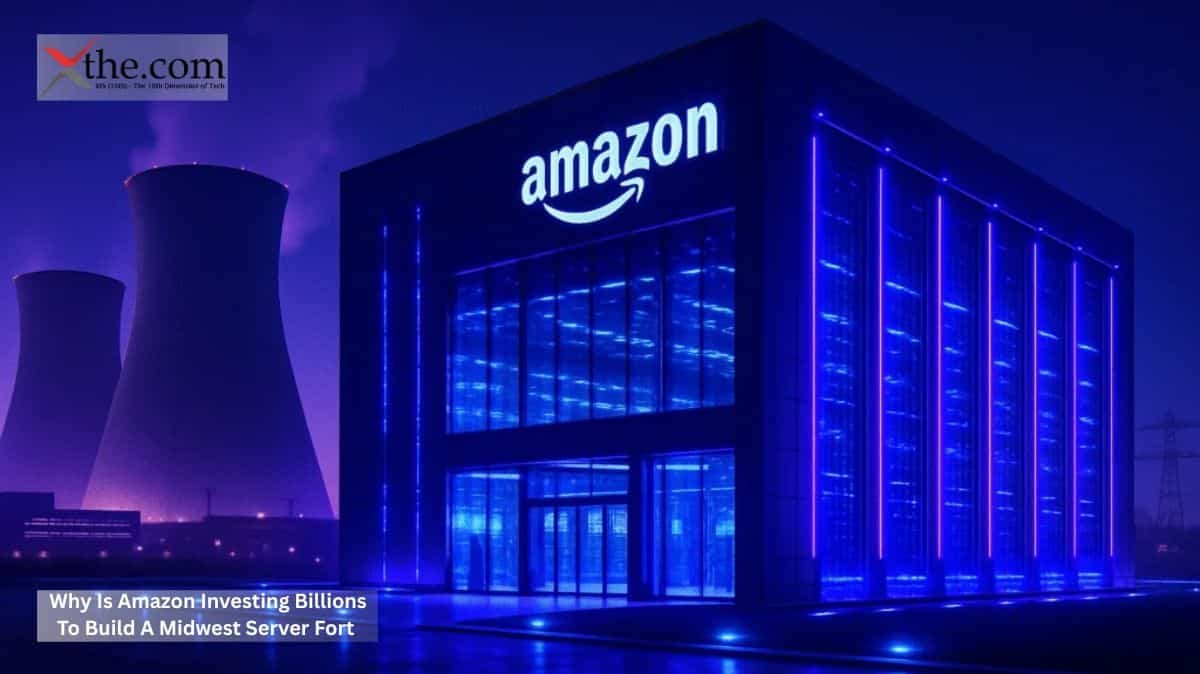
A patch of farmland southeast of New Florence, Missouri, with a population of about 700 at the intersection of Interstate 70 and Highway 19, is about to become one of the most secure digital infrastructure sites in the country. Amazon plans to spend $10 billion to build a data center campus covering 1,000 acres in Montgomery County, a project they call Project Green. That number is correct: ten billion dollars, in a county where the land used to bring in only about $9,000 a year in tax revenue.
The real question is not just why Amazon chose Missouri. It is also about why now, why this setup, and what it means for everyone whose hospital records, mortgage payments, or retirement accounts depend on cloud systems that most people only notice when something goes wrong.
The Amazon Data Center Missouri Bet on the American Heartland
Missouri is quickly becoming a key hub for large-scale data centers as companies look beyond traditional markets that are running out of power and space. Amazon and Google together have invested about $25 billion in Montgomery County alone. For years, places like Northern Virginia, Phoenix, and the Oregon coast led the data center industry. But now, land is expensive, the electric grid is stretched, and local officials are less welcoming to the construction of more large warehouses. Missouri offers a completely different situation.
Amazon plans to build at least four data center buildings, and possibly up to 17, with a minimum investment of $8.5 billion. Construction could start as early as 2026 if all approvals go through. The project will happen in two phases: the first will build eight buildings, and the second could add up to 13 more. When finished, this campus will be much larger than most places called a ‘data center.
Inside the Montgomery County Facility: What “Secure” Actually Means Here
If you look past the official statements, Amazon is building a self-contained operating environment. The Montgomery County facility is designed to handle cloud computing tasks such as remote access to hospital records and real-time financial transactions. For these kinds of services, a network outage is not just inconvenient—it can be a public safety issue.
Building secure cloud architecture at this scale needs physical separation as much as strong encryption. The campus is far from any urban grid pressure points, which lowers the risk of both failures and attacks. AWS will set up several stormwater ponds, three wells, and a wastewater and water treatment plant on site. This setup keeps the facility running on its own, instead of relying on city systems that might be disrupted or overloaded.
This kind of separation is important. For example, a hospital in St. Louis using AWS to access patient records, or a community bank in Jefferson City processing wire transfers, depends on those records being available even if there is a problem with the regional power grid. The Montgomery County campus is built to handle that pressure and keep services running.
The 138-Megawatt Energy Answer to the Grid Problem
Power is the main challenge for building data centers today. AI workloads, especially large language model training, use a lot of electricity—a single training session can consume as much power as dozens of average American homes in a year. The Missouri facility is planned to run on 138 megawatts of carbon-free energy, enough to power about 28,000 homes.
Amazon is paying all the costs to connect the new data center to the power grid. The company worked with Ameren Missouri, the local electric utility, and will cover all expenses for electric service and grid connection, without any incentives or rate discounts. This is an important decision. Amazon is choosing to cover the costs of connecting to the regional grid itself, rather than asking for lower rates that would make local residents pay more. Missouri’s Senate Bill 4, passed in 2025, requires the Public Service Commission to set rates for large customers that match their share of costs, so regular customers are not unfairly charged for service to big users.
The renewable energy component of the project is more than just a way to appear sustainable. Having 138 megawatts of carbon-free power protects the Amazon Data Center Missouri campus from the price swings of fossil fuels and from the growing regulatory risks facing coal-based power providers.
Rain-Harvesting, Deep Wells, and the Water Independence Play
Water is another big challenge for placing data centers across the country. Cities often resist when a large company’s cooling needs compete with local water supplies. Amazon’s engineering solution in Montgomery County is worth a closer look.
The data centers are expected to use outside air for cooling about 90% of the time, and water for cooling only 7% of the year or less. At full capacity, Amazon says the campus will use less than 0.1% of the aquifer’s yearly recharge from normal rainfall. The 90% number is important. Most of the time, the facility uses Missouri’s outside air to cool its servers and releases the heat outside, without using any city water.
When it gets hot enough for the facility to need water cooling, the campus uses a rainwater harvesting system that should provide about 20% of its yearly water needs. It also has a recycling system that reuses water six times. This internal cycle—harvest, cool, recycle, repeat—is the kind of closed system that sets the Amazon Data Center, Missouri, Montgomery County campus safety profile so distinct from older facilities. Those older centers often drew water directly from city supplies, which caused problems for local communities.
Amazon is also spending over $5 million to drill wells that are 600 feet deeper than typical residential wells, and the water system is built to be twice as efficient as the average data center. After construction, Amazon will transfer the entire water system to Montgomery County Public Water Supply District No. 1 at no cost, enabling the district to expand water service to other areas.
What Montgomery County Gets — and What It Gives Up
Amazon committed more than $7 million in community contributions, including $3 million for emergency dispatch services, over $1 million for a new community gathering space at the county fairgrounds, another $3 million toward broader community programs, and a $150,000 community fund for local projects.
The project should create more than 400 full-time data center jobs and thousands of construction jobs, while bringing in hundreds of millions of dollars in new tax revenue. For a county that used to get almost no tax money from this land, this new income could change what local schools, roads, and emergency services can afford for years to come.
There are real tradeoffs, though. Some residents worry about potential impacts on their electric and water bills and on the environment, even though Amazon and county officials point to the project’s built-in safeguards. Community doubts about promises made during big infrastructure projects are understandable—they come from past experience. The legal protections in Senate Bill 4 and Amazon’s commitments regarding grid costs are meant to address these concerns with concrete rules, not just promises.
The Rebalancing of America’s Digital Map
What Amazon is building in Montgomery County has bigger implications than just one facility. Experts say this trend reflects a broader shift in how large tech companies plan their data centers, with Missouri poised to become a major hub. When most cloud infrastructure is concentrated in a few coastal areas, it creates a weakness a power outage, a fiber cut, or a political event in one place can disrupt services people rely on every day.
Spreading this infrastructure into the middle of the country, into places with open land, steady water supplies, and growing energy networks, changes the risks for the whole national cloud system. The Amazon Data Center Missouri project in Montgomery County is not simply an economic story for a small county. It is a decision about where the country’s digital backbone should be located, and about who pays for it and who benefits.
When your bank processes a transaction late at night, or your doctor looks up an imaging scan from a rural clinic, the answer to ‘where does that actually happen?’ is more and more likely to be places like New Florence, Missouri. This is not simply an interesting fact. It is infrastructure policy in action, made real one server rack at a time.
Source: What you need to know about Amazon today: June 18, 2026