






Seattle, Washington | Dateline: July 8, 2026
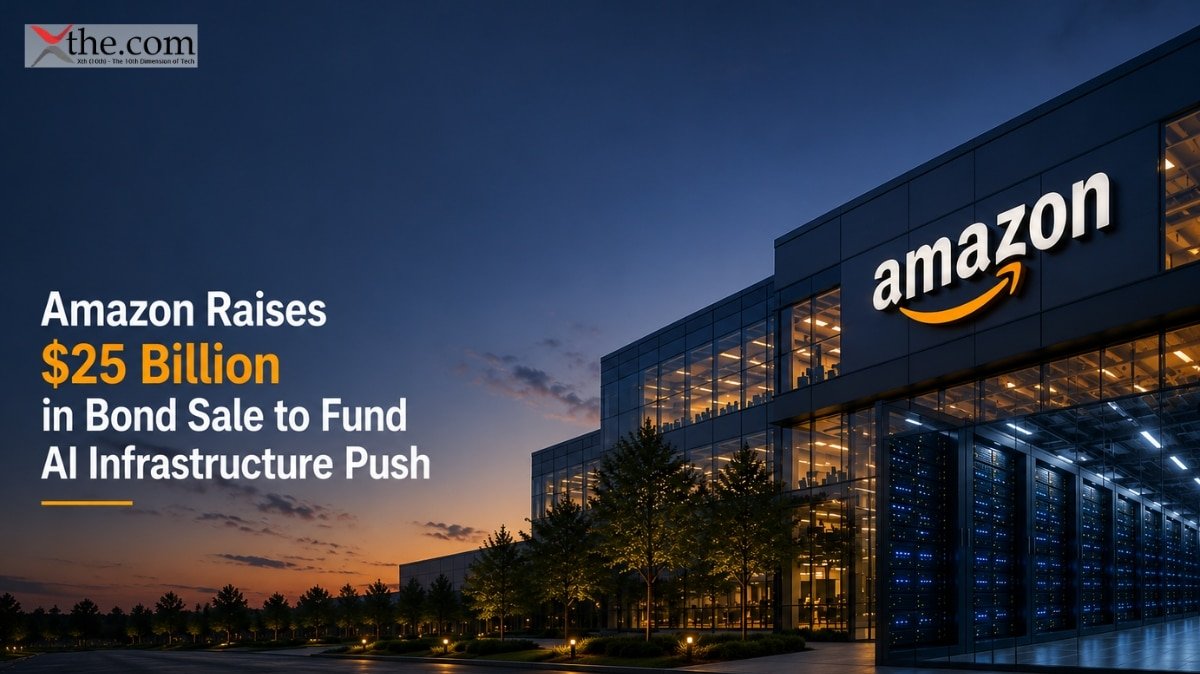
Sixty-two billion dollars chased a twenty-five-billion-dollar offering, and the deal still got priced tighter than the sellers wanted. That single fact tells you more about where Wall Street’s head is right now than any earnings call could. The Amazon $25 billion bond sale landed this week as one of the largest single corporate debt issuances of 2026, and unlike some of its Big Tech peers, Amazon didn’t need to sweeten the pot to get investors to show up. Sources told CNBC’s David Faber that the company is tapping the investment-grade market in eight tranches, with proceeds earmarked to continue funding Amazon AI infrastructure debt. Shares of the internet giant gained roughly 0.8% in premarket trading, a modest but telling signal that the market has filed this transaction under “business as usual” rather than “cause for alarm.”
Inside the AMZN Bond Offering 2026
The mechanics of the deal are straightforward, even if the dollar figures are not. This AMZN bond offering 2026 spans eight parts, some stretching out as far as 40 years, giving Amazon’s treasury desk the flexibility to lock in long-duration financing while the 10-year Treasury sits near 4.5%, at the upper end of its 12-month range. Barclays, Goldman Sachs, JPMorgan, and Morgan Stanley are handling underwriting, and the company has told those banks it does not intend to issue additional debt for the remainder of the year. That guidance matters. It signals discipline rather than desperation, and it protects buyers of this week’s paper from being diluted by a follow-on offering next quarter.
This isn’t Amazon’s first time raising money through bonds in 2026. Earlier this year, the company raised about $54 billion in the U.S. and Europe, plus $10 billion in Canada in June, and another $37 billion through an 11-part sale in March, following strong investor participation. Altogether, Amazon has borrowed around $90 billion so far this year, all going toward a capital spending plan of $200 billion for 2026, which is a big jump from $131 billion in 2025.
Amazon Bond Sale David Faber Coverage Frames the Story
The Amazon bond sale, as David Faber reports, has become something of a bellwether for how Wall Street reads hyperscaler financing decisions. On CNBC, Faber walked through the deal’s structure alongside Jim Cramer, and the mood was notably calmer than the coverage surrounding some of Amazon’s AI-spending peers earlier this year. Part of that calm comes from arithmetic. Amazon’s debt-to-equity ratio ranges from 0.27 to 0.48, depending on how leases and short-term obligations are accounted for, a fraction of the leverage carried by companies racing to build out similar AI capacity.
Why AWS Changes the Debt Math
New borrowing needs strong revenue to back it up, and that’s where Amazon’s AWS AI data center expansion comes in. In the first quarter of 2026, AWS brought in $37.6 billion in revenue, up 28% from last year and its fastest growth in fifteen quarters. That puts AWS on track for over $150 billion a year. The cloud unit’s operating earnings also rose about 23% to $14.2 billion. This isn’t just future revenue it’s money coming in now from customers like OpenAI, Anthropic, and many other businesses. AWS has signed contracts for a two-gigawatt Trainium deal and up to five gigawatts with Anthropic.
That distinction is exactly why bond investors treated Amazon’s debt financing AI 2026 so differently from Oracle’s comparable announcement earlier this year. When Oracle announced it would raise tens of billions more through debt and equity for its AI projects, its stock had its worst week since the dot-com era. Analysts pointed out that Oracle’s debt-to-equity ratio was between 3.5 and 4.3, and its free cash flow had dropped to about-$25 billion. While Oracle’s cloud revenue is growing quickly up 84% year-over-year it starts from a much smaller base, and its total revenue is still much less than what Amazon or Microsoft make in a single quarter. As a result, the cost of insuring Oracle’s debt increased, indicating that investors perceived greater risk.
A Tale of Two Leverage Ratios
When you compare the two companies, the difference is clear. Oracle is borrowing amounts that would make sense for a company three to four times its current revenue, according to analysts. Amazon, on the other hand, is borrowing against a business that already generated $148.5 billion in operating cash flow over the past year. Free cash flow has dropped to about $1.2 billion as Amazon spends more on capital projects, but this is a planned investment, not a sign of financial trouble. CEO Andy Jassy has said the current AI expansion is a rare chance that makes the short-term drop in free cash flow worthwhile.
The AI Arms Race Debt Narrative
Amazon isn’t the only company borrowing for AI. Together, Amazon, Alphabet, Microsoft, and Meta are expected to spend over $700 billion on AI in 2026. Meta sold $25 billion in bonds this year after a record $30 billion sale last October. Alphabet raised about $85 billion through an equity offering last month. SpaceX is considering a $20 billion bond sale, its first as a public company, partly to refinance debt from its acquisition of xAI. What used to be rare financing events are now common, with every major tech company raising money at levels that would have seemed unbelievable just a few years ago.
What Investors Need to Know Going Forward
For anyone tracking AMZN stock bond reaction in real time, the takeaway is less about the headline number and more about context. Investors searching for the full picture behind the Amazon raises $25 billion bond sale fund AI data center infrastructure expansion 2026 story should note that demand for the deal still settled at 1.6 times the offering size even after banks trimmed the spread, a healthy multiple by any standard, if noticeably cooler than the frenzy surrounding Amazon’s biggest bond sale earlier this year. For those researching the Amazon AMZN $25 billion debt offering AI infrastructure investment what investors need to know- the core signal is that credit markets are still willing to extend Amazon cheap, long-duration capital because the underlying cash-generating engine, AWS, keeps expanding fast enough to justify it.
The next quarters will show if this confidence in Amazon lasts. Spending nearly $200 billion can’t prevent free cash flow from shrinking, especially since competitors like Microsoft and Google are also spending heavily. For now, though, the bond market sees a big difference between borrowing backed by a strong, growing cloud business and borrowing that isn’t. At the moment, Amazon is on the safer side, and the next earnings report will reveal if AWS’s growth can keep up with these big investments.
Source: https://finance.yahoo.com/technology/ai/articles/amazon-borrowing-another-25-billion-185918054.html








