






San Francisco, California
Dateline | July 5, 2026
A Billion-Dollar AI Race Meets One of Medicine’s Least Profitable Problems
Pharmaceutical companies often focus their investments on treatments that promise high profits, leaving many diseases impacting low-income populations still lacking funding. This gap is one of healthcare’s continuing market failures. Anthropic hopes artificial intelligence can change the equation. With its announcement of Anthropic drug discovery AI, the Claude Science workbench, and a dedicated initiative focused on Anthropic-neglected diseases, Anthropic is moving beyond general AI to support scientific research that commercial drug developers often overlook.
This announcement marks a significant shift in the AI industry. Rather than offering AI solely as a tool to help scientists work faster, Anthropic is now investing its own resources to find treatments for neglected diseases and to provide professionals with a new research platform.
Anthropic Drug Discovery AI Signals a Major Shift.
For years, leading AI labs have promoted their models as tools for coding, writing, legal tasks, and software development. Now, Anthropic is bringing this approach to biomedical science with its new project.
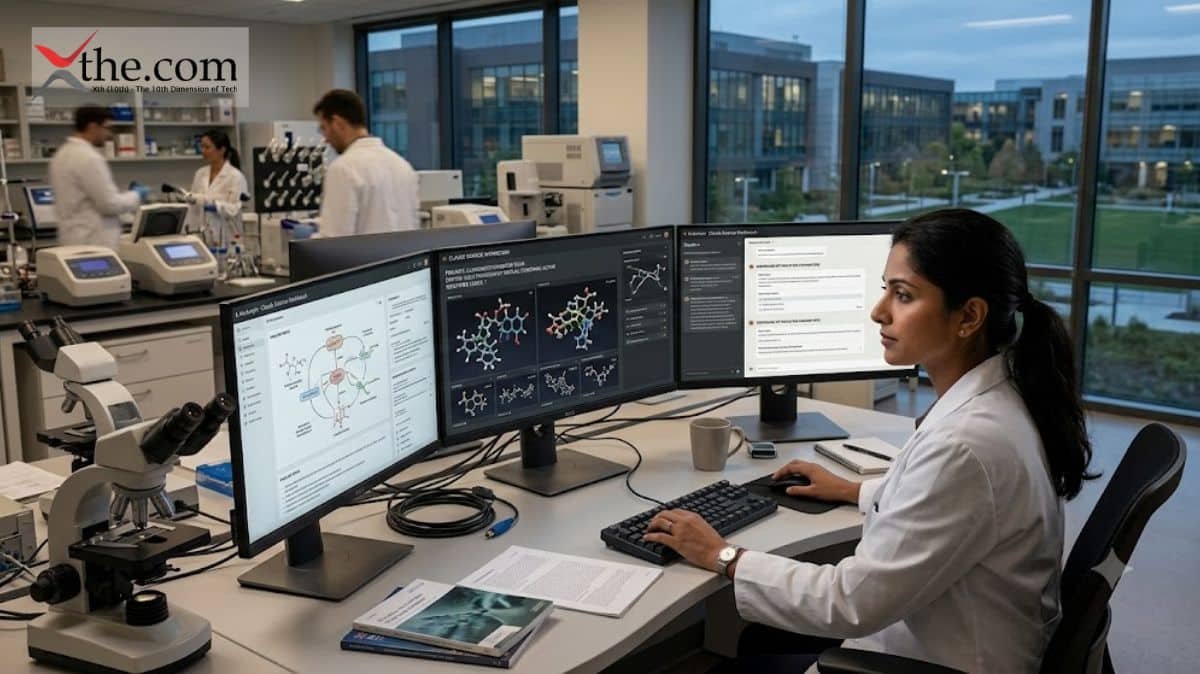
Anthropic’s drug discovery AI blends its own research with a wider scientific platform available through the Claude Science workbench. Unlike standard AI chat tools, this platform offers specialized features to support complex lab work, from formulating hypotheses to planning experiments.
This announcement also places Anthropic’s neglected diseases research at the center of Anthropic’s long-term research plans. Diseases such as malaria, Chagas disease, leishmaniasis, and other neglected tropical illnesses affect millions of people but often receive little commercial investment because the financial returns are low.
This makes Anthropic’s decision especially important. It is one of the first times a major AI company has publicly committed its research resources to diseases that primarily affect lower-income regions, rather than focusing solely on profitable markets.
What the Claude Science workbench Actually Does
The main highlight of the launch is the Claude Science workbench, a research platform designed for scientists, universities, pharmaceutical researchers, and biotech organizations.
Instead of requiring researchers to build separate computational pipelines, the platform offers Claude Science 60 tools beta, which includes over sixty ready-made scientific workflows to reduce repetitive analysis.
These tools include molecular modeling to evaluate candidate compounds, literature reviews of thousands of scientific papers, automated experimental design, biological data analysis, computational chemistry support, and organized research documentation.
Scientists often lose time switching between databases, software, and manual documentation. Anthropic aims to solve this by bringing all these tools together into a single AI-powered workspace.
The launch of Claude Science in July 2026 positions the platform as an enterprise-level scientific assistant, not just another conversational chatbot.
Claude Science Workbench Brings Research Tools Together.
Scientific research often relies on the use of many specialized applications together.
For example, a medicinal chemist may review hundreds of studies before selecting a few molecules to test in the lab. Each step involves searching the literature, visualizing molecules, interpreting statistics, drafting protocols, and collaborating with different teams.
The Claude Science workbench is designed to make these tasks easier by providing AI-supported workflows.
Researchers can now gather key findings from hundreds of publications in minutes, rather than doing so manually. They can also analyze molecular structures more quickly and receive AI suggestions for experimental protocols intended to review before lab testing.
Importantly, the platform does not replace lab experiments. It just reduces paperwork and data processing, while researchers proceed to make key scientific decisions and verify results themselves.
Who Can Access the Beta Platform?
Access to the platform will be limited during the initial launch.
Anthropic has confirmed that Anthropic Pro Max Team Enterprise beta users will get access to the new scientific platform during the beta phase. This includes organizations already on higher-tier plans and research teams testing advanced AI features.
By limiting access, Anthropic can collect feedback from professional researchers before releasing the platform more widely. Scientific software needs careful testing because reliable research depends on consistent results.
For universities, biotech companies, pharmaceutical companies, and nonprofit research groups, early access provides an opportunity to see how AI can fit into current lab workflows without immediately replacing established scientific processes.
The wider range of Anthropic AI research tools also shows that the company sees scientific research as its own product category, not just an add-on to general AI assistance.
Why Neglected Diseases Matter
The choice to focus on neglected diseases is just as important as the technology itself.
Neglected diseases usually affect people with limited purchasing power. Because of this, traditional pharmaceutical economics frequently discourage large-scale investment, even though these diseases have major global health impacts.
Take diseases like dengue fever or leishmaniasis. They affect millions in developing countries, but drug pipelines stay small because expected revenues rarely justify billion-dollar research programs.
Artificial intelligence cannot remove lab costs or regulatory requirements. However, it can reduce the time needed for literature analysis, compound prioritization, experimental planning, and data interpretation.
If AI can shorten early-stage discovery by even a few months, researchers with limited funding could spend more resources on lab validation instead of administrative work.
This potential is why the Anthropic drug discovery AI initiative has quickly attracted attention in both scientific and technological communities.
The Wider Competitive Landscape
Anthropic is joining a field where several tech companies already work with pharmaceutical organizations on AI-assisted drug discovery.
The difference is in who owns the research mission.
Many AI companies offer technology platforms to pharmaceutical clients. Anthropic, however, has revealed its own internal research program in addition to its commercial software.
This combination changes the conversation.
Instead of acting only as a software vendor, Anthropic is presenting itself as both a technology provider and an active participant in biomedical research.
The release of Claude Science in July 2026, therefore, means more than just another enterprise software update. It shows Anthropic’s growing ambitions in life sciences and public health.
Visionary Commitment or Tactical Placement?
The announcement naturally elicits questions that go beyond technology.
Some people see Anthropic’s investment as a real devotion to global health. AI can process large scientific datasets, uncover overlooked connections, and reduce repetitive analysis that consumes researchers’ time. Using these abilities to address diseases with little commercial incentive could accelerate discoveries that might otherwise be ignored.
Others see it differently.
Anthropic is growing quickly and attracting major institutional investment. Moving into socially beneficial scientific research helps its public image, especially as AI companies face more scrutiny over safety, governance, intellectual property, and long-term business plans.
Whether this effort is about long-term philanthropy, strategic differentiation, or preparing for a possible future public offering will likely remain a subject of debate.
The truth may include both. Corporate strategy and real scientific contribution can go hand in hand.
Comprehending the Long-Term Opportunity
Researchers now expect AI systems to act as collaborative scientific assistants, not simply as simple text generators.
The phrase “Anthropic Claude Science workbench 60 preconfigured tools drug discovery neglected diseases 2026” captures the breadth of Anthropic’s announcement by combining specialized research software with a clearly defined biomedical mission.
Similarly, “Anthropic internal drug discovery program Claude Science beta Pro Max Enterprise users explained” indicates growing interest in how Anthropic plans to integrate commercial AI products with internally funded scientific research.
If the platform leads to clear improvements in research productivity, scientists may start evaluating AI workbenches the same way they assess lab equipment, sequencing platforms, or statistical software.
This would be a real step forward in how artificial intelligence fits into scientific practice.
Gazing Forward
Anthropic’s latest announcement puts the company at a unique crossroads of enterprise software, biomedical research, and global public health. By combining drug discovery AI, the Claude Science workbench, expanded research tools, and a clear focus on neglected diseases, Anthropic is trying a model that few leading AI labs have attempted at this scale. Whether this effort leads to real medical breakthroughs or mainly boosts Anthropic’s strategic position will depend on measurable scientific results in the coming years. What is already clear is that AI companies are no longer just competing to build smarter models they are now competing to show where those models can make the biggest real-world difference.








