




Canada Retaliatory Tariffs Hit 700 US Goods as Trade War With America Escalates
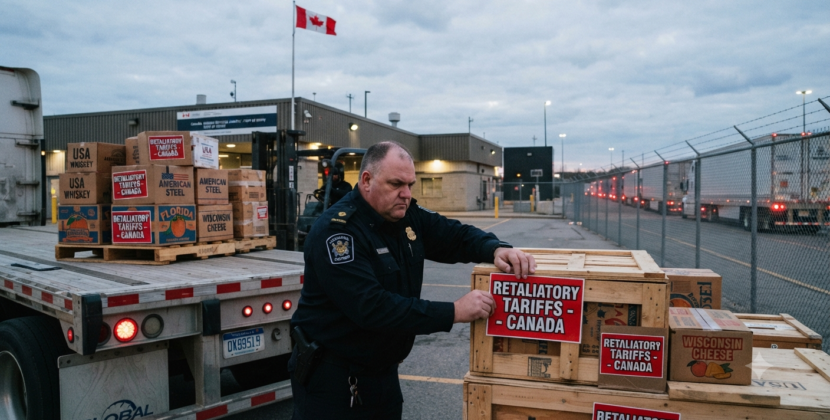
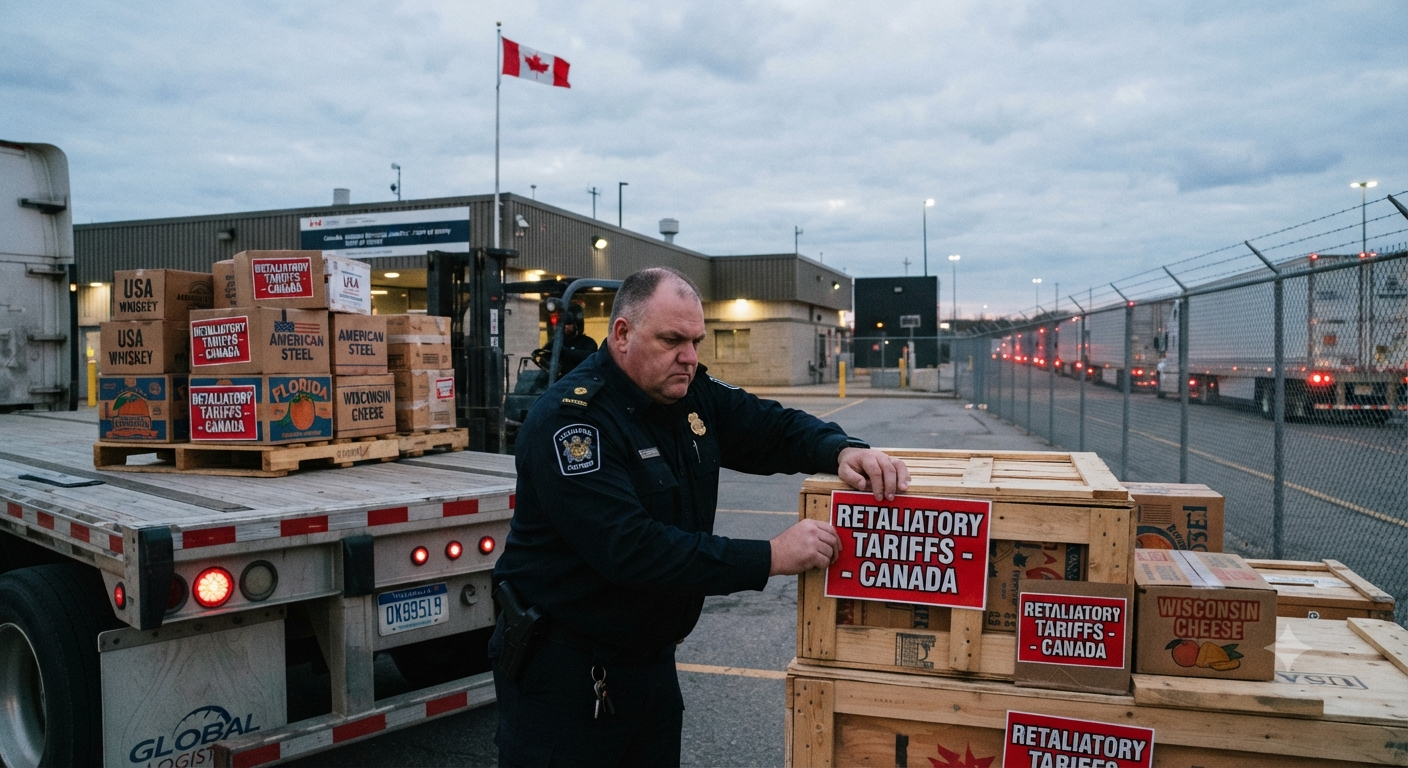
Canada has announced a sweeping new round of retaliatory tariffs targeting 700 American goods, escalating the trade dispute between the two closest allies to its most intense point in decades. The tariffs, which take effect immediately, cover a broad range of products including steel, aluminum, machinery, and consumer goods, and are designed to inflict maximum economic pain on key U.S. industries.
What Canada Is Targeting
The Canadian tariffs are carefully calibrated to hit regions that supported Trump in the last election and industries that are most sensitive to political pressure. The list includes bourbon from Kentucky, motorcycles from Wisconsin, and agricultural equipment from Iowa and Ohio.
Canada’s strategy is to make the political cost of the trade war as high as possible, said Drew Yewchuk, a trade policy expert at the University of Alberta. By targeting goods from swing states and politically important districts, Canada is hoping to build pressure on the Trump administration to negotiate.
The tariffs range from 10 to 25 percent on most goods, with some products facing even higher rates. The total value of affected imports is estimated at approximately $28 billion, which represents a significant portion of the $377 billion in goods that the U.S. exports to Canada annually.
Prime Minister Mark Carney announced the tariffs in a press conference in Ottawa, calling them a necessary response to the Trump administration’s aggressive trade policies. Carney said Canada would continue to seek dialogue with the U.S. but would not back down from defending Canadian workers and businesses.
Canadians do not want a trade war, but we will not be pushed around, Carney said. We will stand up for our sovereignty, our workers, and our economy.
The Impact on American Exporters
American companies that export to Canada are bracing for significant disruptions. Canada is the largest single destination for U.S. exports, accounting for approximately 18 percent of all American goods sold abroad. The tariffs will make American products more expensive in the Canadian market, potentially driving Canadian buyers toward alternative suppliers.
The agricultural sector is expected to be particularly hard hit. Canadian buyers of American beef, pork, and dairy products are already looking to alternative suppliers, and the new tariffs will accelerate that trend. Some American farmers have reported that they are losing Canadian contracts to competitors in Australia, New Zealand, and the European Union.
We had contracts with Canadian buyers that are now being renegotiated at lower prices, said Tom Peterson, a soybean farmer in Iowa. If this trade war continues much longer, we are going to lose our Canadian market for good.
The manufacturing sector is also feeling the strain. Companies in the automotive, aerospace, and machinery industries rely heavily on the Canadian market, and the tariffs are expected to reduce demand for their products. Some manufacturers have begun exploring whether they can shift production to Canadian facilities to avoid the tariffs, but that process is expensive and time-consuming.
The Bigger Picture
The Canada-U.S. trade dispute is just one front in a global trade war that has been escalating since the early months of the Trump administration. The U.S. has imposed tariffs on China, the European Union, and numerous other trading partners, while those countries have responded with their own retaliatory measures.
The result is a fragmented global trade system that is producing higher costs, greater uncertainty, and slower economic growth. The International Monetary Fund has warned that the trade war could reduce global GDP by as much as 0.5 percent over the next two years, with the heaviest impact falling on the countries involved in the disputes.
For Canada, the trade war has accelerated a strategic pivot toward diversifying its trade relationships. In recent months, Canada has signed new trade agreements with the European Union, Japan, and several Southeast Asian nations. These agreements are designed to reduce Canada’s dependence on the U.S. market, which has historically accounted for about 75 percent of Canadian exports.
The long-term consequences of this trade war could be profound, said Stockwell Day, a former Canadian trade minister. If Canada successfully diversifies its trade relationships, it could emerge as a more resilient and less dependent economy. But the transition will be painful.
What Comes Next
Both sides show no signs of backing down. The Trump administration has indicated that it may respond with additional tariffs on Canadian goods, while Canada has warned that it has a long list of additional products it is prepared to target.
The most likely scenario in the near term is a continuation of the current standoff, with both sides maintaining their tariffs while seeking to build political support for their respective positions. Some analysts have suggested that the trade war could eventually lead to a negotiated settlement, but the political dynamics on both sides make compromise difficult.
For American consumers and businesses, the practical impact is clear: higher prices, reduced choice, and greater uncertainty. The cost of everyday goods, from cars to groceries, is expected to rise as the tariffs work their way through the supply chain. And for the millions of Americans who work in export-oriented industries, the stakes are existential.
This is not just a political dispute, said Day. It is a fundamental challenge to the economic relationship between two countries that have been partners for over a century. How this ends will shape the future of North American prosperity.
Energy and the Tariff Battle
The energy sector has emerged as another flashpoint in the Canada-U.S. trade dispute. Canada is the largest foreign supplier of oil to the United States, providing approximately 60 percent of U.S. crude oil imports. The tariffs have raised concerns about the cost and reliability of energy supplies, particularly in the Midwest and Northeast, where refineries are designed to process Canadian heavy crude.
Canadian energy companies have responded to the tariffs by seeking alternative markets. Major pipeline projects that would transport Canadian crude to Pacific coast terminals for export to Asian markets have received renewed attention, and several new contracts have been signed with buyers in Japan, South Korea, and China.
The energy dimension of the trade war adds another layer of complexity to an already complicated situation. While the U.S. has significantly increased its own oil and gas production in recent years, it still relies on Canadian imports to meet domestic demand, particularly during periods of peak consumption. Any disruption to the flow of Canadian energy could have significant economic consequences. This is not just about trade, said Kevin Birn, vice president at S&P Global Commodity Insights. This is about the energy security of North America. When you start putting tariffs on energy products, you are playing with fire.