






Washington, D.C. | July 7, 2026
Before dawn on Monday, rescue teams pulled an entire family from the rubble of a collapsed apartment building in Kyiv’s Podilskyi district before dawn on Monday. By the time crews finished digging inside the wreckage, the death toll from the Russia Kyiv missile attack in July 2026 stood at 15 in the capital and six more in the surrounding region, with dozens wounded. The timing was not incidental. Hours before world leaders met in Turkey, Moscow sent a clear and violent message.
A Strike Engineered for Maximum Political Weight
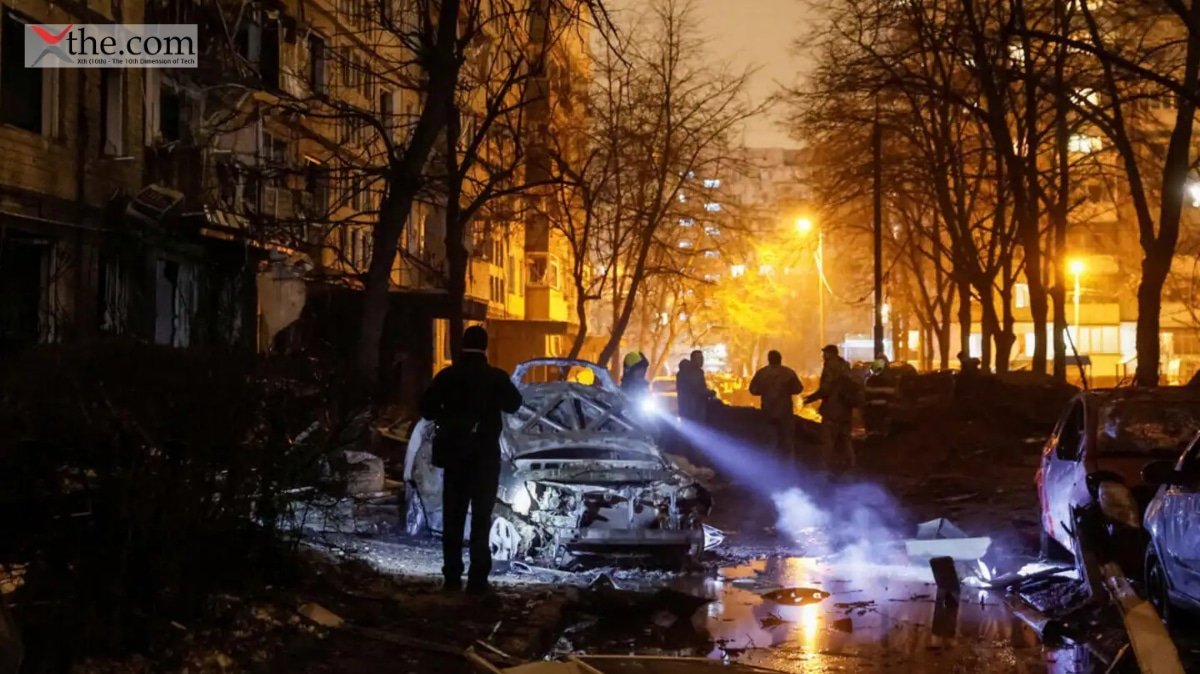
The Kyiv attack on July 6, 2026, occurred in the early hours of July 6, 2026, and saw ballistic missiles and drones strike four districts of the city. Officials reported that Podilskyi district was hit hardest, with a residential building partially collapsing and trapping families under the debris. In Darnytskyi district, several apartment blocks were damaged, adding to the destruction from an earlier attack just days before.
Kyiv Mayor Vitali Klitschko spoke of massive destruction across the city as rescuers evacuated residents, including children, from the upper floors of damaged buildings. Cars burned in the streets. Families spent hours in air raid shelters, unsure if their homes would survive the night.
The scale of the bombardment was staggering by any measure. Ukraine’s air force reported that Russia 68 missiles and 351 drones at Kyiv were launched overnight, targeting mainly the capital. Every single ballistic missile fired hit its target. Not one was intercepted. That detail, more than any other, has changed the conversation among Western defense officials this week, because it exposes a gap that money alone has not yet closed.
Why the Timing Was the Real Message
Vladimir Putin did not choose Monday morning by accident. The Russia-NATO summit Kyiv strike landed less than 24 hours before President Donald Trump was set to leave for Ankara, where NATO leaders would discuss future support for Ukraine. President Volodymyr Zelensky saw it coming. The day before the attack, he posted on social media that the assault was “typical of Putin,” coming right after America’s Independence Day and just before the NATO summit.
The strategy is clear. A major attack right before a summit sets the agenda, confronting delegates with images of destroyed homes and grieving families. It also challenges the alliance’s unity, as hesitation now costs civilian lives, not just words. Trump spoke with Zelensky by phone on Saturday and had a long call with Putin on Sunday, according to Russia’s foreign ministry, offering to help end the war. Within a day, Russia responded with 68 missiles.
Zelensky’s Direct Appeal to the Alliance
Standing in the ruins of Kyiv, Zelensky spoke directly. He said Ukrainian forces could handle drones and cruise missiles, but not Russian ballistic missiles, a gap he attributed squarely to a shortage of interceptors. That framing represents Zelensky’s NATO-strong decisions at the center of this week’s summit: he urged American and European partners to leave Ankara with real commitments, not just more statements.
Zelensky’s frustration stems from months of near-nightly attacks. He argued that as long as Patriot interceptor missiles stay in allied stockpiles instead of being sent to Ukraine, Russia will keep targeting homes, believing the political cost is less than the military risk. The phrase seen in Western media this week, “Zelensky urges NATO strong decisions Ukraine air defense Patriot missiles after Kyiv attack 2026,” sums up what Ukrainian officials want: action, not just words.
The Air Defense Gap That Won’t Close Itself
The unpleasant truth for NATO planners is structural, not simply political. The Ukraine air defense shortage ballistic missiles problem stems from basic physics and finite production capacity. Drones and cruise missiles can be intercepted by a range of mobile systems, some of which are relatively inexpensive. Ballistic missiles are a different category of threat entirely, requiring sophisticated interceptors like the Patriot system, which are manufactured in limited numbers and are in high demand across multiple theaters, including the recent strain from conflict in the Middle East.
Ukrainian Air Force spokesman Yurii Ihnat explained the matter clearly on national television. He said stopping ballistic missiles requires the right equipment, and Russia is taking advantage of a worldwide shortage of interceptor missiles. For Kyiv’s residents, this shortage is not theoretical. It means the difference between a missile hitting an empty field and one hitting an apartment building full of people.
Residential Streets Bear the Brunt
Tymur Tkachenko, head of Kyiv’s Military Administration, described the human reality behind the statistics. The Kyiv residential buildings destroyed in Monday’s strike, he said, were homes where people slept and lived their daily lives. Several multistory buildings in Darnytskyi district were damaged, with residents trapped under rubble for hours as emergency crews searched for survivors.
Russia’s Defense Ministry gave a different explanation, saying the strikes targeted weapons factories, including places that make drones, armored vehicles, missiles, air defense repair sites, and energy infrastructure. These claims could not be independently confirmed and contrast with a well-documented pattern: Russian air attacks have often hit civilian neighborhoods during the war, which has killed over 16,000 Ukrainian civilians according to the United Nations. The headline “Russia kills 15 people massive Kyiv missile drone attack eve of NATO Ankara summit July 6 2026” sums up a familiar cycle: an attack, a denial, a rising death toll, and a summit forced to respond.
A War That Refuses to Wait for Diplomacy
The attack happened as both sides escalated their actions. Ukraine has stepped up strikes on Russian energy infrastructure, hitting oil refineries and ports deep inside Russia. Moscow’s Defense Ministry used these attacks to justify the bombardment of Kyiv. Now, both sides see infrastructure whether energy sites in Russia or apartment buildings in Ukraine as fair targets in a war that shows no sign of ending soon.
For the delegates meeting in Ankara, it is now clear that Ukraine needs more air defense. Monday’s casualties made that obvious. The real issue is whether allied governments can act faster than Russia’s next attack, and whether “strong decisions,” as Zelensky put it, will lead to faster Patriot deliveries and more production, or just more statements with no action. For Kyiv’s residents, still picking through the rubble, words alone are not enough.
Source: Deadly Russian strikes hammer Kyiv on eve of Trump trip to critical NATO summit








