




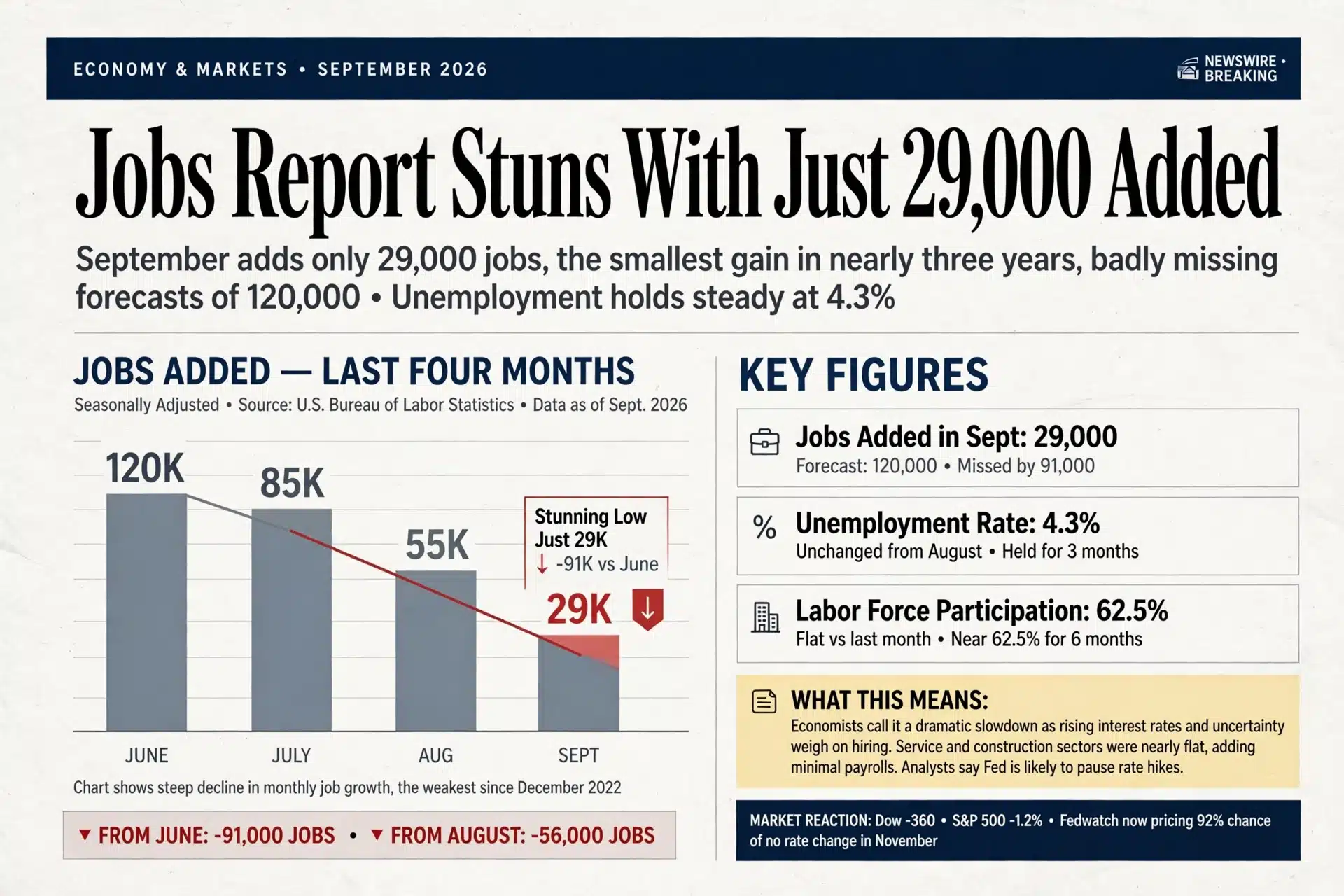
September Jobs Report Stuns With Just 29,000 Added as Fed October Rate Hike Odds Collapse
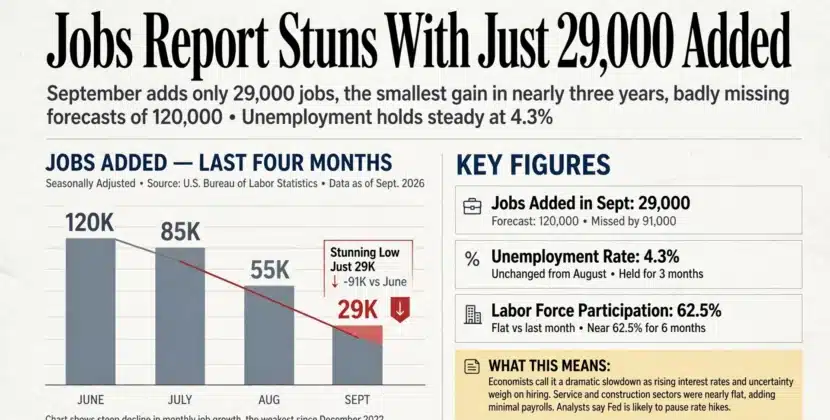
The September jobs report landed Friday like a cold bucket of water on an overheated economy debate: employers added just 29,000 jobs, far below the 84,000 economists expected, and the unemployment rate ticked up to 4.2 percent instead of holding at the projected 4.1 percent. Average hourly earnings rose only 0.1 percent on the month, well under the 0.3 percent forecast. Within minutes, traders were rerouting their bets on the Federal Reserve’s October meeting, and Treasury yields tumbled as the case for another rate hike weakened sharply.
Stocks took the news as a green light. The Nasdaq climbed to an intraday high, the Dow rose after the report, and major indexes finished the week near record territory as weaker labor data eased fears that a hot economy would force the Fed to keep tightening. The report complicates the Fed’s calculus in both directions: cooling wage pressure helps the inflation fight, but a 29,000 pace of hiring is thin enough to raise its own questions about whether the labor market is downshifting too fast.
What the September Jobs Report Showed
The Bureau of Labor Statistics said nonfarm payrolls grew by 29,000 in September, a fraction of consensus and a dramatic downshift from August’s 162,000 gain. The unemployment rate rose to 4.2 percent as more people entered the labor force, though economists noted the broader unemployment-and-underemployment measure edged lower, taking some sting out of the headline. Wage growth of 0.1 percent month over month was the softest reading in months.
Bill Adams, chief U.S. economist at Fifth Third Commercial Bank, said the composition mattered as much as the headline: the unemployment rate rose because labor force participation improved, not because of a wave of layoffs. On wages, the slowdown gives the Fed room. The report is the last major employment snapshot before the central bank’s late-October decision, and it arrives after months in which policymakers have said repeatedly that they are data dependent rather than committed to any preset path.
Why the Fed’s October Meeting Shifted
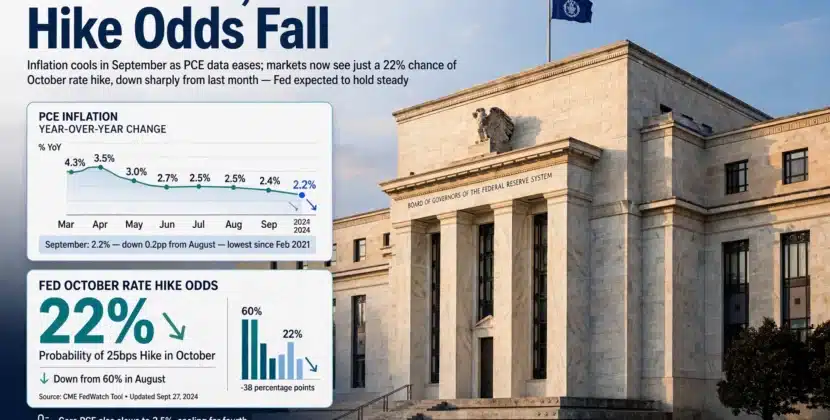
Before the report, markets were split on whether the Fed would deliver another increase at its October meeting, which would extend the cycle that began with the central bank’s first rate hike since 2023. After the numbers, commentators were blunt: the jobs report definitely puts the Fed on hold for October. Futures pricing shifted decisively toward a pause, and Treasury yields fell from the multidecade highs they had been pressing against all week.
The logic cuts two ways. A weak labor market reduces the urgency of hiking, because rate increases are designed to cool demand, and demand for labor is already cooling. But inflation is still above the Fed’s target, and Adams cautioned that the September report is not bad enough to shift the Fed’s focus away from price pressures. The late-October decision remains live, he said, and will probably be swayed by the September CPI and PPI releases, geopolitical developments and prices at the pump between now and then.
How Markets Reacted on Wall Street
Equities rallied on relief. The Nasdaq’s intraday record was powered in part by Nvidia, which hit a new all-time high of $237.88 and pushed its market capitalization past $5.7 trillion as investors kept piling into artificial intelligence. The Standard & Poor’s 500 and the Dow both closed higher, capping a week that began with the encouraging PCE inflation reading and ended with payrolls missing badly.
The bond market moved even more dramatically. Yields across the curve fell as investors reassessed the rate path, unwinding part of the run-up that had pushed long-term borrowing costs to fresh multidecade highs earlier in the week. Oil prices eased alongside. The combination, stocks up, yields down, gave relief to rate-sensitive corners of the market from homebuilders to small caps that had been punished by the summer’s rate-hike repricing.
What It Means for Mortgage Rates and Loans
For American households, the practical channel is the 10-year Treasury yield, which mortgage rates track closely. After weeks of climbing toward levels that kept buyers on the sideline, the yield drop created a window. Anyone shopping for a mortgage, auto loan or personal credit line should watch the next several sessions closely, because rate quotes move with bond yields faster than they move with Fed announcements.
Savers see the mirror image: another pause caps how much more new CDs and savings accounts will pay. Credit card borrowers, whose rates reset quickly when the Fed hikes, benefit directly from a hold. The key planning point is that a weak jobs report does not guarantee a pause; it shifts the odds. Borrowers betting on lower rates should still lock decisions around the October meeting, and anyone with variable-rate debt should model both outcomes before the Fed votes.
The AI Question Hanging Over the Labor Market
One theme running beneath the report is artificial intelligence’s uneven footprint. Adams said evidence of AI’s impact on the job market is mixed: employment is falling in industries that are adopting the technology aggressively, while employment of the technical workers building the systems keeps rising. That split helps explain why payrolls can disappoint even as corporate AI spending runs at record levels and Nvidia’s market value blows past $5.7 trillion.
Economists will be watching whether the pattern persists into the fourth quarter. A labor market that sheds ordinary roles while adding technical ones changes the shape of a recession risk rather than eliminating it, and it complicates the Fed’s job because aggregate statistics hide the churn. For now, the September report reads as a cooling, not a collapse: fewer hires, firmer participation, slower wage growth and a central bank with one more month of data before it votes.
What Comes Next
Three reports will decide the narrative before the Fed meets. The September CPI and PPI readings will confirm whether the cooler PCE trend is holding. Next month’s payrolls will show whether 29,000 was a one-month distortion from holidays or government shutdown noise, or the start of a real slowdown. And in between, weekly jobless claims will offer a faster pulse on layoffs.
For investors, the playbook is clear: watch yields for confirmation that the market believes the pause, watch Fed officials’ speeches for whether the pricing gets talked up or down, and watch the dollar, which softens when rate expectations fade. For households, the message is that the most borrower-friendly stretch since the Fed began hiking may be opening, but it hinges on inflation cooperating for one more month.
Frequently Asked Questions
How many jobs did the U.S. add in September?
Employers added 29,000 nonfarm jobs, well below the 84,000 expected, and the unemployment rate rose to 4.2 percent from the projected 4.1 percent, the Bureau of Labor Statistics reported.
Does the jobs report mean the Fed will not raise rates?
It sharply reduced expectations for an October increase. Commentators said the report puts the Fed on hold for October, though the central bank’s late-month decision still hinges on inflation data to come.
Why did stock markets rise on weak jobs data?
Softer hiring and wage growth reduced the odds of another rate hike, pulling Treasury yields down and lifting equities, with the Nasdaq reaching an intraday record.
How does this affect mortgage rates?
Mortgage rates track the 10-year Treasury yield, which fell after the report, so the weak jobs print opened a window for better borrowing rates ahead of the Fed’s October meeting.