




PCE Inflation Report Shows 3.4% as Fed October Rate Hike Odds Slide
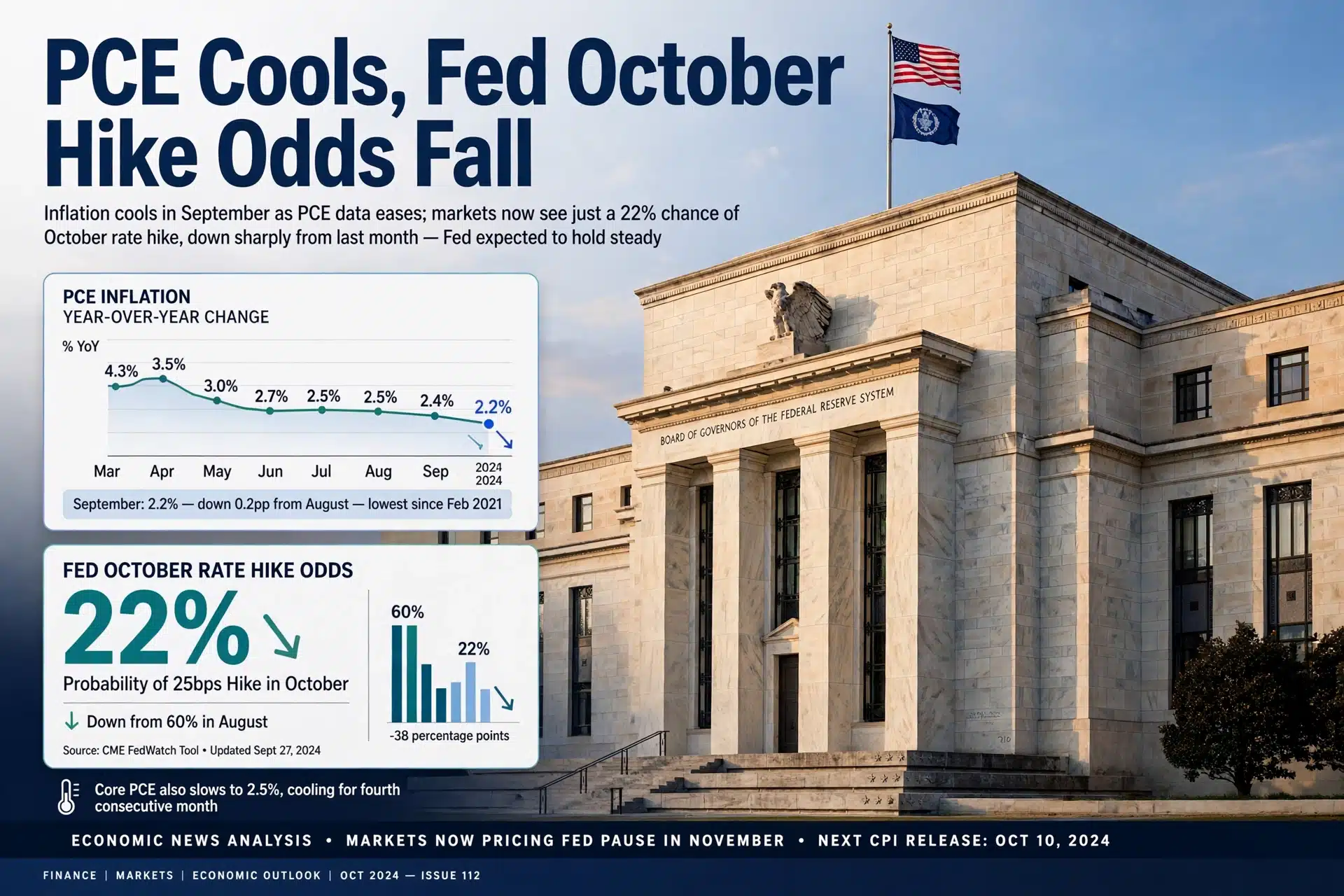
The Bureau of Economic Analysis reported Wednesday that personal consumption expenditures inflation held at 3.4 percent in August, coming in below the 3.7 percent pace economists had expected and giving the Federal Reserve its most welcome price report in months. Core PCE, the measure stripping out food and energy that the Fed treats as its preferred gauge, was steady at 3.0 percent. The release immediately reset expectations for the central bank’s October meeting.
Before the numbers landed, traders priced roughly a 51 percent chance that the Fed would deliver another rate hike next month. After the report, those odds fell to about 37 percent, according to CME FedWatch data cited by Reuters. Stock index futures moved higher and Treasury yields eased as investors recalibrated. For American households, the print matters directly: mortgage rates, auto loans and credit card costs all hinge on whether the tightening cycle continues or pauses in October.
What the PCE Report Showed
Headline PCE, the total inflation rate including volatile food and energy, registered 3.4 percent on a year-over-year basis in August, unchanged in trajectory but below consensus estimates that had clustered around 3.7 percent. Core PCE held at 3.0 percent, also matching expectations and signaling that the underlying price pressure the Fed watches most closely is no longer accelerating.
Monthly figures rounded out the picture: economists surveyed ahead of release looked for roughly 0.4 percent headline and 0.3 percent core gains for the month, and the results landed close to those marks. Coming after months of upside surprises, an in-line or cooler reading changed the mood quickly. Inflation at 3.4 percent is still above the Fed’s long-run target, but the direction of travel, not the level alone, is what drives policy bets.
Why the Fed Watches PCE More Than CPI
Consumers know the Consumer Price Index, but the Fed anchors policy on PCE for structural reasons. The PCE gauge, produced by the Bureau of Economic Analysis, uses a broader scope of expenditures and accounts for when people substitute away from goods that get expensive, so it rises more slowly than CPI in practice. It also draws on a wider range of source data than the Labor Department’s shopping-basket survey.
The gap between the two matters for interpretation. CPI can print hotter while PCE cools, producing confusing headlines. The Fed’s explicit target, the 2 percent longer-run goal set in its framework, refers to PCE, not CPI. When the PCE number falls short of expectations, rate-setting committee members get political cover to hold, because the metric they are actually mandated to watch is behaving.
How October Rate Hike Odds Shifted
The repricing was immediate and measurable. CME FedWatch pricing shown by Reuters put the probability of an October increase near 51 percent in the prior session, then dropped it to roughly 37 percent after the PCE release. That is not a forecast of a cut; it is a recalculation of how aggressively the Fed keeps tightening after delivering its first rate hike since 2023.
Two dynamics drove the swing. First, a cooler PCE reduces the urgency of another increase. Second, markets had been positioning defensively for weeks, with the 10-year yield pressing toward multi-year highs near 5.18 percent as traders demanded compensation for policy risk. When the data softened, some of that defensive positioning unwound, pulling yields lower and lifting futures in the same motion.
What It Means for Mortgages, Loans and Savings
Household finances translate policy directly. Mortgage rates track the 10-year Treasury closely, so an easing in yields gives prospective buyers a window, and rates that had already drifted below the 6 percent mark in 2026 have more room to improve if the Fed pauses. Auto loan and credit card rates, which reset faster, respond to the overnight rate the Fed controls, making the October meeting a live event for anyone financing a purchase.
Savers see the mirror image. Certificates of deposit and high-yield savings accounts pay more when the Fed hikes, so a pause caps further gains on new deposits. The practical takeaway: lock long-term borrowing decisions around the October meeting, refresh savings yields before a pause cements, and treat a 3.4 percent PCE print as permission for markets, not as a victory lap on inflation.
Why Markets Reacted the Way They Did
Stock futures rose and yields fell because the report removed the tail risk investors feared most: a Fed hiking into cooling growth with inflation still accelerating. When PCE lands below expectations, the worst combination disappears, and risk assets rally on relief as much as on fundamentals. The S&P 500 entered October trading near record territory around 7,683, up about 0.4 percent, extending gains from a resilient September.
Bond investors had a different reason to cheer. Treasury yields had climbed for weeks as supply concerns and rate-hike fears compounded; softer inflation data eases both. The reaction also reflects positioning: with hedges expensive and sentiment cautious, modestly good news gets amplified. Traders now turn to the next jobs report and the next inflation prints to decide whether 37 percent October odds were too generous or too conservative.
What Comes Next
The Fed’s October meeting is the anchor, but the data between now and then decides the outcome. The next jobs report will show whether the labor market is cooling alongside prices, which would strengthen the case for a pause. Additional price readings will confirm whether August’s PCE was a trend or a one-month respite, and policymakers have repeatedly said they are data dependent rather than preset.
For investors, the playbook is straightforward. Watch the 10-year yield for confirmation that the market believes the cooler print, watch Fed officials’ speeches for whether 37 percent odds get talked up or down, and watch the dollar, which weakens when rate expectations fade. For households, the October decision is the clearest signal yet of whether the first hike since 2023 becomes a pattern or a one-off.
Frequently Asked Questions
What did the August PCE report show?
Headline PCE inflation held at 3.4 percent year over year and core PCE held at 3.0 percent, both below the 3.7 percent headline growth economists had expected.
How did the report change October Fed rate hike odds?
Traders cut the probability of an October increase from about 51 percent before the release to roughly 37 percent afterward, according to CME FedWatch data cited by Reuters.
Why is PCE different from CPI?
PCE covers a broader set of spending and adjusts for substitution behavior, so it typically runs cooler than CPI, and it is the gauge tied to the Fed’s official 2 percent target.
What does cooler PCE mean for mortgage rates?
Mortgage rates follow the 10-year Treasury yield, so softer inflation data that pulls yields down gives borrowers a window for better rates around the Fed’s October meeting.