






The $541 Million Loss
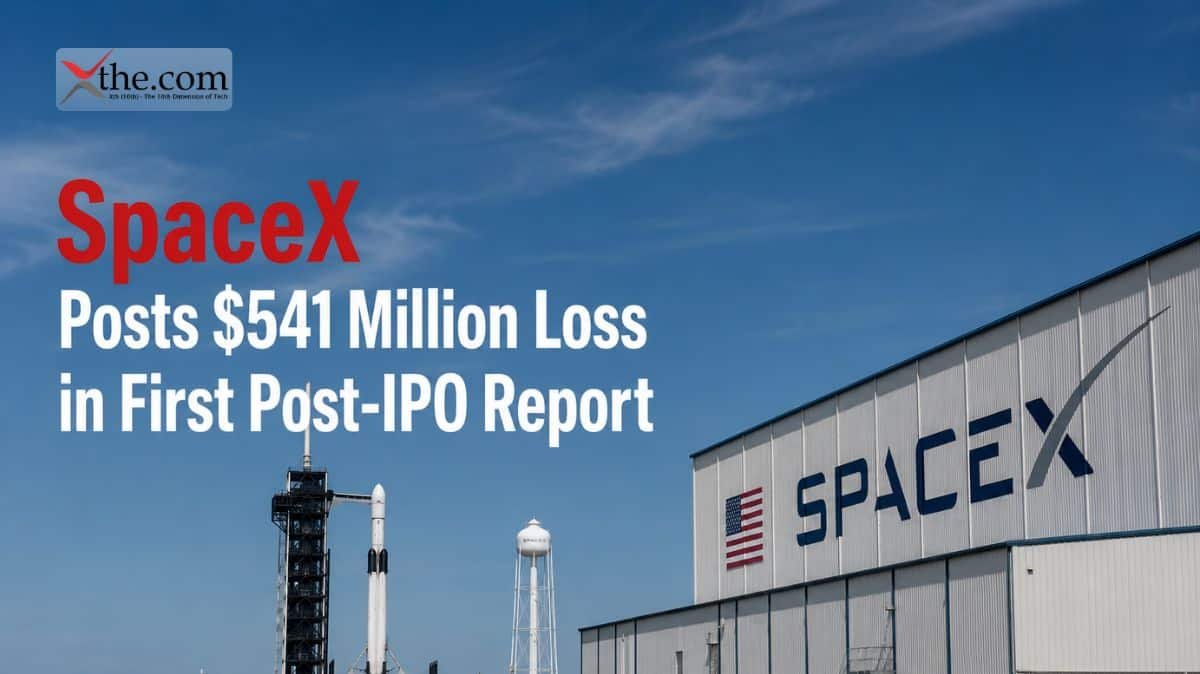
On August 4, 2026, SpaceX released its first quarterly earnings report since its record-setting initial public offering — and the numbers were sobering. The company posted a loss of $541 million, a figure that underscores the immense capital requirements of building the next generation of space infrastructure. The report, detailed by The Washington Post, marked a critical moment for the most valuable aerospace company in history as it transitions from a private venture to a publicly accountable corporation.
The loss was not entirely unexpected. SpaceX has always operated on a growth-first, profitability-later model, reinvesting every available dollar into Starship development, Starlink expansion, and Mars colonization infrastructure. But for public market investors accustomed to the profit margins of traditional aerospace giants like Lockheed Martin and Boeing, the half-billion-dollar quarterly burn rate raises serious questions about when — or if — SpaceX will deliver sustainable returns.
Market Reaction: Stock Jumped Before the Drop
In a bizarre twist of market psychology, SpaceX stock had jumped by more than 10 percent in the trading sessions before the earnings announcement. The rally represented one of the first positive signs for the stock after weeks of decline, suggesting that institutional investors had priced in the bad news and were looking for signals of future profitability.
The pre-announcement surge may also reflect optimism about SpaceX’s recent operational milestones. The company has maintained a blistering launch cadence, deploying Starlink satellites at a rate that no competitor can match. But operational excellence in rocketry does not automatically translate to financial excellence — a lesson that Tesla investors learned during years of production hell.
Following the earnings release, analysts were divided. Bullish investors pointed to SpaceX’s dominant market position and the long-term revenue potential of Starlink’s global internet service. Bears focused on the cash burn, the technical challenges remaining for Starship, and the regulatory hurdles facing the company’s expansion plans.
What’s Driving the Losses
SpaceX’s $541 million quarterly loss stems from several interconnected factors:
1. Starship Development: The Starship program — designed to be the fully reusable super-heavy launch vehicle that will carry humans to Mars — remains in active development. Each test flight costs tens of millions of dollars, and the iterative engineering process requires continuous hardware destruction. While recent test flights have shown dramatic improvements in booster catch and ship landing, the program is still years away from operational profitability.
2. Starlink Constellation Expansion: SpaceX continues to launch Starlink satellites at a furious pace, with the constellation now numbering more than 7,000 active spacecraft. But building and launching satellites is capital-intensive. The user terminal subsidies — SpaceX sells the dish at a loss to acquire subscribers — add hundreds of millions in quarterly costs.
3. Raptor Engine Production: The Raptor engines that power both Starship and Super Heavy are among the most advanced rocket engines ever built, utilizing full-flow staged combustion. They are also expensive to manufacture, with each engine costing an estimated $1-2 million. SpaceX needs hundreds of Raptors per year to maintain its launch cadence.
4. Regulatory and Legal Costs: SpaceX faces increasing regulatory scrutiny from the FAA, the FCC, and environmental groups. Lawsuits challenging Starship launches from Boca Chica, Texas, have delayed test schedules and increased legal expenses.
The Wayward Rocket Heading for the Moon
Compounding SpaceX’s challenging week, the company confirmed on August 5 that a wayward Falcon 9 upper stage — initially intended to deliver a lunar lander — is now expected to crash into the moon instead. The rocket will leave a crater on the lunar surface, marking an unintended consequence of a mission that failed to achieve its primary objective.
The incident highlights the growing problem of space debris in cislunar space. While the moon has no atmosphere to burn up incoming objects, impacts can disturb scientifically valuable regions and create hazards for future missions. SpaceX has not disclosed the exact impact location or the size of the crater expected, but lunar scientists have expressed concern about the precedent.
The wayward rocket also raises questions about SpaceX’s mission assurance processes. A rocket intended for lunar orbit should have sufficient fuel margins and trajectory controls to avoid unplanned impacts. The failure suggests either a propulsion anomaly or a miscalculation in mission planning — neither of which inspires confidence among investors already nervous about the company’s financial performance.
Starship Program Costs
Starship remains both SpaceX’s greatest opportunity and its largest financial drain. Elon Musk has stated that Starship is essential for Mars colonization, lunar base construction, and the deployment of next-generation Starlink satellites too large for Falcon 9.
Starship Economics:
Table
| Cost Category | Quarterly Estimate | Annual Run Rate |
| Test flight operations | $150-200M | $600-800M |
| Hardware production (prototypes) | $100-150M | $400-600M |
| Raptor engine manufacturing | $80-120M | $320-480M |
| Boca Chica facility expansion | $50-80M | $200-320M |
| Regulatory/legal | $20-40M | $80-160M |
| Total Starship-Related | $400-590M | $1.6-2.4B |
The numbers suggest that Starship alone could account for nearly all of SpaceX’s quarterly losses. The program will not generate meaningful revenue until NASA’s Artemis lunar landings begin in the late 2020s — and even then, the fixed-price government contracts may not cover full development costs.
Starlink Revenue vs. Development Costs
Starlink represents SpaceX’s best near-term path to profitability. The satellite internet service now serves more than 4 million subscribers globally, generating an estimated $6-8 billion in annual revenue. But the business model remains challenging.
Starlink Financial Snapshot:
Table
| Metric | Estimate |
| Annual Revenue | $6-8 billion |
| Subscriber Count | 4+ million |
| User Terminal Subsidy | ~$200-400 per unit |
| Satellite Manufacturing Cost | ~$250,000-500,000 each |
| Launch Cost per Satellite (Falcon 9) | ~$50,000-100,000 |
| Monthly ARPU (Average Revenue Per User) | ~$100-120 |
The user terminal subsidy is particularly problematic. SpaceX loses money on every dish it sells, betting that subscriber lifetime value will eventually exceed acquisition costs. But in competitive markets and regions with low disposable income, that bet may not pay off.
Competition from Blue Origin and China
SpaceX’s dominance is no longer unchallenged. Blue Origin, Jeff Bezos’s aerospace company, has accelerated development of its New Glenn heavy-lift rocket and has secured national security launch contracts that were once SpaceX’s exclusive domain. China’s state-backed space program continues to advance rapidly, with plans for its own megaconstellation to rival Starlink.
The competitive pressure is most acute in the launch market. While SpaceX currently controls approximately 80% of the global commercial launch market by mass to orbit, that share is expected to decline as competitors bring new vehicles online. Lower launch market share would mean less revenue to subsidize Starship development.
What Investors Should Watch
SpaceX shareholders should monitor several key metrics in upcoming quarters:
1. Starship Test Flight Cadence: Successful orbital flights with payload deployment would signal that the program is approaching operational status.
2. Starlink Subscriber Growth: Sustained growth above 500,000 new subscribers per quarter would validate the business model.
3. Government Contract Wins: NASA Artemis, Pentagon national security launches, and FCC rural broadband subsidies provide stable revenue.
4. Raptor Engine Production Rate: SpaceX needs to demonstrate the ability to manufacture engines at scale — a bottleneck that has plagued the program.
5. Cash Position: With $541 million in quarterly losses, SpaceX will need to raise additional capital or achieve profitability within 2-3 years to avoid a cash crunch.
Frequently Asked Questions
Q: How much did SpaceX lose in its first post-IPO quarter? A: SpaceX reported a loss of $541 million in its first quarterly earnings report since going public.
Q: Why did SpaceX stock go up before the earnings announcement? A: The stock jumped more than 10% as institutional investors appeared to price in the bad news and looked for signals of future profitability.
Q: What is the wayward SpaceX rocket? A: A Falcon 9 upper stage originally intended to deliver a lunar lander is now expected to crash into the moon, leaving a crater.
Q: Is Starlink profitable? A: Starlink generates $6-8 billion in annual revenue but faces high costs from satellite manufacturing, launches, and user terminal subsidies. SpaceX has not disclosed whether Starlink is independently profitable.
Q: When will Starship be operational? A: Starship remains in active development. NASA has contracted SpaceX to use a modified Starship as the lunar lander for Artemis missions in the late 2020s.
External Sources:
- The Washington Post: https://www.washingtonpost.com/business/technology/
- SpaceX Official: https://www.spacex.com/
- NASA Artemis: https://www.nasa.gov/artemis
- FCC Starlink: https://www.fcc.gov/
- Blue Origin: https://www.blueorigin.com/








